
The Phase 3 integrated PEACHTREE and AZALEA study data revealed strong safety and efficacy for triamcinolone acetonide via suprachoirodal injection.
The Phase 3 integrated PEACHTREE and AZALEA study data revealed strong safety and efficacy for triamcinolone acetonide via suprachoirodal injection.
The study's primary endpoints were to look at increasing Schirmer's scores, as well as eye discomfort score.
The Phase 3 integrated PEACHTREE and AZALEA study data revealed strong safety and efficacy for triamcinolone acetonide via suprachoirodal injection.
Penny Asbell, MD, FACS, MBA, discusses “Antibiotic Resistance among Ocular Staphylococcal Pathogens: Longitudinal Trends in the ARMOR Study."
Takeaway: there doesn't seem to be a specific dry eye phenotype that does better or worse.
The OpRegen trial is a cell therapy trial, looking to explore potential safety and efficacy for patients with advanced dry age-related macular degeneration (AMD).

Dr. Diana Do presents data on a novel patient-reported outcome instrument for patients with proliferative diabetic retinopathy with the hope of capturing the burden of the disease and treatment.

Diana Do, MD, professor of ophthalmology at Stanford's Byers Eye Institute, presents research on a newly developed, novel patient-reported outcome instrument (PRO) for patients who have proliferative diabetic retinopathy and who are undergoing treatment with either intravitreal anti-VEGF therapy, or panretinal photocoagulation.

The Association for Research in Vision and Ophthalmology’s 2022 annual meeting in Denver, Colorado, revealed a variety of advancements in technology, pivotal trials and clinical trial design.
Dr Jennifer I. Lim reviews the 2-year results of the YOSEMITE and RHINE trials, outlining the efficacy, durability, and safety of faricimab in diabetic macular oedema.
Jennifer I. Lim, MD, FARVO, FASRS, reviews the 2-year results of the YOSEMITE and RHINE trials, outlining the efficacy, durability, and safety of faricimab in diabetic macular edema.
Jennifer I. Lim, MD, FARVO, FASRS, reviews the 2-year results of the YOSEMITE and RHINE trials, outlining the efficacy, durability, and safety of faricimab in diabetic macular edema.

Dr Eva Chamorro points out that myopia control spectacle lenses affect the diurnal rhythms in the AL in young adult human and produced a small short-term increase in the AL that varies in intensity and time interval for each of the 3 studied lenses.

Investigators from the Karolinska Institutet and St. Erik Eye Hospital, Stockholm, Sweden, reported that they have developed a prognostic test, referred to as serUM, that they believe is a strong predictor of metastasis of uveal melanoma.
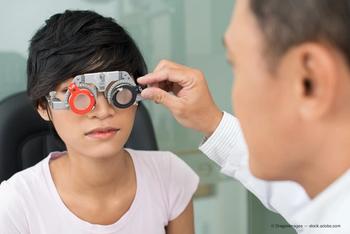
In a poster presented at the Association for Research in Vision and Ophthalmology’s 2022 annual meeting in Denver, Eva Chamorro, PhD, MSc, points out that myopia control spectacle lenses affect the diurnal rhythms in the AL in young adult human and produced a small short-term increase in the AL that varies in intensity and time interval for each of the 3 studied lenses.
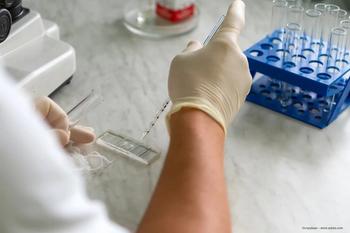
Investigators from the Karolinska Institutet and St. Erik Eye Hospital, Stockholm, Sweden, reported that they have developed a prognostic test, referred to as serUM, that they believe is a strong predictor of metastasis of uveal melanoma.

Christina Herrspiegel, MD, and colleagues from the Karolinska Institute and St. Erik Eye Hospital, Stockholm, Sweden, reported that they have developed a prognostic test, referred to as serUM, that they believe is a strong predictor of metastasis of uveal melanoma.

Eva Chamorro, PhD, MSc, points out that myopia control spectacle lenses affect the diurnal rhythms in the AL in young adult human and produced a small short-term increase in the AL that varies in intensity and time interval for each of the 3 studied lenses.
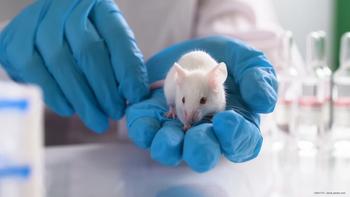
THR-687 is currently being evaluated in a phase 2 clinical trial in patients with DME. The first data from the dose-optimization study is expected to be released in the first half of 2022.

THR-687 is currently being evaluated in a phase 2 clinical trial in patients with DME. The first data from the dose-optimization study is expected to be released in the first half of 2022.

Mike Watson, Vice President of OraNet, unpacks some of the most pressing challenges to clinical research in today’s climate.
Mike Watson, Vice President of OraNet, unpacks some of the most pressing challenges to clinical research in today’s climate.
Mike Watson, Vice President of OraNet, unpacks some of the most pressing challenges to clinical research in today’s climate.

The study found no association between treatment and the risk of chronic kidney disease or end-stage renal disease.
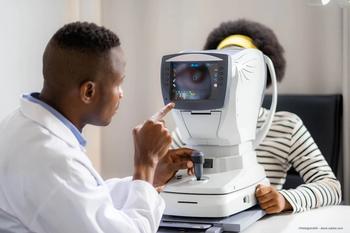
In a poster presented at the Association for Research in Vision and Ophthalmology’s 2022 annual meeting, Dr Osama Ibrahim Hirayama and colleagues offered results that demonstrating that anisometropia and astigmatic error were greater among the patients with high myopia compared with the other groups. Compared with the subjects with no myopia, those with high myopia reported significantly more dryness, less photophobia, and less pain.

Daniel Choi, MD, and colleagues from the University of Pennsylvania, Philadelphia, investigated the effect of anti-vascular endothelial growth factor (VEGF) therapies in patients.

During a presentation at the Association for Research in Vision and Ophthalmology’s 2022 annual meeting in Denver, Yuichi Hori, MD, PhD, and colleagues found that taping the top border of a surgical mask to a clinicians’ skin reduces the potential for ocular surface damage resulting from expirations of air reaching the ocular surface during the COVID-19 pandemic.

During a presentation at the Association for Research in Vision and Ophthalmology’s 2022 annual meeting in Denver, Yuichi Hori, MD, PhD, and colleagues found that taping the top border of a surgical mask to a clinicians’ skin reduces the potential for ocular surface damage resulting from expirations of air reaching the ocular surface during the COVID-19 pandemic.

The study found no association between treatment and the risk of chronic kidney disease or end-stage renal disease.

In a poster presented at the Association for Research in Vision and Ophthalmology’s 2022 annual meeting in Denver, Osama Ibrahim Hirayama, MD, and colleagues offered results that demonstrating that anisometropia and astigmatic error were greater among the patients with high myopia compared with the other groups. Compared with the subjects with no myopia, those with high myopia reported significantly more dryness, less photophobia, and less pain.