




Technology
Latest News


Orbis International, NIDEK teaming up to scale up artificial intelligence eye sceenings in Vietnam
By David Hutton
Advertisement
Video Series

CME Content












Advertisement

News
eSight’s medical equipment enhances vision for individuals with over 20 distinct ocular disorders, frequently enabling users to attain 20/20 vision. The Consumer Electronics Show runs January 9-12 in Las Vegas.
In this podcast, Neda Shamie, MD, and Peter J. McDonnell, MD, discuss real-world experiences, patient choices, and the nuances of integrating femtosecond laser-assisted cataract surgery into practice, offering insights into the latest developments in ophthalmology.

A team of researchers from Tokyo Medical and Dental University have developed models based on machine learning that predict long-term visual acuity in patients with high myopia, one of the top three causes of irreversible blindness in many regions of the world.
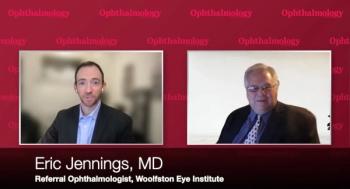
Eric Jennings, MD, from Woolfson Eye Institute, discusses the SMARTCataract cloud-based app from Alcon and its implementation where he practices with David Hutton, Managing Editor, Ophthalmology Times.
In this episode, Neda Shamie, MD, and Peter J. McDonnell, MD, discuss the benefits and challenges of implementing the many options from the premium lens pipeline into practice, emphasizing the importance of customization based on patients' lifestyles and expectations, while also addressing concerns and sharing their positive experiences with the evolving technology in the field.

Additional testing is needed to ensure accuracy across different groups.

Moving toward eliminating drug and chemical safety testing in animals.

The augmented reality headset compensates for central vision loss to enhance the visual clarity of patients with age-related macular degeneration and other conditions such as Stargardt disease.
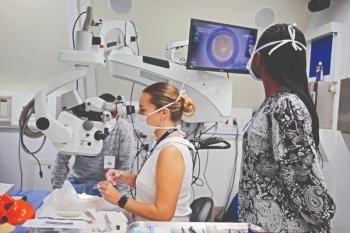
Orbis advances cataract surgery training in low-resource areas with technology

A study of the course was conducted in Vietnam, and showed participant scores doubled following the online course, to a level like local ophthalmologists.
Peter J. McDonnell, MD, and Neda Shamie, MD, consider the transformative landscape of cataract surgery, highlighting the impact of small-aperture IOL technology. The conversation delves into its potential benefits, influence on the market, and the evolving role of cataract surgeons in guiding patients through advanced options.

Jayashree Kalpathy-Cramer, PhD, was granted $300,000 from the Michael J Fox Foundation to examine key data put together at the Sue Anschutz-Rodgers Eye Center with artificial intelligence in an effort to identify biomarkers of Parkinson’s disease.
Anthony Wallace, BS, MBA, vice president and general manager of the surgical business at Bausch + Lomb North America spoke with Ophthalmology Times about 3 new technologies the company launched at this year's American Academy of Ophthalmology meeting.

The general public should use caution when reading AI-generated medical information as it may be inaccurate, misleading, or biased.

The latest innovations are in focus at the 127th annual meeting of the American Academy of Ophthalmology, being held at the Moscone Center in San Francisco.
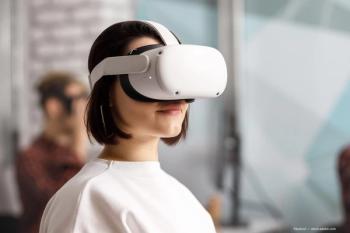
The collaboration, fueled by a $5 million donation from Knights Templar Eye Foundation (KTEF), will introduce a free and open VR simulation program for ophthalmologists and trainees worldwide.
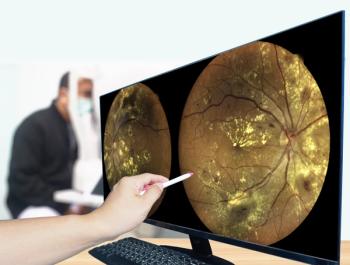
News
The company’s AI CLAIR technology platform has received FDA breakthrough device status, and if cleared by the FDA will deliver real-time cardiovascular disease risk assessments through routine eye exams.

Developing technology may offer marked improvements in surgical precision

Physicians explore how other specialties adopted and integrated remote monitoring into plans.

The collaboration will drive an effort to develop predictive analytics to enable early detection of eye diseases and more personalized treatments to prevent vision loss for people with serious eye diseases.


The MyopiaX-1 trial studies MyopiaX, a smartphone application that aims to slow the progression of myopia, or nearsightedness, in children and adolescents.
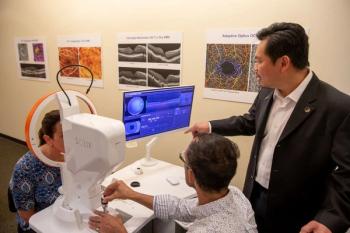
The Lasker-DeBakey Clinical Medical Research Award, dubbed ‘America’s Nobel,’ recognizes the wide use of optical coherence tomography to manage eye disease, prevent blindness.
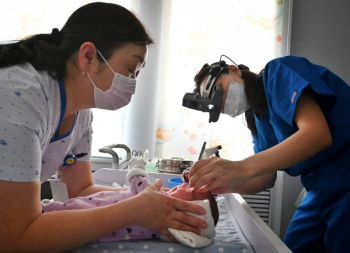
According to the companies, the partnership will roll out a proprietary system that has earned FDA breakthrough designation, one of the few ophthalmic devices to achieve this status in almost a decade.

Earlier this year, the US Centers for Disease Control and Prevention issued an advisory, sounding the alarm for an outbreak of a drug resistant strain of the bacteria Pseudomonas aeruginosa that was connected to the use of artificial tears.
Advertisement
Advertisement
Trending on Eye Care Network - Ophthalmology Times
1
One day, three approvals: FDA expands options for ocular redness, thyroid eye disease, and presbyopia
2
Matching artificial tears to dry eye phenotype: a Q&A with Omur Ucakhan, MD
3
Women’s Health: Identifying dry eye in rheumatoid arthritis can make all the difference
4
Diabetic macular edema: an inflammatory disease in focus
5