






Retina
Latest News
Advertisement
Video Series

CME Content












Advertisement

In a study, a team of UCLA investigators detail a deep-learning model pre-trained on 2D scans that accurately predicts disease-risk factors from 3D medical-scan modalities.

Marketed as Triesence, it is a preservative-free synthetic corticosteroid that is approved by the FDA for visualization during vitrectomy and for the treatment of ocular inflammatory conditions that are unresponsive to topical corticosteroids.

The company’s flagship product is Reti-CVD, an AI diagnostic solution that autonomously assesses future cardiovascular disease risk using a retina scan.

Digital exclusive article on red-blue-green ultrawidefield (UWF) imaging
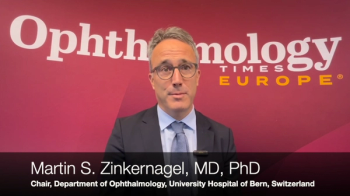
The general secretary of the European Society of Retina Specialists (EURETINA) says the future of AI is here

Dvey-Aharon is an internationally known AI expert and the inventor of AEYE-DS.
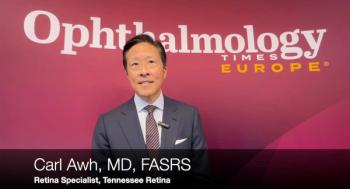
Carl Awh, MD, FASRS, spoke about the presence of members of the American Society of Retina Specialists (ASRS) attending the EURETINA meeting and the value of the international community of retina clinicians connecting at meetings around the globe.

Zhang’s journey as the first retina optometrist in Colorado


Retina is a rapidly advancing field with promising research, technology, and treatment areas. Two stand out as particularly exciting.

Researchers from NYU Langone published a study reporting on the eye's functioning, without sight but offering hope for the future.

The contract research organization and technology solution is for the execution of ophthalmology clinical trials.

APP13007, according to the company, is the first product developed using Formosa’s proprietary APNT nanoparticle formulation platform.

This certification covers AI based regulatory requirements for the company's platform for AI imaging and diagnostic tools.

Australian researchers have found that clinical registries may be an untapped font of information for artificial intelligence.

The Australian Society of Ophthalmologists hosted its inaugural Eye Surgery Showcase, where participants learned how ophthalmologists and the medical technology industry are working together to save the sight of Australians.

Researchers conducted a retrospective cohort study that included adult patients 18 years and older who underwent primary repair of uncomplicated rhegmatogenous retinal detachment at the Wilmer Eye Institute from January 2008 to December 2018.

Researchers from the Shanghai Jiao Tong University School of Medicine developed a deep learning–based model for early identification of myopia, strabismus, and ptosis using 1419 facial photographs from 476 individuals.
Alan Franklin, MD, PhD, FASRS, spoke about his presentation, "Intraoperative Fluorescein Angiography Reduces the Rate of Postoperative Vitreous Hemorrhage" at this year's American Society of Retina Specialists (ASRS) meeting in Stockholm, Sweden.
Nikoloz Labauri, MD, FVRS, founder of DAVINCI Eye Clinic in Tbilisi, Georgia, discusses his presentation, "Suspensory Macular Buckling for Myopic Traction Maculopathy" at this year's American Society of Retina Specialists (ASRS) meeting in Stockholm, Sweden.

Lens feathering resulting from intraocular gas can interfere with the visualization needed to perform posterior segment surgery
John T. Thompson, MD, spoke about his presentation, "Long-Term Results of Macular Hole Surgery With Long-Acting Gas Tamponade and Internal Limiting Membrane Peeling" at the annual ASRS meeting in Stockholm, Sweden.
Eleonora Lad, MD, PhD, spoke about her presentation, "Multiwavelength photobiomodulation significantly reduces risk for vision loss and onset of geographic atrophy in dry age-related macular degeneration" at this year's American Society of Retina Specialists (ASRS) meeting in Stockholm, Sweden.
Chase Ludwig, MD, shared an overview of his presentation, which covered real-impact of vitrectomy surgery on the progression of AMD at the annual ASRS meeting in Stockholm, Sweden.
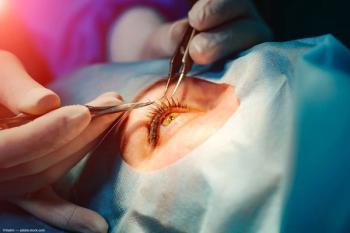
Novice surgeons affected more than seasoned surgeons
Advertisement
Advertisement
Trending on Eye Care Network - Ophthalmology Times
1
FDA approves phentolamine ophthalmic solution 0.75% (Ryzumvi) for presbyopia
2
Alvotech files first known aflibercept 8 mg biosimilar with EMA
3
Uveitis: a practical guide for ophthalmologists and optometrists
4
AAO 2026: How to become an ocular pain detective in dry eye
5