



Interventional Glaucoma
Latest News

Advertisement
Video Series


CME Content












Advertisement

According to the company, a study shows the non-implantable minimally invasive glaucoma surgery effectively reduces IOP and reduces need for IOP-lowering medications in patients diagnosed with open-angle glaucoma.

According to Johns Hopkins Medicine researchers, as little as $65 per year appears to influence practitioners, making them up to twice as likely to prescribe the companies’ brand name eyedrops for glaucoma instead of cheaper generic versions.

According to a new study from New York Eye and Ear Infirmary of Mount Sinai, a new, non-invasive ocular imaging method may be able to detect an early indicator of glaucoma in time to prevent disease progression and vision loss.
Flavoprotein fluorescence could serve as a new biomarker, according to a Mount Sinai study.

The doctors will join the Cataract and Primary Eye Care, Glaucoma, and Retina Services.

Bausch + Lomb has made an equity investment in Sanoculis and has entered into an exclusive European distribution agreement for MIMS minimally invasive surgical procedure.
Mount Sinai study could lead to earlier and increased screening for this population to prevent blindness.

Janet B. Serle, MD, discusses the pros and cons of various treatment options.
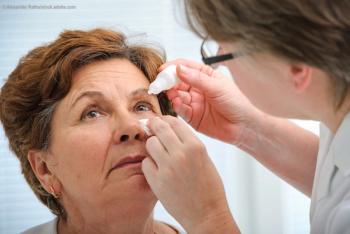
A novel eye drop under development may provide neuroprotection to the retinal ganglion cells.
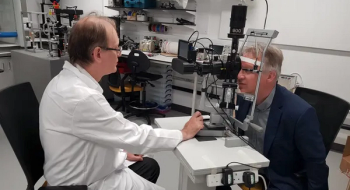
Researchers at the University of Strathclyde have developed an affordable device which takes 3D images and could shift the landscape of eye screening and treatment around the world.

The program — entitled “Pumping Adrenaline!” — brings viewers myriad challenging cases, intraoperative complications, and complex problems following cataract surgery.
The University of Oklahoma Health Sciences Center has received an unrestricted grant from Research to Prevent Blindness for $575,000 over 5 years to support eye research conducted by the Department of Ophthalmology.

Ehsan Sadri, MD FACS, A minimally invasive glaucoma surgery specialist discusses impressions and key take away points from patient case.
Ehsan Sadri, MD FACS reviews the case of a 67-year-old white female with open angle glaucoma and how she benefits from minimally invasive glaucoma surgery.
A minimally invasive glaucoma surgery specialist discusses impressions and key take away points from patient case and how minimally invasive glaucoma surgery has changed the landscape of open angle glaucoma.
Ehsan Sadri, MD, FACS, reviews the case of a 58-year-old male with open angle glaucoma utilizing minimally invasive glaucoma surgery procedure.

The lower energy applications and slower sweep speeds offer marked IOP reductions in patients.

Researchers discover glaucoma and chronic kidney disease have more in common than what meets the eye
A team of investigators from the Yong Loo Lin School of Medicine at the National University of Singapore has found that there is a bidirectional association between chronic kidney disease and glaucoma.
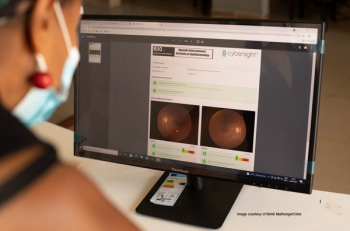
The research from eye care nonprofit Orbis International focuses on diabetic retinopathy in Rwanda, where associated vision complications from diabetes are growing.

The research is the result of a national collaboration led by investigators from the Centre for Eye Research Australia at the University of Melbourne and University of Tasmania and the Garvan Institute of Medical Research.
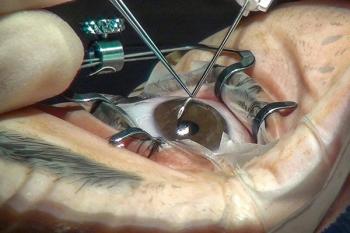
According to the company, no safety concerns with corneal endothelial health reported across all 3 trials, and the device delivered consistent results up to two-year follow-up in patients across Central and South America, Asia and Europe.
Automated 360-degree goniophotography seems to have simplified screening and diagnosis of glaucoma.

Presented at ARVO 2022, research from Mass Eye and Ear hopes to open a new avenue for therapies that are for helping treat patients that develop primary open angle glaucoma.
Investigators find the recognition could improve surveillance of the disease.
Advertisement
Advertisement
Trending on Eye Care Network - Ophthalmology Times
1
Brepocitinib meets all Phase 3 end points in noninfectious uveitis
2
Myopia control using spectacle lenses with highly aspherical lenslets
3
Demodex blepharitis: Diagnosis, treatment response, and recurrence
4
CHMP recommends ranibizumab biosimilar Fovlussea for retinal disease
5