




Interventional Glaucoma
Latest News

Advertisement
Video Series





CME Content












Advertisement

Glaukos Corp's iDose TR has received FDA approval for the reduction of IOP in patients with ocular hypertension (OHT) or open-angle glaucoma (OAG) following a new drug application (NDA) submission.

A Q-switched, 532 nm-wavelength, frequency-doubled Nd:YAG laser, the Eagle is intended for use in performing selective laser trabeculoplasty.
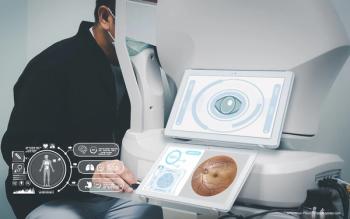
The system hopes to use optical coherence tomography (OCT), while at the same time, leverage air and ultrasonic pulses to excite the mechanical waves in the cornea, enabling the detection of normotensive glaucoma.

MACs categorize goniotomy, canaloplasty, cyclophotocoagulation as experimental; glaucoma specialists speak out.

Analisa Arosemena, MD, underscores the importance of year-round glaucoma control through extended-release medications and laser treatments at EyeCon 2023.

Oluwatosin U. Smith, MD, and Peter J. McDonnell, MD, discuss their experience at EyeCon 2023, highlighting the latest updates in retina, cataract and refractive surgery, and the growing epidemic of myopia worldwide.

The Phase 2 study is evaluating the efficacy and safety using 2 concentrations of SBI-100 OE vs. placebo, dosing twice a day for 14 days.

A study of the course was conducted in Vietnam, and showed participant scores doubled following the online course, to a level like local ophthalmologists.

In the study, researchers changed the microenvironment in the eye in a way that enabled them to take stem cells from blood and turn them into retinal ganglion cells that were capable of migrating and surviving into the eye’s retina.

Approach to lowering IOP reduces medication burden without risking graft rejection.

TRS01 has the potential to be the first-line treatment option for non-infectious uveitis and specifically uveitic glaucoma, according to the company.

First-in-human feasibility study.
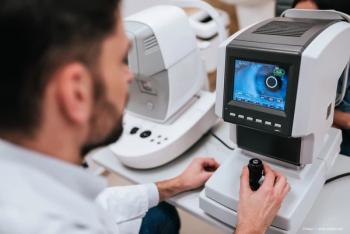
AMDX-2011P aims to revolutionize glaucoma detection with micron-level amyloid beta tracking.

Ab-interno implantation of a supraciliary allograft bio-tissue successfully reduced intraocular pressure (IOP) with comparable safety to other minimally invasive glaucoma surgical (MIGS) procedures

Eight patients were able to receive a second implant at 21 weeks, with no product related adverse effects.

More testing is needed to ensure accuracy across different groups

News
According to the company, its Phase I/II trial is being initiated to investigate SpyGlass platform for the long-term delivery of bimatoprost in patients with glaucoma and visually significant cataracts.

News
According to the company, its ViaLase Laser combines the precision of femtosecond laser technology and the accuracy of micron-level image guidance to deliver the world's first femtosecond laser image-guided high-precision trabeculotomy.

News
According to Stuart, the agreement will grant Glaukos exclusive worldwide rights to develop and commercialize the company’s ST-113 drug candidate for neuroprotection in glaucoma.

Thomas V. Johnson, MD, PhD, notes the value of home monitoring lies in its ability to provide real-time insights into IOP fluctuations, enabling more precise glaucoma care and a deeper understanding of the patient's risk for vision loss.

Results showed that the PAUL Glaucoma Implant is an effective glaucoma drainage device that provides effective IOP lowering, similar to that achieved with the Baerveldt Glaucoma Implant, but with lower rates of complications

The approach to lowering intraocular pressure reduces medication burden without risking graft rejection

News
Glaucoma specialist Joel Solano, MD, connects patients diagnosed with glaucoma with digital health solutions that can help prevent blindness and vision loss.

Preservative-free Iyuzeh, launched more than 10 years ago, currently is available in 46 countries, mostly under the brand name Monoprost, with about 1.5 million patients treated monthly, according to the company.
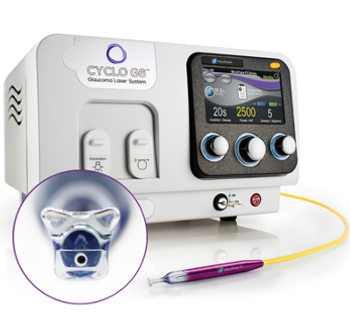
Highlighting the benefits of Iridex's updated P3 Probe and Cyclo G6® Laser software for MicroPulse® transscleral laser therapy. The redesigned probe improves ergonomics and visibility, while the user-friendly software ensures precise, reproducible glaucoma treatments.
Advertisement
Advertisement
Trending on Eye Care Network - Ophthalmology Times
1
Brepocitinib meets all Phase 3 end points in noninfectious uveitis
2
Myopia control using spectacle lenses with highly aspherical lenslets
3
Demodex blepharitis: Diagnosis, treatment response, and recurrence
4
CHMP recommends ranibizumab biosimilar Fovlussea for retinal disease
5