


Conference Coverage
Trending on the Eye Care Network
1
Brepocitinib meets all Phase 3 end points in noninfectious uveitis
2
Matching artificial tears to dry eye phenotype: a Q&A with Omur Ucakhan, MD
3
Demodex blepharitis: Diagnosis, treatment response, and recurrence
4
SpyGlass Pharma's BIM-IOL System holds 37% IOP reduction at 4 years in first-in-human trial
5
Myopia control using spectacle lenses with highly aspherical lenslets
Latest News

Oct 22, 2026 | Commentary
Matching artificial tears to dry eye phenotype: a Q&A with Omur Ucakhan, MD

CHMP recommends ranibizumab biosimilar Fovlussea for retinal disease
Oct 20, 2026

Varicose veins linked to central serous chorioretinopathy in large cohort study
Oct 17, 2026

Alvotech files first known aflibercept 8 mg biosimilar with EMA
Oct 15, 2026

Real-world VOYAGER data on faricimab in nAMD, DME, RVO at EURETINA 2026
Oct 07, 2026






Advertisement
Shorts

1:04
Subcutaneous option for TED
8 hours ago
0:45
EURETINA 2026: Predicting treatment and prognosis in central serous chorioretinopathy
18 days ago
1:04
EURTINA 2026: Mapping patients with inherited retinal disease to unlock new therapies
19 days ago

0:54
Euretina 2026: AI's biggest potential lies in retinal imaging, not surgery (yet)
22 days ago
0:46
ESCRS 2026: Why aceclidine drops are a task-specific solution
a month ago
1:09
ESCRS 2026: Fitting light therapy into the cataract surgery workflow
a month ago
0:56
ESCRS 2026: Why retinal measurements can be wrong
a month ago

0:39
ESCRS 2026: What makes a good candidate for aceclidine drops?
a month ago
1:03
Intra-Operative OCT During Glaucoma Surgeries
a month ago
0:50
Building a low-level light therapy workflow
a month ago
Digital Edition
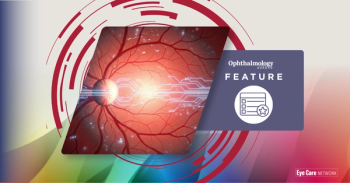
Ophthalmology Times Europe
New research covers a 3D OCT foundation model, an OCTA biomarker review and offline smartphone screening for three retinal diseases.

Ophthalmology Times Europe
A gamified program may speed the brain’s adjustment, new data suggest.
Ophthalmology Times Europe
João Pedro Marques, MD, PhD, on how systematic reanalysis moved a cohort's solved rate from 59.4% to 70.1% and what it means for gene therapy eligibility
Ophthalmology Times Europe
Matias Iglicki, MD, PhD, on patient selection, technical pitfalls and why symmetry decides outcomes in flanged vs sutured fixation

Ophthalmology Times Europe
Waste, cost and carbon are converging to reshape how cataract centres choose instruments.

Ophthalmology Times Europe
Why AI-driven functional imaging could change how clinicians assess and treat retinal disease
Ophthalmology Times Europe
David E. I. Pyott, CBE, MD(Hon), MBA, MA, discusses expanding subspecialty training and internationally recognized credentials in underserved regions.

Ophthalmology Times Europe
Charlie Zhang, MD, reflects on the rising incidence, diagnostic challenges and multidisciplinary management of immune checkpoint inhibitor–associated uveitis

Ophthalmology Times Europe
AI models predicting retinal function from OCT could transform geographic atrophy assessment in clinical care and trials

Ophthalmology Times Europe
Two cases highlight the diagnostic challenges of Demodex blepharitis and underscore the unmet need for approved targeted therapies in the United Kingdom.
Podcasts



Continuing Medical Education













Advertisement
All News
Advertisement
At EURETINA 2026, Roger Goldberg, MD, MBA, explains why EYP-1901 missed LUGANO's primary endpoint despite matched anatomy, clean safety and a 42% cut in treatment burden.
Ashish Sharma, MD, on what real-world data show about switching and long-term outcomes with retinal biosimilars.
Serena Salvatore, MD, discusses the retinal laser training gap, persistent laser myths, simulation and practical advice for safer laser at EURETINA 2026.
Ester Carreño, MD, PhD, explains how to tell retinitis pigmentosa from uveitis and why genetic confirmation now matters more.
Women’s systemic and ocular health associated with pregnancy is a focus at EURETINA 2026 in Vienna.
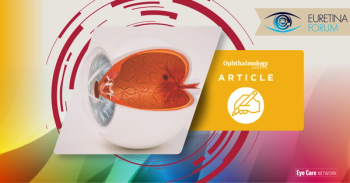
Three EURETINA 2026 e-posters examine OCT/OCTA biomarkers and real-world switching to faricimab or aflibercept 8 mg in nAMD.
Three studies use OCT and OCTA to track AMD treatment response, flag diabetic retinopathy before oedema and confirm ocular toxoplasmosis.

Inherited metabolic diseases affect the retina even before the systemic diagnosis is established.

An industry symposium on intravitreal 4D-150 and a course on subretinal delivery lead gene therapy content at EURETINA 2026, alongside IRD courses and trial readouts.

Alessandro Arrigo, MD, describes an early-stage method that uses blue light autofluorescence imaging to grade cataracts objectively. He explains why a reproducible score could help with surgeon selection, IOL power calculation, and retinal image quantification.
Advertisement

EURETINA President Nicole Eter, MD, picks the sessions busy clinicians should follow at the 26th EURETINA Congress in Vienna, from durability data to AI. She also explains why early referral is still the most effective retina treatment.
Helena Noguera Nuñez, MD, discusses a prospective study of the TECNIS Odyssey IOL from ESCRS 2026.

Learn who benefits most from Encelto for MacTel type 2, its long-lasting CNTF implant results, and key safety counseling points.

Sessions at the 1-4 October Vienna congress address GA patient selection, AI-based functional prediction, imaging biomarkers, and surgical intervention.
NESTS survey reveals patients often normalize dry eye symptoms, delaying care despite major impacts on daily life.
Advertisement
Advertisement