


Conference Coverage
about 7 hours ago
EURETINA 2026: Prof. Anat Loewenstein on what to expect in ViennaTrending on the Eye Care Network
1
RCA releases first State of Retina Care report
2
OT Roundup ep. 1: ADHD's eye link, MOGENRY's BLA, and myopia news
3
Eichenbaum Acorns: A passion for retina science with Andrea Gibson, PhD, and Erin C. Henry, PhD
4
FAQ: What retina specialists need to know about the MOGENRY (MCO-010) BLA acceptance
5
How screen time and eyelid health affect dry eye risk
Latest News

Sep 19, 2026 | News
Vienna calling: Inside the 26th EURETINA Congress
RCA releases first State of Retina Care report
Sep 18, 2026
FAQ: What retina specialists need to know about the MOGENRY (MCO-010) BLA acceptance
Sep 18, 2026

Four years, 500 cases: The case for office-based retina surgery
Sep 16, 2026
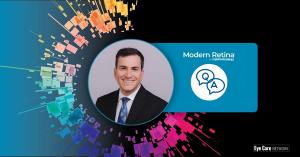
A first for advanced RP: Bakall on the MOGENRY BLA acceptance and what an in-office option would mean
Sep 15, 2026







Advertisement
Shorts
0:56
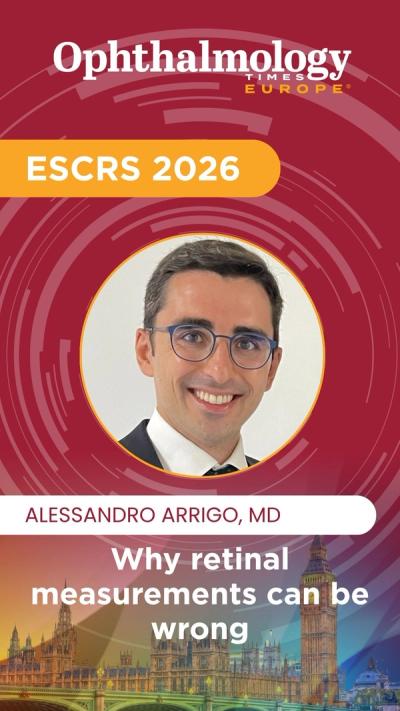
ESCRS 2026: Why retinal measurements can be wrong
3 days ago

0:39
ESCRS 2026: What makes a good candidate for aceclidine drops?
5 days ago
1:03
Intra-Operative OCT During Glaucoma Surgeries
7 days ago

0:50
Building a low-level light therapy workflow
8 days ago

1:08
AI's growing role in ophthalmology screening and outcomes analysis
9 days ago

0:40
Dr. Radhika Rampat: AI in practice today
10 days ago

1:35
Finding GA earlier in patients
11 days ago
0:59
EYP-1901 positioned as lower-burden option in DME treatment as phase 3 program completes enrollment
17 days ago

0:24
An unusual clinical trial design to test vision restoration in GA
18 days ago

0:59
The unmet need for long-lasting DME treatment
24 days ago
Digital Edition

Modern Retina
How this gene-agnostic optogenetic approach could fill a critical gap for advanced inherited retinal degeneration.

Modern Retina
Ultra-widefield imaging reveals early retinal risk in pediatric patients.
Modern Retina
SOL-1 results show intravitreal axitinib hydrogel delivered superior vision
maintenance and anatomic outcomes through 52 weeks.

Modern Retina
New pathways are reshaping the management of retinal disease.
Modern Retina
Imaging and biomarkers are driving earlier, more individualized GA treatment
Modern Retina
When no retina podcast was available, Jayanth Sridhar, MD, created one—and learned lessons about branding, bandwidth, and mentorship along the way.

Modern Retina
A trio of retina specialists recently reviewed the clinical benefits of aflibercept 8 mg, including its extended dosing intervals, improved patient satisfaction, and enhanced treatment outcomes for various conditions.
Modern Retina
Explore early MacTel diagnosis with OCT/FA, who qualifies for Encelto implant, and how costs, reimbursement, and surgery shape timely retina care.
Modern Retina
For Jordan M. Graff, MD, FACS, early adoption is about reigniting the thrill of discovery and navigating the rewards, risks, and realities of translating innovation into practice.

Podcasts

Continuing Medical Education








Advertisement
All News
Advertisement

The authors of a review of 16 gene therapy trials for inherited retinal diseases explain why the pediatric evidence base remains thin and argue that individual-level, age-stratified reporting is the change most needed before CRISPR-based editing reaches children.

Majda Hadziahmetovic, MD, on MacTel neovascular warning signs, urgent referral, and how Encelto reshapes screening.
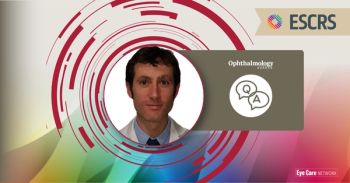
Mingo-Botín, MD, PhD, discusses ESCRS 2026 data on an EDOF IOL in post-LASIK eyes vs non-LASIK controls.

The 44th Congress of the ESCRS kicked off at ExCeL London with iNovation Day and the Opening Ceremony, setting the stage for a five-day programme.
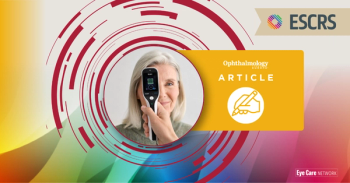
Handheld IC1000 pairs rebound tonometry with camera-guided alignment

The FDA accepted Nanoscope's BLA for MOGENRY (sonpiretigene isteparvovec, MC-010), a gene therapy for retinitis pigmentosa with severe vision loss, supported by RESTORE trial data showing sustained BCVA improvement.

Ahead of the 44th ESCRS Congress in London, a look at the presbyopia-correcting IOL, glaucoma and dry eye disease research on this year's scientific programme.
Dante Pieramici, MD, discusses the phase 3 COMO and CAPRI trials of EYP-1901 in diabetic macular edema and what 6-month dosing could mean for treatment burden.

Scaling telemedicine-based screening for retinopathy of prematurity in sub-Saharan Africa
ByArthur R. Brant, MD,Sarthak V. Shah, MD,Akwasi Ahmed, MD, MBA,Imoro Braimah, MD,Naana Wireko Brobby, MD,Kwabena Onwona-Agyeman, MD,Dominic Masonuo Bagbio, MD,Gilbert Bonsaana, MD,Samuel Bondzie, MD,Jacquelyn Adu, MD,Muniratu Alhassan, BS,Sadik T. Sherief, MD,Asrat Demptse, MD,Eyerusalem Haregewoyn, MD,Celina Mhina, MD,Martha Mkony, MD,Ahmad Al-Moujahed, MD, PhD,Ahmad Kunbaz, MD,Celine Chaaya, MD, MSc,Cindy S. Zhao, MD, MBA,Geoffrey C. Tabin, MD,Nimesh A. Patel, MD,Darius M. Moshfeghi, MD
Zero Blind Babies uses wide-field retinal imaging and telemedicine to expand ROP screening across Ghana, Ethiopia, Tanzania, and Syria—screening 400 infants weekly at $56 per QALY—while stressing that local staff and complete-pathway systems remain essential.
Jay Chhablani, MD, on how MacTel eyes turn neovascular, when to refer, and what Encelto means for treatment.
Advertisement
Retina specialist David A. Eichenbaum, MD, FASRS, discusses KSI-101 (tabirafusp alfa), a dual IL-6/VEGF-blocking biologic in the Phase 3 PEAK trial, as a potential steroid-sparing, first-line therapy for uveitic macular edema.

A priority review in Stargardt disease, two pivotal-trial milestones, an emerging bispecific for wet AMD, and new diagnostic guidance defined a busy August for retina.
Researchers from China and Singapore found that the macular microvasculature is altered as early as the pre-diabetic stage of the disease. The findings suggest that the status of the choriocapillaris can be used to monitor early metabolic disease.

Kodiak fully enrolled the first pivotal cohort of its phase 3 PEAK trial testing KSI-101 for inflammatory macular edema, with topline data expected December 2026.
Noah G. Banoub discusses a study finding MacTel2 misdiagnosed in 25.5% of cases, common mimics, misleading imaging, and Encelto's approval.
Advertisement
Advertisement