
Scientists at the Doheny Eye Institute, in collaboration with UCLA chemists, demonstrate how a single gene mutation in an enzyme complex known to produce the energy required by cells causes a sudden, blinding disease.
Scientists at the Doheny Eye Institute, in collaboration with UCLA chemists, demonstrate how a single gene mutation in an enzyme complex known to produce the energy required by cells causes a sudden, blinding disease.

John Bertrand, CEO of Digital Diagnostics sits down with Managing Editor David Hutton of Ophthalmology Times to talk about the importance of early screening for diabetic retinopathy as well as other diagnostic options for National Save Your Vision month.
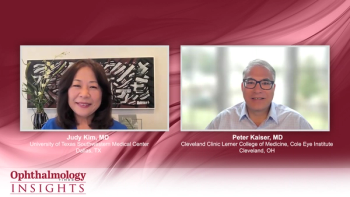
Judy Kim, MD and Peter Kaiser, MD discuss the use of biosimilars and the potential introduction of biosimilar aflibercept for treating retinal diseases. Experts discuss their preferences for specific drugs and highlight the evolving landscape, anticipating challenges in drug selection and emphasizing the need for collaboration between retinal specialists and insurance companies to optimize patient care.
In this insightful discussion on changing therapeutic approaches in neovascular age-related macular degeneration (nAMD) and diabetic macular edema (DME), Judy Kim, MD and Peter Kaiser, MD address barriers like step therapy and the impact of insurance-guided choices on treatment outcomes. The conversation emphasizes the need for a personalized approach, citing clinical trial data while acknowledging the challenges of aligning real-world practices with stringent trial protocols.
The retina specialist shares advice for the clinician-scientists of a digital-centric future
Jeff Todd, president and CEO of Prevent Blindness, and astrophotographer Jon Carmichael sat down with David Hutton of Ophthalmology Times to talk about how ophthalmologists can help make sure patients are viewing the eclipse safely as well as proper ways to view/photograph the event without damaging your eyes or equipment.

Filomena Ribeiro, MD, PhD, FEBO, discusses the crucial role of mentors – and where to find them

Sydney Tyson, MD, MPH concludes this series discussing common challenges that patients may face following IOLs implantation, such as visual halos, glare, or low contrast, and the means available to reduce these artifacts.

Nicole Fram, MD concludes this series on the potential of decentration and subsequent IOLs misalignment, highlighting zero and negative spherical aberration lens options for these unique cases.

Sydney Tyson, MD, MPH discusses various types of aspheric IOLs that cater to a patient’s lifestyle, highlighting recent developments in the therapeutic landscape like the CT Lucia 621P IOL.

Nicole Fram, MD discusses the methods for assessing a patients’ ocular anatomy for IOLs, such as corneal topography, ray tracing, and optical biometers.

Sydney Tyson, MD, MPH discusses the methods of measuring ocular anatomy, highlighting the importance of optimizing the ocular surface for accurate data.

Seth Pantanelli, MD discusses the landscape of monofocal aspheric intraocular lenses (IOLs) and how he caters treatment options to each patient.

Nicole Fram, MD discusses unique ocular anatomies, such as keratoconus or high myopia, that require specialized intraocular lens (IOLs) selection, highlighting the risks associated with IOLs calculation.

Seth Pantanelli, MD discusses the differences between traditional monofocal intraocular lenses (IOLs) and aspheric options.
Andrew G. Iwach, MD, recounts two personal life experiences that underscore the significance of patient-centered care in glaucoma management.
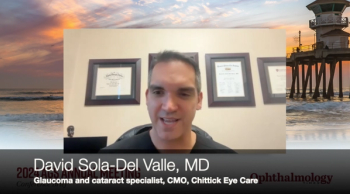
David Sola-Del Valle, MD, sat down with David Hutton of Ophthalmology Times to discuss his talk at the annual American Glaucoma Society meeting held in Huntington Beach, about the importance of bridging the language barrier in patients who may not be fluent in English.
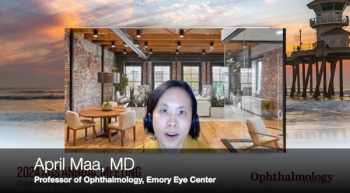
April Maa, MD, sat down with David Hutton of Ophthalmology Times to discuss her presentation at the annual American Glaucoma Society meeting held in Huntington Beach, about tips and tricks for implementing telehealth into ophthalmology.
Michael Greenwood, MD, discusses the safety of laser refractive surgery for patients at high risk for glaucoma, focusing on the need for thorough pre-surgery assessment, careful monitoring of eye pressure during and after the procedure, and awareness of prolonged steroid use following PRK.
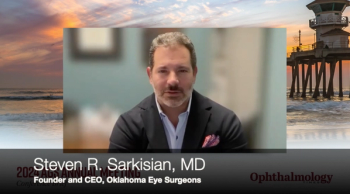
Steven R. Sarkisian, MD, sat down with David Hutton of Ophthalmology Times to discuss his poster about the Travoprost intraocular implant in phakic eyes from the American Glaucoma Society meeting held in Huntington Beach
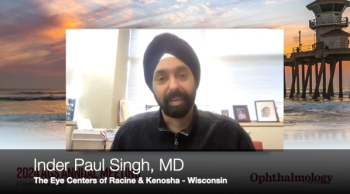
I. Paul Singh, MD, sat down with David Hutton of Ophthalmology Times to discuss his poster "Travoprost Intraocular Implant Demonstrates Efficacy in Diverse Subpopulations of OAG and OHT Subjects," from the American Glaucoma Society meeting held in Huntington Beach
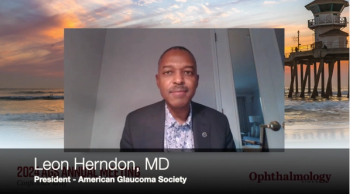
Leon Herndon, MD, President of the American Glaucoma Society, sat down with David Hutton of Ophthalmology Times to discuss the AGS meeting held in Huntington Beach and what attendees can expect as well as new and exciting information to come from the meeting.
Bonnie An Henderson, MD, leads HelpMeSee to provide advanced cataract surgery training globally, emphasizing humanitarian aid and innovative simulation technology.
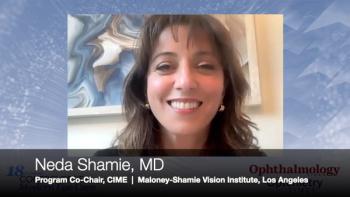
Neda Shamie, MD, highlights the origins and growth of CIME and what makes it unique from other meetings.

Sruthi Arepalli, MD, discusses the case of a patient with syphilis and sheds light on the complexities of diagnosing a masquerading syndrome.
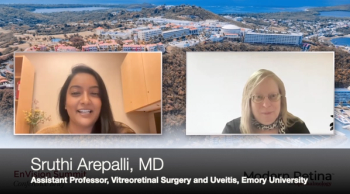
Sruthi Arepalli, MD, discusses the case of a patient with syphilis and sheds light on the complexities of diagnosing a masquerading syndrome.

Marsha Link, PhD, uses three words—Imagine, Prepare, and Optimize—to encourage women to assess their current leadership journey, strategically plan for advancement, and explore new opportunities for growth and impact in vision care.

Marsha Link, PhD, uses three words—Imagine, Prepare, and Optimize—to encourage women to assess their current leadership journey, strategically plan for advancement, and explore new opportunities for growth and impact in vision care.