

Glaucoma management is shifting toward earlier, drop-sparing interventions using sustained drug delivery and advanced laser technologies that improve outcomes and quality of life for both patients and physicians.

Glaucoma management is shifting toward earlier, drop-sparing interventions using sustained drug delivery and advanced laser technologies that improve outcomes and quality of life for both patients and physicians.

Exploring how oral sedation and office-based surgery can enhance efficiency and patient experience
A one-drop, low dose atropine study assesses accommodative amplitude and dynamics, with clinically applicable findings.
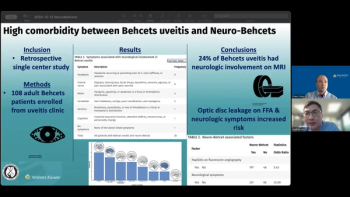
In cases with optic nerve hyperfluorescence or neurologic symptoms, prompt neuroimaging is warranted to rule out neuro-Behcet disease and guide multidisciplinary management.

Katherine Talcott, MD, a retina specialist at Cleveland Clinic, presented findings on EYP-1901 in the phase 2 DAVIO study.
The trial will assess allogeneic retinal pigment epithelium cells in the treatment of geographic atrophy.
The first SightLine meeting, held pre-ASCRS, reveals insights on physician-industry relationships, mentorship opportunities, and the practical applications of AI in healthcare.

Outcomes from high myopia LASIK using the Teneo laser platform demonstrate strong visual stability and patient satisfaction, with reduced dysphotopsias and minimal reliance on cycloplegia or nomograms.
Researchers stratified a dataset of more than 100 patients in an emergency department to see which patients may be indicated for retinal artery occlusions.


Wendy Lee, MD, MS, shares how she integrates aesthetic and functional care in oculoplastics.
At the ARVO 2025 Annual Meeting in Salt Lake City, Utah, Nimesh Patel, MD, presented on the LUCIA and LUGANO phase 3 pivotal trials for EYP-1901 against aflibercept for the treatment of wet macular degeneration.
At the ARVO 2025 meeting in Salt Lake City, Utah, Cameron Cummings presented a poster on how retinal microvascular imaging metrics may show sex-specific biomarkers for Parkinson's disease.
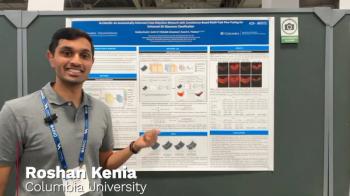
Roshan Kenia presented a poster on how AI-CNet3D enhances glaucoma classification using cross-attention networks while improving interpretability and performance in OCT scan analysis.

A machine learning model using treated astigmatism and other nuanced inputs can significantly improve the accuracy and personalization of arcuate keratotomy planning
The Virtual Eye Simulation Analyzer is an AI-driven digital twin of the human eye designed to model aging and personalize presbyopia treatment across the lifecycle.
Shehzad Batliwala, DO, known to his patients as Dr. Shehz, appeared on the ASCRS Foundation Symposium, where he discussed performing refractive surgery in low-resource, high-risk areas.

A novel vitrectomy device shows promising safety and efficacy in the targeted removal of symptomatic vitreous opacities in pseudophakic eyes

Researchers evaluate key measures for tracking disease progression in Usher syndrome type 2–related retinal degeneration
Lisa Nijm, MD, says preoperative osmolarity testing can help clinicians manage patient expectations and improve surgical results.

The retrospective study assessed corneal cross-linking complications at Wills Eye Hospital from 2018 to 2023.
Use of the LENSAR Ally femtosecond laser for arcuate incisions was associated with improved early visual outcomes and reduced need for postoperative adjustments in premium IOL patients.


Patricia Buehler, MD, MPH, presented a poster and two patient films at the ASCRS annual meeting, focused on minimally-invasive blepharoplasty device Ziplyft (Osheru).

AI’s use in diagnostic tools, surgical guidance, and its ethical considerations in ophthalmology are transforming the field

A study reports minimal rotation and improved near vision following implantation of the Eyhance toric lens.
Sheng Lim, MD, FRCOphth, discussed the CONCEPT study, which compared standalone cataract surgery to cataract surgery with ECP.
Data show excellent refractive stability, strong visual acuity across all distances, and contrast sensitivity comparable to monofocal IOLs.