

Lloyd Williams, MD, PhD, discusses rising cataract blindness and low-cost surgery in conflict zones for World Sight Day.
Lloyd Williams, MD, PhD, discusses rising cataract blindness and low-cost surgery in conflict zones for World Sight Day.

Sharon Fekrat, MD, FACS, FASRS, discusses how retinal imaging fits into the diagnostic picture for CVI, TBI, and neurodegenerative disease.
Reconstructing periocular defects in children requires planning for growth, not just repair.

Majda Hadziahmetovic, MD, on MacTel neovascular warning signs, urgent referral, and how Encelto reshapes screening.
Antibiotic injection reduced endophthalmitis risk vs topical drops after cataract surgery, meta-analysis found.

At WIO 2026, Durga Borkar, MD, discussed DAVIO2 trial results for EYP-1901 in wet AMD.
A roundup of Ophthalmology Times' H1 2026 refractive coverage shows the field moving toward individualized care through adjustable lens outcomes, AI-assisted planning, and refined pediatric myopia monitoring.

Ahead of his November 10, 2026, start date, the incoming Duke ophthalmology chair shares his vision for research, training, and the integration of AI and data science.
Dry eye care pivots to root-cause diagnosis and personalized biologics/devices,
Cataract surgery becomes refractive: learn how IOL choices and preop counseling across distance, intermediate and near turn 20/20 into 20/happy.

Bedside OCT in preterm infants links retinal thickness to motor, cognition, and autism risk at age 2, hinting at earlier brain screening.

Changing demographics and increasing trial complexity present challenges and opportunities.
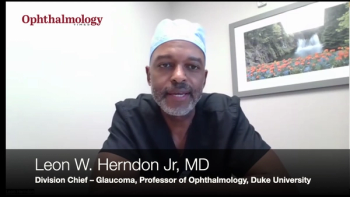
The procedure offers a renewed approach to suprachoroidal drainage, with potential for both combined and standalone glaucoma surgery.

GATHER2 met its prespecified primary endpoint of mean rate of growth (slope) in GA area at 12 months with statistical significance and a favorable safety profile. With this data in hand, Iveric Bio is working to submit a New Drug Application for Zimura to the FDA by the end of the first quarter of next year.

With clearer imaging and enhanced resolution, the new OCT approach could improve medical diagnostic imaging.