

A retrospective study identifies thin choroid as the key factor behind ungradable ultrawidefield green-light fundus autofluorescence images in geographic atrophy.
A retrospective study identifies thin choroid as the key factor behind ungradable ultrawidefield green-light fundus autofluorescence images in geographic atrophy.

After accounting for key factors like eye length, researchers found no meaningful differences in corneal biomechanics between primary open-angle and primary angle-closure glaucoma.

A case report describes image-guided surgical excision combined with adjunctive cryotherapy and a single anterior chamber methotrexate injection, with no recurrence at 10 months.

In part 2 of a 2-part Q&A, John Berdahl, MD, weighs in on AI-driven IOL power calculation in challenging eyes, best practices for reducing posterior capsule opacification, and how surgical mission work abroad has shaped his approach in the OR.

Alkeus Pharmaceuticals has dosed the first participant in the phase 3 NORTHSTAR trial of oral gildeuretinol for Stargardt disease, a condition with no approved treatments.

Three-year gene therapy data, an FDA reversal in wet AMD, light-powered dry eye treatment, a new macular supplement, and progress in childhood glaucoma—our review breaks down the 5 May 2026 stories that matter.

In the latest episode of The Retina TL;DR with Dr. Weng, host Christina Y. Weng, MD, MBA, FASRS, talks with Dr. Eichenbaum about the cell and gene therapy pipeline ahead, what sustains a career in retina, and why lifting others up is just what you do.

The update introduces a 250 kHz scan speed for OCT Angiography combined with enhanced TruTrack Active Eye Tracking, as well as new multimodal imaging capabilities, including the Green Autofluorescence Module

The FDA approved the TECNIS PureSee IOL (model ZEN00V) on March 12, 2026.

New phase 3 trial tests rhNGF eye drops for persistent corneal epithelial defects, aiming for full healing and a first approved PCED therapy.
Alkeus Pharmaceuticals has dosed the first participant in the phase 3 NORTHSTAR trial of oral gildeuretinol for Stargardt disease, a condition with no approved treatments.

Finding satisfaction in ocular research—considerations about AI and enhanced datasets.

Examining the physiologic limits can help identify when its usage may be ineffective

Meeting founder and co-chair Arshad M. Khanani, MD, MA, FASRS, shares what attendees can expect during this year's program, opening the evening of June 12 and running through June 13 in Las Vegas, Nevada.

A newly developed diagnostic system, CaptureTumor (CaT), driven by artificial intelligence (AI) and designed specifically for smartphone deployment, achieved diagnostic accuracy comparable to that of a specialist-graded slit-lamp evaluation” for detecting rare ocular surface malignancies.

Understanding the different expectations between patients with these conditions is key to choosing the appropriate refractive surgery.

LENZ Therapeutics licenses FDA-approved presbyopia drop to Everest Medicines for Greater China; NDA under review by NMPA with approval anticipated in Q1 2027

The FDA has approved ranibizumab-hkdz (Ranluspec; Lupin Limited) as an interchangeable biosimilar for wet AMD, DME, DR, RVO, and mCNV.
In part 1 of a 2-part Q&A, John Berdahl, MD, discusses the widening global cataract surgical gap and examines emerging evidence linking cataract extraction to a reduced risk of dementia.

A propensity-matched retrospective analysis of more than 920,000 adults finds a 30% higher risk of incident uveitis following human papillomavirus infection.
Guidance includes building on existing science, reducing redundant testing, and accelerating treatments for rare and life-threatening diseases

NYU Langone’s Jordan Mandell, MD, and Ariana Levin, MD, sit down with UCLA’s Anne Coleman, MD, to discuss her recent study on cardiovascular risk scores and their association with glaucoma, AMD, and other ocular diseases.

Researchers report pseudophakic patients implanted with a peripheral vision IOL detected roadway hazards significantly faster than those receiving a standard monofocal lens.

The company confirmed it does not plan to submit a New Drug Application (NDA) to the US Food and Drug Administration (FDA)

Samsung Bioepis launched Opuviz, an aflibercept biosimilar, in Europe for wet AMD, DME, retinal vein occlusion, and myopic CNV.

The topical synthetic peptide receives orphan drug and fast track status and enters phase 2 as a first-in-class treatment for a rare degenerative corneal disease.

Samsung Bioepis launched Opuviz, an aflibercept biosimilar, in Europe for wet AMD, DME, retinal vein occlusion, and myopic CNV.

The study, led by researchers at Keio University School of Medicine, measured near add power in 6258 patients aged 40 to 79.
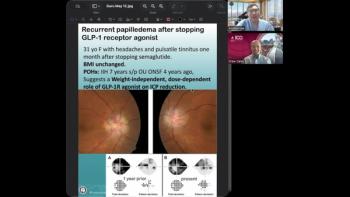
Andrew G. Lee, MD, and Drew Carey, MD, discuss recurrence of papilledema after discontinuation of GLP-1 receptor agonists and the implications for monitoring patients with idiopathic intracranial hypertension.
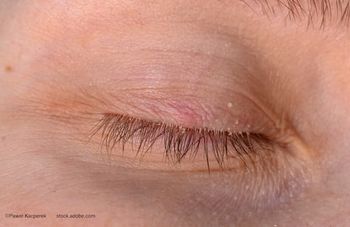
Two cases illustrate how recognizing and treating Demodex can change surgical outcomes and resolve chronic dry eye disease.