


The trial evaluated the safety, efficacy, and tolerability of AURN001 in patients with corneal edema secondary to corneal endothelial dysfunction.
The trial evaluated the safety, efficacy, and tolerability of AURN001 in patients with corneal edema secondary to corneal endothelial dysfunction.

The incision-free therapeutic for keratoconus is expected to be commercially available in early 2026, according to the company.
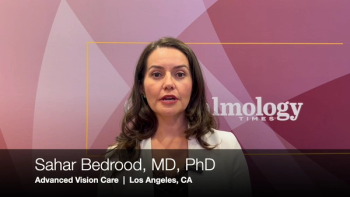
Bedrood describes improved visualization of the ciliary body, efficient setup, and favorable postoperative outcomes.

Telemedicine, mobile clinics, and policy reform offer a road map to equitable care.
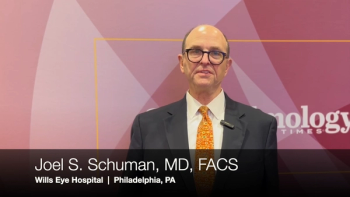
Innovations in selective laser trabeculoplasty and laser cyclophotocoagulation focus on procedural efficiency, patient comfort, and evolving first-line treatment strategies.
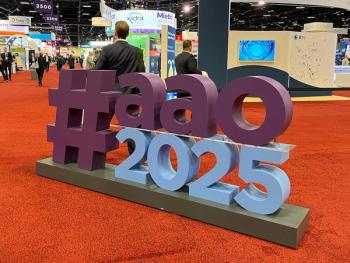
The annual scientific meeting of the American Academy of Ophthalmology highlighted research in retina, refractive surgery, and accessible care.

John P. Berdahl, MD, discusses advanced lens options for patients with pseudoexfoliation, highlighting considerations for successful longterm outcomes.

While the injuries associated with other similar sports, such as tennis, badminton, and racquetball have been investigated in many studies, no epidemiologic studies have specifically focused on the incidence of ocular injuries that occur in pickleball
In the Phase 2 TEASE 2 trial, gildeuretinol was well tolerated and showed promising trends in slowing ellipsoid zone loss and preserving low-luminance visual acuity in patients with Stargardt disease.
A new study reveals enhanced safety and efficacy in epi-on cross-linking for keratoconus, utilizing oxygen-rich boost goggles during treatment.

The second day of the annual scientific meeting of the American Academy of Ophthalmology highlighted advancements in AI, surgery technology, and money-saving solutions.
Data suggests the candidate can reduce the number of injections and treatment burden for patients

The first day of the American Academy of Ophthalmology meeting in Orlando, Florida featured presentations centered on eye injuries and data insights.

In this murine model of glaucoma, SPG302 was administered daily to 3-month-old mice for 8 weeks.
The 18-month extension of the GATHER2 trial indicated continued benefit for patients receiving avacincaptad pegol, with efficacy gains increasing over time.
At the 2025 Academy of American Ophthalmology meeting, Prof Stalmans described safety and efficacy benefits of disposable non-contact vitrectomy lenses

Durga Borkar, MD, MMCi, explores real-world treatment patterns and safety of avacincaptad pegol for geographic atrophy, revealing critical insights for patient care.

Broadwood stresses that STAAR ignored offers outside Alcon, while STAAR states Broadwood Partners’ claims are "misleading and distort the truth."
Jean-Francois Korobelnik, MD, shares highlights from the PULSAR extension study showcasing aflibercept 8 mg and its ability to promote fluid resolution
As ophthalmic technologies move at supersonic speed, AI and gene therapy take center stage.

An easy reference guide for this year's award lectures and subspecialty day keynotes.
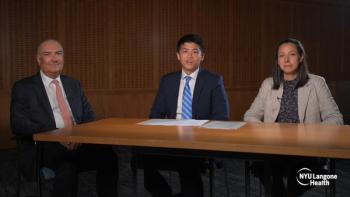
NYU Grossman School of Medicine’s Galen Hu, MD, and Andrea Blitzer, MD, sit down with Eduardo C. Alfonso, MD, of Bascom Palmer Eye Institute, to discuss how ophthalmologists are leveraging social media not just to promote practices, but to educate patients.
Explore groundbreaking advancements in eye care from the 2000s, including LASIK innovations, anti-VEGF treatments, and enhanced imaging technologies.

DURAVYU is being developed as a potential sustained-delivery treatment for patients suffering from serious retinal diseases.

The VisiPlate aqueous shunt is made of a patented metamaterial that has been designed to be non-fibrotic and is many times thinner than a human hair, according to the company.
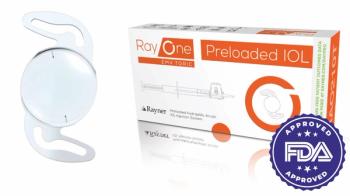
The approval follows the successful completion of a pivotal Investigational Device Exemption (IDE) study.
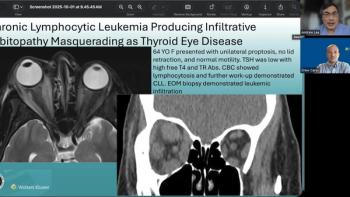
Andrew G. Lee, MD, and Drew Carey, MD, highlight how chronic lymphocytic leukemia can mimic Graves’ orbitopathy, underscoring the importance of a thorough evaluation.
Explore the groundbreaking advancements in ophthalmic technology from the 1980s and 1990s, including excimer lasers, LASIK, and innovative imaging techniques.
Attendees of the AAO 2025 annual meeting will have a chance to preview the virtual technician training platform on October 19, at 10:30 am in the Academy Theater, Hall WB1, Booth 2761.