

Option could prove to enhance safety for both patients and staff.

Option could prove to enhance safety for both patients and staff.

According to preliminary results, intranasally delivered ST266 is a safe treatment option.
Use of such procedures increased markedly in analysis of IRIS Registry Data.
UK physician notes a full systemic work-up needed to determine source of infection.

Nanoscope Therapeutics Inc. expects to advance the therapy by launching a late-stage Phase 2b trial this summer with gene therapy that delivers multi-characteristic opsin to retinal cells.

According to the company, preclinical study results from a 42-day proof-of-concept in vivo study demonstrated a single, intralacrimal gland injection of an adeno-associated virus containing the NGF gene produced statistically significant increase in NGF in tear film, as compared to placebo, as early as Day 7.

Study results show that aflibercept-treated eyes are protected.

Study results show the device offers an effective long-term option for patients.
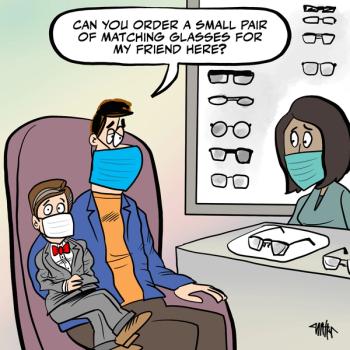
Check out the latest cartoon!

More Americans have used and continue to use teleheath for mental health care. according to a recent online poll by the American Psychiatric Association.
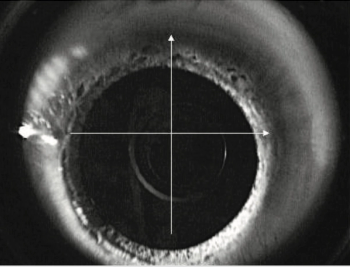
Procedure can improve best-corrected visual acuity, enhancing quality of life for patients.
Therapeutic choices beneficial for patients may be available in 1 to 3 years.

A word from Chief Medical Editor Peter J. McDonnell, MD.

Virtual reality, home visual field testing offer new options for physicians.
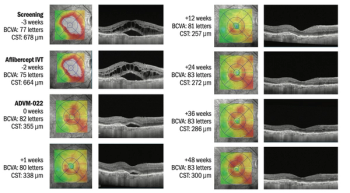
ADVM-022 offers sharp decrease in treatment burden for patients with nAMD.

Technologies offer different approaches to different scenarios.

Upsher-Smith Laboratories LLC and Rafarm SA have announced the U.S. commercial launch of moxifloxacin ophthalmic solution, USP 0.5% following a recent abbreviated new drug application (ANDA) approval by the FDA.

The company is hoping to commercialize the first FDA-approved ophthalmic formulation of bevacizumab-vikg for retinal disease. It expects to receive BLA approval from the FDA by mid-2022.
A new report by George Washington University offers a snapshot of health care workers during the COVID-19 pandemic and offers recommendations to prepare for the future.

Practices can turn a moment of crisis into a win-win for all.

Intermediate/near vision improvements are achieved without compromising distance vision.
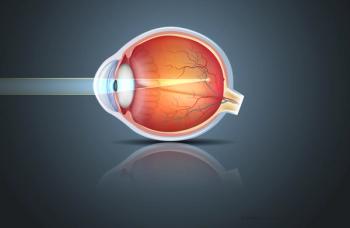
Vyluma Inc. will focus on the development and commercialization of therapies to treat ophthalmic diseases, including pediatric myopia.
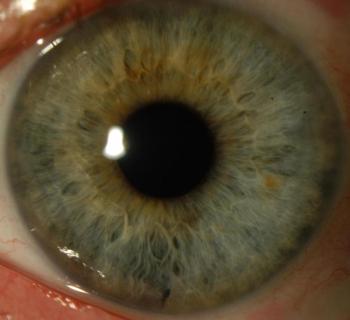
Backed by a five-year, $6.4 million grant from the National Eye Institute of the National Institutes of Health, investigators from Case Western Reserve University, University Hospitals and the Jaeb Center for Health Research hope to determine which diabetic patients can successfully donate their corneas for keratoplasty (and which should not).
The company plans to start a second Phase 3 registration study, VISION-2, as it continues on path toward a New Drug Application submission to the FDA.
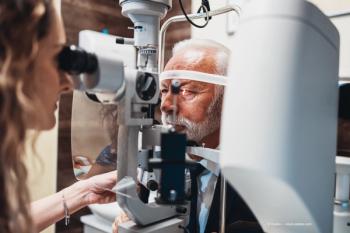
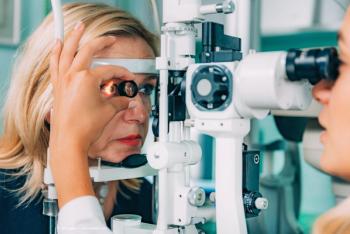
Investigators determine that patient rates of adherence with gonioscopy are low.
A team of researchers at the University of Cincinnati's Department of Chemistry and Department of Ophthalmology, in collaboration with researchers at Cincinnati Children's Hospital Medical Center and the Ohio State University, have received a four-year, $1.6 million grant from the National Institutes of Health/National Eye Institute to develop a drug delivery system that is more efficient and longer lasting than conventional eye injections.
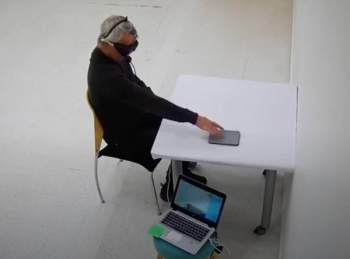
An international research team has shown that optogenetic therapy has helped to partially regain visual function in a patient with retinitis pigmentosa. This is a milestone towards a gene therapy that could restore vision.

Patients frequently require a multidisciplinary approach.
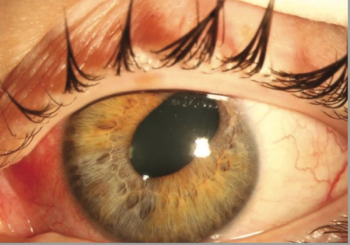
Case of anterior segment ischemia involves young adult with prior carotid artery injury.

Investigators find increased treatment regimen is effective and long-lasting for patients.