

AM712 is a novel bispecific biologic molecule specifically designed for ocular use. In pre-clinical studies, it demonstrated efficacy, ocular pharmacokinetics, and the desired safety profile supporting clinical exploration.

AM712 is a novel bispecific biologic molecule specifically designed for ocular use. In pre-clinical studies, it demonstrated efficacy, ocular pharmacokinetics, and the desired safety profile supporting clinical exploration.

During a presentation at the Bascom Palmer Eye Institute Angiogenesis, Exudation, and Degeneration 2022 conference, Robert Bhisitkul, MD, PhD, provided 24-week clinical data from the Phase 1 study, demonstrating that patients with DME and wAMD showed improved visual acuity through 24 weeks following a single dose of UBX1325.

During the Glaucoma 360 New Horizons Forum at the Grand Hyatt San Francisco at Union Square, several speakers discussed the latest advances in technology.

Oluwatosin U. Smith, MD, associate professor in the Department of Ophthalmology, University of Texas Southwestern, Dallas, speaks with Ophthalmology Times'® Sheryl Stevenson on the highlights of her presentation exploring remote monitoring of glaucoma and the future of virtual care on the whole.

Andrew G. Iwach, MD, co-founder and co-chair of Glaucoma 360, Glaucoma Center of San Francisco, speaks with Ophthalmology Times’® Sheryl Stevenson on his presentation regarding trends and challenges of glaucoma.
Shan C. Lin, MD, explains why ophthalmologists should be mindful of refractive considerations in cataract surgery for their patients with glaucoma.
Robert L. Stamper, MD, speaks with Ophthalmology Times®' David Hutton on intraocular pressure measurement, corneal elasticity, and why hysteresis is important for glaucoma management.
This year's Shaffer-Hetherington-Hoskins Lecture keynote speaker Joseph Caprioli, MD, focuses on the phenotypes of primary open-angle glaucoma with Ophthalmology Times®' David Hutton at Glaucoma 360.

Carel B. Hoyng, MD, noted that investigators have developed an RNA therapy to stop the progression of the disease, which ultimately leads to legal blindness.

Arshad M. Khanani, MD, MA, told attendees at the Bascom Palmer Eye Institute’s 19th annual Angiogenesis, Exudation, and Degeneration 2022 Virtual Edition that data from the part A of the KALAHARI trial is encouraging, showing that THR-149 has the potential to improve vision in patients with DME who have a sub-optimal response to anti-VEGF therapies.

Most patients (95%) with the PDS implanted did not need supplemental treatment before the refills, indicating the persistence and durability of the treatment.
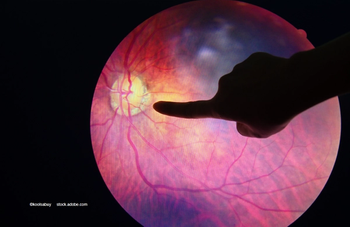
After 2 years, the improvements in vision and anatomy were sustained with extended dosing out to every 16 weeks in a high percentage of patients.

During the Glaucoma 360 New Horizons Forum, the spotlight was cast upon sustained release injectables, including innovations that have been flourishing over the past year despite, or perhaps because of, a continuing worldwide pandemic.
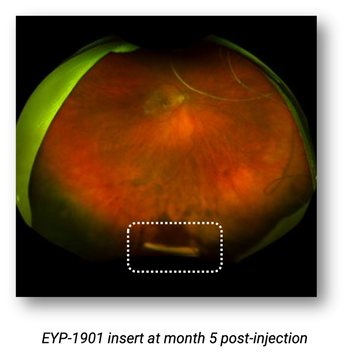
Jay S. Duker, MD, who presented data at the Bascom Palmer Eye Institute’s 19th annual Angiogenesis, Exudation, and Degeneration 2022 Virtual Edition, noted that previously treated patients showed a significantly reduced treatment
Robert L. Stamper, MD, speak with Ophthalmology Times®' David Hutton to discuss his presentation at the Glaucoma 360 event in San Francisco, where he presented an update on OCT-Angiography and its role in detecting the density of the capillaries in the macula.
The introduction of new devices is possibly the single most influential factor currently driving the glaucoma market, said Kristen Harmon Ingenito, MBA, in her presentation during the New Horizons Forum at the 2022 Glaucoma 360.

During a presentation at the Bascom Palmer Eye Institute's Angiogenesis, Exudation, and Degeneration 2022 Virtual Edition conference, David S. Boyer, MD, explained that the drug, which is being considered to treat diabetic retinopathy, renal disease, and age-related macular degeneration, is intended to be an alternative therapy to monthly chronically administered intravitreal injections of anti-VEGF drugs.
Ranya Habash, MD, medical director of Technology Innovation, assistant professor of Clinical Ophthalmology at Bascom Palmer Eye Institute, University of Miami in Miami, Florida, offers a preview of her New Horizons keynote speech on "The future of eye care: science fiction to science fact."

In a presentation at the Bascom Palmer Eye Institute’s 19th annual Angiogenesis, Exudation, and Degeneration 2022 Virtual Edition, Glenn J. Jaffe, MD, noted that the analysis showed, for the first time, a decreased growth rate in the central foveal area by a therapeutic intervention when compared with sham treatment.
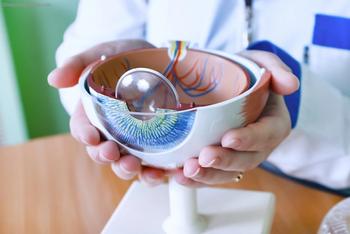
In a presentation at the Bascom Palmer Eye Institute’s 19th annual Angiogenesis, Exudation, and Degeneration 2022 Virtual Edition, Amir Kashani, MD, PhD, discussed results that show the implant procedure is feasible on an outpatient basis and has a good safety and efficacy profile.
Ora Chief Medical Officer Gustavo De Moraes, MD, PhD, MPH, speak with Ophthalmology Times®' Sheryl Stevenson to discuss some of the cutting-edge advancements in therapies and diagnostics for the treatment of glaucoma patients.

Glaucoma 360 is being held at the Grand Hyatt San Francisco at Union Square, and the meeting brings together celebration, innovation, and education in its efforts to eradicate glaucoma, with the Gala serving as the traditional kickoff of the event.
Glaucoma 360's co-founders and co-chairs Adrienne L. Graves, PhD, and Andrew G. Iwach, MD, speak with Ophthalmology Times®' Sheryl Stevenson on what attendees can expect from this year's annual meeting.

According to investigators at the University of Washington, Seattle, the COVID-19 pandemic has made measuring IOP challenging because of the potential to spread the virus.

Stanford researchers found an implanted chip, natural eyesight coordinate vision in study of macular degeneration patients.
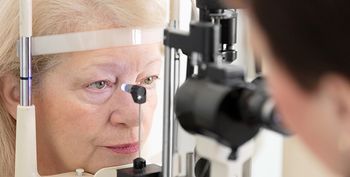
A University of Montréal Hospital Research Center team reveals the fine mechanisms behind the major vascular defects observed in glaucoma patients and identifies new therapeutic targets.

According to the company, its C.STIM IPL system is based on intense pulsed light technology for the treatment of dry eye disease.

The Toronto-based medical eyewear company partnered with the visual assistance community to help empower an Oregon college student with enhanced vision.

Presbyopia-correcting drops represent a whole new product category—one with a lot of upsides for clinicians who want to help their patients see well at all distances.
Moore suffered from dry eye disease and Lumenis noted that treatment with OptiLight improved her condition. Now she’s partnering with the company to share her story and empower others.