

According to the company, the fully connected environment, digital technologies and artificial intelligence tools enable optimization of patient care.

According to the company, the fully connected environment, digital technologies and artificial intelligence tools enable optimization of patient care.

At the 22nd EURETINA World Congress in Hamburg, Germany,Isabelle Audo, MD, reported that voretigene neparvovec used to treat patients with a RPE65-related inherited retinal dystrophy, showed good safety and efficacy at the 1-year time point of the LIGHT Study.
According to researchers, findings could lead to new screening protocols to catch glaucoma early and preserve vision.

Bausch + Lomb expects to begin the distribution of the intraocular dyes in all EU countries, with the exception of Italy, during the first half of 2023. Bausch + Lomb and Alfa Instruments are also in the process of exploring regulatory requirements and approvals of the surgical dyes in other markets.

David J. Calkins, PhD, is being recognized for his groundbreaking contributions to the field of vision research.

The multi-center, international clinical study is designed to assess the safety and efficacy of novel investigational low-dose atropine eye drops in children 3-17 years old with myopia.
Product is forging a future in ocular regenerative procedures

ONS-5010 is an investigational ophthalmic formulation of bevacizumab under development to be administered as an intravitreal injection for the treatment of wet AMD and other retinal diseases.

The first cases in the United States using the company’s suprachoroidal technology were performed earlier this month, and long-term clinical outcomes will be presented at the annual meeting of the American Academy of Ophthalmology in Chicago, starting Sept. 30.
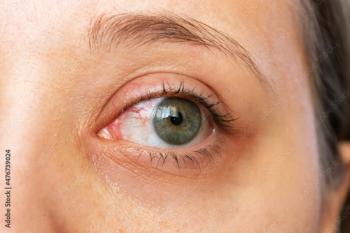
Researchers at the University of Bonn are evaluating a new imaging technique for the diagnosis of posterior uveitis.

The 22nd European Society of Retina Specialists Congress kicks off Thursday at the Congress Centre Hamburg in Hamburg, Germany.

The debate continues about the protective effect of eyeglasses against contracting the COVID-19 virus. Researchers from Denmark reported that their results were inconclusive regarding whether wearing eyeglasses is linked with a decreased risk of COVID-19 infections.

The American Academy of Ophthalmology annual meeting is coming to Chicago, Illinois from September 30 to October 3, featuring Subspecialty Days and a virtual component. The event will be held at Chicago’s McCormick Place, billed as the largest convention center in North America and located on the shore of Lake Michigan.

The company has filed an ophthalmic IND submission for the first treatment of ocular conditions associated with DNA damage.


On this week's episode of the NeuroOp Guru, Andy Lee, MD, and Elizabeth Fortin, MD, discuss Tocilizumab and the influence it can have on ophthalmic outcomes in giant cell arteritis.
AB 2236, which would reduce the medical education, clinical, and surgical training requirements to become licensed in California to perform eye surgery. Trade organizations and other groups are stepping up to oppose the measure.

Edward J. Holland, MD, discusses how postoperative dry eye disease after refractive and cataract procedures may lead to patient dissatisfaction.

The research points to the importance of isolating offending organism.
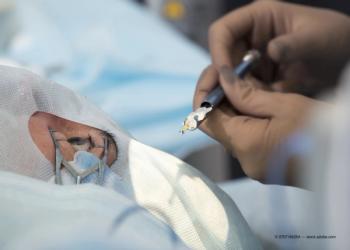
For many surgeons, technology is replacing old methods , including the use of cadaver eyes.
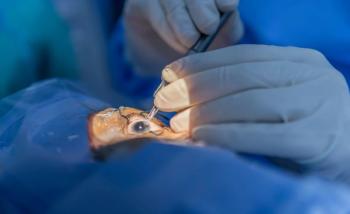
Reducing incidents can reduces cases of infection, transmission among physicians, clinicians.

When paired with SD-OCT, the device also can be used to evaluate photoreceptors.


This award totals $65,000 to support strategic planning implementation.

The IOL has a hybrid design that combines the benefits of central extended depth-of-focus technology and multifocal technology that provides a continuous range of high-quality vision ranging from distance and intermediate and near vision to about 12 to 14 inches.

According to Sarah Van Tassel, MD, physicians may need to recognize issues and treat patients more holistically.

Researchers in Trinity’s School of Genetics and Microbiology developed a new gene therapy, ophNdi1, that is the first of its kind to directly target mitochondrial function in cells that are malfunctioning in AMD.
Audrey R. Talley Rostov, MD, discusses how patient education and hygiene is important for a positive outcome.
Gene therapy has partly restored the function of the retina’s cone receptors in two children who were born completely colorblind, reports a new study led by UCL researchers.

Stoke Therapeutics announced enrollment of the first patient in a prospective natural history study of people ages 8 to 60 who are living with autosomal dominant optic atrophy.