

A one-drop, low dose atropine study assesses accommodative amplitude and dynamics, with clinically applicable findings.

A one-drop, low dose atropine study assesses accommodative amplitude and dynamics, with clinically applicable findings.


Topcon Healthcare launches IDHea, an innovative platform enhancing AI research and ocular data access to improve clinical outcomes in healthcare.

A study reveals that repeated anti-VEGF injections for AMD do not alter retinal vascular metrics over time, ensuring treatment stability.

Katherine Talcott, MD, a retina specialist at Cleveland Clinic, presented findings on EYP-1901 in the phase 2 DAVIO study.
The trial will assess allogeneic retinal pigment epithelium cells in the treatment of geographic atrophy.
In this Q&A, Luke Lindsell, OD, MD, shares his insights on emerging therapies in retina, the evolving role of optometrists in retinal disease management, and the importance of comanagement in patient care.
The first SightLine meeting, held pre-ASCRS, reveals insights on physician-industry relationships, mentorship opportunities, and the practical applications of AI in healthcare.

Opus Genetics reveals promising 1-year results from OPGx-LCA5 gene therapy, showing sustained vision improvements in adults with LCA5 retinal degeneration.
Outcomes from high myopia LASIK using the Teneo laser platform demonstrate strong visual stability and patient satisfaction, with reduced dysphotopsias and minimal reliance on cycloplegia or nomograms.

New research reveals subretinal drusenoid deposits as potential indicators of serious heart disease, highlighting the need for ophthalmologists to screen patients effectively.
Researchers stratified a dataset of more than 100 patients in an emergency department to see which patients may be indicated for retinal artery occlusions.

Wendy Lee, MD, MS, shares how she integrates aesthetic and functional care in oculoplastics.
At the ARVO 2025 Annual Meeting in Salt Lake City, Utah, Nimesh Patel, MD, presented on the LUCIA and LUGANO phase 3 pivotal trials for EYP-1901 against aflibercept for the treatment of wet macular degeneration.
At the ARVO 2025 meeting in Salt Lake City, Utah, Cameron Cummings presented a poster on how retinal microvascular imaging metrics may show sex-specific biomarkers for Parkinson's disease.
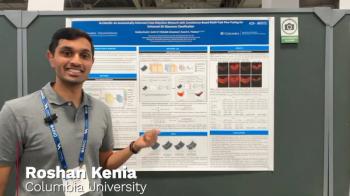
Roshan Kenia presented a poster on how AI-CNet3D enhances glaucoma classification using cross-attention networks while improving interpretability and performance in OCT scan analysis.

A machine learning model using treated astigmatism and other nuanced inputs can significantly improve the accuracy and personalization of arcuate keratotomy planning
The Virtual Eye Simulation Analyzer is an AI-driven digital twin of the human eye designed to model aging and personalize presbyopia treatment across the lifecycle.

Retina World Congress 2025 unites global retina experts in Fort Lauderdale to explore cutting-edge research, surgical techniques, and patient care advancements.
Shehzad Batliwala, DO, known to his patients as Dr. Shehz, appeared on the ASCRS Foundation Symposium, where he discussed performing refractive surgery in low-resource, high-risk areas.

A novel vitrectomy device shows promising safety and efficacy in the targeted removal of symptomatic vitreous opacities in pseudophakic eyes

Alex Hacopian, MD, highlights how a recent ambispective study demonstrated strong visual acuity outcomes and patient satisfaction following bilateral implantation of an advanced presbyopia-correcting intraocular lens.
Lisa Nijm, MD, says preoperative osmolarity testing can help clinicians manage patient expectations and improve surgical results.

The retrospective study assessed corneal cross-linking complications at Wills Eye Hospital from 2018 to 2023.

The company announced 27 abstracts at the Association for Research in Vision and Ophthalmology (ARVO) 2025 Annual Meeting from May 4 to 8 in Salt Lake City, Utah.
Use of the LENSAR Ally femtosecond laser for arcuate incisions was associated with improved early visual outcomes and reduced need for postoperative adjustments in premium IOL patients.