





IOL
Latest News
Advertisement
Video Series






Shorts



CME Content











Advertisement

Sequencing IOL choice by eye can ease patient decision paralysis.

Helena Noguera Nuñez, MD, discusses a prospective study of the TECNIS Odyssey IOL from ESCRS 2026.

Influence on effective lens position in cataract and lens-based surgery.

ESCRS 2026: enhanced monofocal IOL delivers distance and functional intermediate vision, study finds
A real-world study of an enhanced monofocal IOL found most patients achieved 20/20 distance vision and functional intermediate vision without glasses, according to Jai Parekh, MD, MA, FAAO, at ESCRS 2026.

Suzana Konjevoda, MD, presents data at ESCRS 2026 showing citicoline eye drops aid corneal nerve recovery post-cataract surgery.

ESCRS 2026 study shows multifocal IOLs tie at distance, but reading speed plunges in dim light; focus curves predict laser touch-ups.

Mingo-Botín, MD, PhD, discusses ESCRS 2026 data on an EDOF IOL in post-LASIK eyes vs non-LASIK controls.
Suzana Konjevoda, MD, previews ESCRS 2026, highlighting new IOLs, presbyopia correction, AI in everyday practice, and advances in post-cataract surgery recovery and comfort.

Ahead of the 44th ESCRS Congress in London, a look at the presbyopia-correcting IOL, glaucoma and dry eye disease research on this year's scientific programme.

A same-platform, prospective comparison of 123 eyes suggests diffractive trifocal optics don't compromise standard automated perimetry outside the central 5°
In part 2 of a 2-part article, Arun C. Gulani, MD, walks through the 4 patient types of the Gulani classification of refractive lens exchange, from primary vision enhancement to staged vision engineering, and explains why outcomes depend on treating the eye as a complete optical system rather than on the implant alone.
Arun C. Gulani, MD, introduces the Gulani classification of refractive lens exchange, a 4-type framework for individualizing premium IOL selection and surgical strategy around each eye's visual potential rather than its diagnosis.

Bausch + Lomb’s EyeGility preloaded enVista IOL inserter streamlines cataract surgery with push-plunger delivery, less handling, faster workflow.

The non-exclusive license agreement pairs Alcon's PCIOL optical designs with RxSight's post-operative light-adjustable platform, with the aim of allowing surgeons to fine-tune visual outcomes after cataract surgery.

Bayer acquired Perfuse Therapeutics and its experimental endothelin-blocking eye implant PER-001, and partnered with AI firm Iambic Therapeutics to accelerate small molecule drug discovery.

Douglas D. Koch, MD, and Karolinne Maia Rocha, MD, PhD, discuss the optics behind enhanced monofocal lenses, patient selection, and how to set expectations.

The FDA approved the TECNIS PureSee IOL (model ZEN00V) on March 12, 2026.

Zaman discusses the positive topline results from a phase 1/2 study of the BIM-IOL system, during which it successfully reduced IOP in patients with OAG or OHT.

Data from a recent trial of the OmniVu Lens System was presented at ASCRS 2026, featuring positive and sustained vision endpoints.
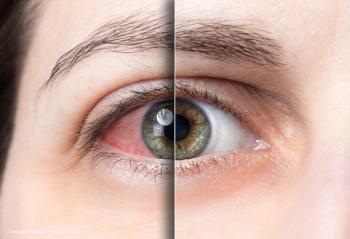
Several presentations at ASCRS 2026 spotlight faster dry eye relief and smarter pre-operative care, showing lifitegrast and new drugs can ease symptoms quickly and improve cataract biometry.

ASCRS 2026 data show smarter EDOF and toric choices after LASIK/PRK, plus reverse optic capture to relieve negative dysphotopsia.

According to the company, the lens is the first and only FDA-approved EDOF IOL in the US without a warning regarding loss of contrast sensitivity.

The BIM-IOL System consists of 2 non-bioerodible drug pads attached to the optic-haptic junction of a monofocal intraocular lens (IOL), which is implanted as part of routine cataract surgery.

A recent nonrandomized trial has demonstrated toric IOLs’ efficacy in providing long-term visual outcomes, reducing amblyopia compared to non-toric lenses.

Take a look at some, but certainly not all, that you may have missed from this year’s EnVision Summit.
Advertisement
Advertisement
Trending on Eye Care Network - Ophthalmology Times
1
Brepocitinib meets all Phase 3 end points in noninfectious uveitis
2
Demodex blepharitis: Diagnosis, treatment response, and recurrence
3
Matching artificial tears to dry eye phenotype: a Q&A with Omur Ucakhan, MD
4
SpyGlass Pharma's BIM-IOL System holds 37% IOP reduction at 4 years in first-in-human trial
5