

Japanese investigators have found an ocular biomarker of cardiovascular diseases.

Japanese investigators have found an ocular biomarker of cardiovascular diseases.

According to data presented at the Association for Research in Vision and Ophthalmology annual meeting in New Orleans, staggered administration of Ixo-vec in non-human primates showed peak aflibercept protein levels in the second eye within the targeted therapeutic range, supporting the potential for bilateral administration.

SB15 (Samsung Bioepis) has shown similar efficacy, pharmacokinetics, safety, immunogenicity to aflibercept after 56 Weeks in phase 3 clinical trial.

Ophthalmology Times® talked with Deborah Ferrington, PhD, about her presentation on using human donor tissue to identify the mechanism responsible for the death of the retinal pigment epithelium.
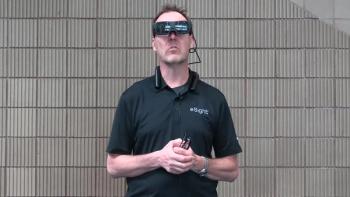
Ophthalmology Times® talked with Roland Mattern, Director of Sales and Marketing for eSight and eSight User Gary Foster at this year's ARVO meeting about eSight Go, the new model of smart glasses for low vision enhancement
Ophthalmology Times® talked with George Magrath, MD, and Andrew Pucker, OD, MS, PhD, FAAO at this year's ARVO meeting about Lexitas Pharma Services' work on modification of the National Eye Institute's corneal fluorescein staining scale.

The Association for Research in Vision and Ophthalmology (ARVO) kicked off its annual meeting today at the Ernest N. Morial Convention Center in New Orleans.
Defective calcium clearance is a characteristic feature of early damage to the retinal ganglion cells (RGC) in a mouse model of glaucoma.

Patrick Yu-Wai-Man, MD, PhD, is being recognized by the ARVO Foundation for his research on gene replacement therapy for Leber hereditary optic neuropathy.

The Centre for Ocular Research and Education is demonstrating its latest discoveries for eye applications at the Association for Research in Vision and Ophthalmology’s annual meeting in New Orleans.



The study assess retinal blood biomarkers using a new prototype OCT, aiming to measure retinal biomarkers such as blood flow volume, average velocity, and vessel diameter with a new prototype.
Carlos Quezada Ruiz, MD, senior medical director at Genentech, discusses “Predicting optimal treatment regimen for patients with neovascular age-related macular degeneration using machine learning.”
Jeff Cleland, PhD, CEO of Ashvattha, discusses safety data for an at-home subcutaneous injection option being developed for wet AMD and DME. The anti-VEGF candidate will enter a Phase 2 study later this year.
Presented at ARVO 2022, research from Mass Eye and Ear hopes to open a new avenue for therapies that are for helping treat patients that develop primary open angle glaucoma.
The study found that if certain forms of nystagmus that are seen in patients, then there is a higher chance of poor binocular visual function, as well as higher interocular suppression.
The study evaluates three separate cases, each which experiences irreversible changes in their corneal structure caused by challenges in getting timely treatment due to various reasons, including insurance, lost to follow up, and the coronavirus pandemic.
At ARVO 2022 in Denver, Colorado, Timothy Blenkinsop, MD, presented “3D Eye Organoids with Distinct Cornea.” His presentation outlined how these organoids have developed sophisticated cornea structures.
The Phase 3 integrated PEACHTREE and AZALEA study data revealed strong safety and efficacy for triamcinolone acetonide via suprachoirodal injection.
The study's primary endpoints were to look at increasing Schirmer's scores, as well as eye discomfort score.
Penny Asbell, MD, FACS, MBA, discusses “Antibiotic Resistance among Ocular Staphylococcal Pathogens: Longitudinal Trends in the ARMOR Study."
Takeaway: there doesn't seem to be a specific dry eye phenotype that does better or worse.
The OpRegen trial is a cell therapy trial, looking to explore potential safety and efficacy for patients with advanced dry age-related macular degeneration (AMD).

Diana Do, MD, professor of ophthalmology at Stanford's Byers Eye Institute, presents research on a newly developed, novel patient-reported outcome instrument (PRO) for patients who have proliferative diabetic retinopathy and who are undergoing treatment with either intravitreal anti-VEGF therapy, or panretinal photocoagulation.
Jennifer I. Lim, MD, FARVO, FASRS, reviews the 2-year results of the YOSEMITE and RHINE trials, outlining the efficacy, durability, and safety of faricimab in diabetic macular edema.

In a poster presented at the Association for Research in Vision and Ophthalmology’s 2022 annual meeting in Denver, Eva Chamorro, PhD, MSc, points out that myopia control spectacle lenses affect the diurnal rhythms in the AL in young adult human and produced a small short-term increase in the AL that varies in intensity and time interval for each of the 3 studied lenses.

Christina Herrspiegel, MD, and colleagues from the Karolinska Institute and St. Erik Eye Hospital, Stockholm, Sweden, reported that they have developed a prognostic test, referred to as serUM, that they believe is a strong predictor of metastasis of uveal melanoma.

Mike Watson, Vice President of OraNet, unpacks some of the most pressing challenges to clinical research in today’s climate.

Daniel Choi, MD, and colleagues from the University of Pennsylvania, Philadelphia, investigated the effect of anti-vascular endothelial growth factor (VEGF) therapies in patients.