

Wet AMD
Latest News
Advertisement
Video Series
CME Content













Advertisement
Retina experts discuss the benefits of using intraocular steroids to treat patients with DME as well as their approach to switching to steroids after a poor response to anti-VEGF therapy.
Expert retina specialists provide an overview of the YOSEMITE and RHINE clinical studies of faricimab in the treatment of DME.

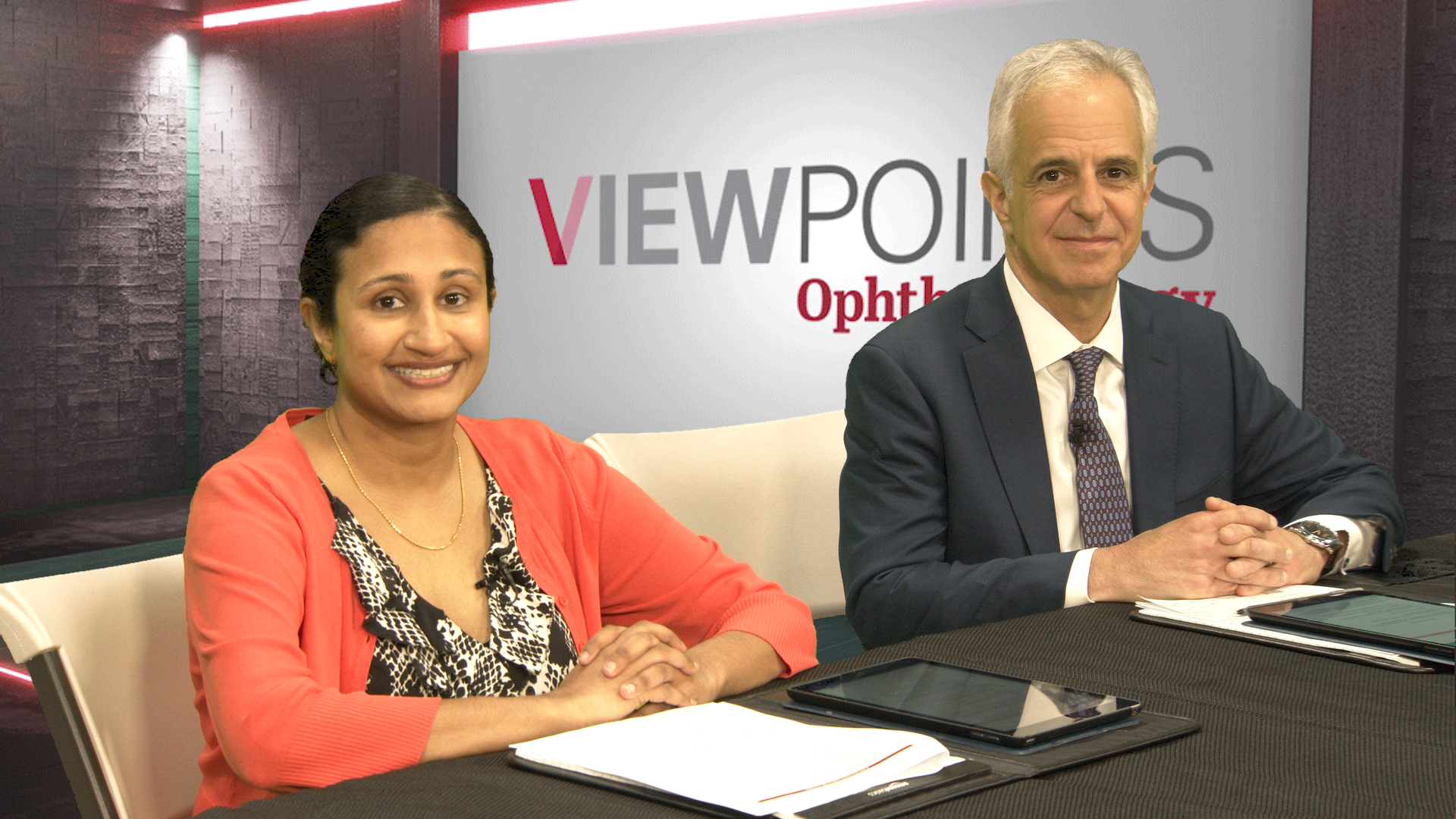
Carl Regillo, MD, FACS, FASRS, and Prethy Rao, MD, MPH, discuss the phase 3 trials of faricimab in the treatment of DME and highlighting the enhanced resolution of intraocular fluid.
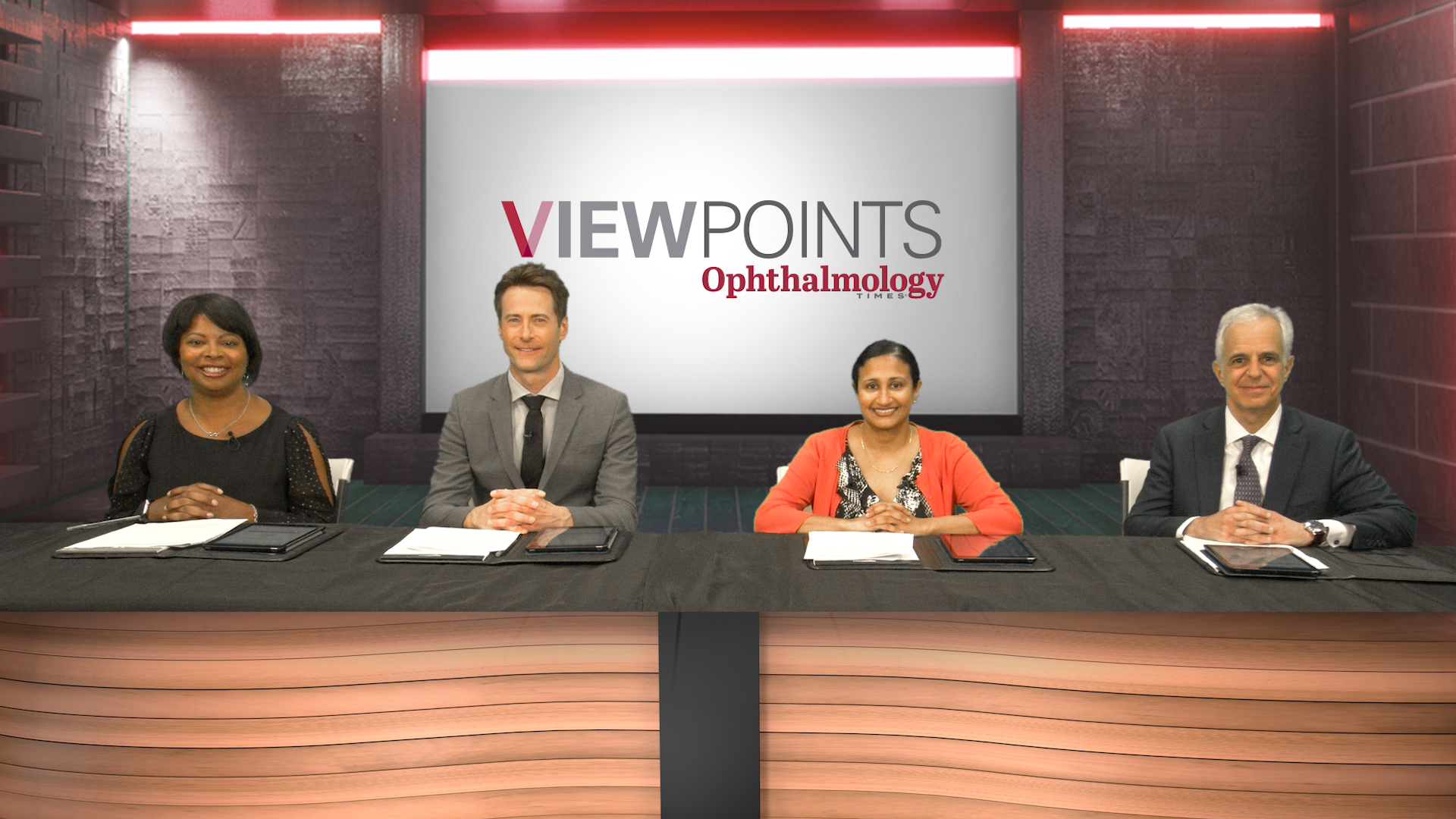
Nathan Steinle, MD; Adrienne Scott, MD; Carl Regillo, MD, FACS, FASRS; and Prethy Rao, MD, MPH, review the challenges presented in the management of DME, including the disease burden on the patient.
Retina experts discuss biomarkers to track disease progression in neovascular AMD, as well as their thoughts on the utility of optical coherence tomography angiography (OCT-A).
Drs Nathan Steinle, Adrienne Scott, Carl Regillo, and Prethy Rao share their approaches to dosing recommendations for faricimab in the treatment of neovascular AMD.
Expert retina specialists review the safety profile of faricimab compared with other anti-VEGF therapies in AMD.
Adrienne Scott, MD; Carl Regillo, MD, FACS, FASRS; and Prethy Rao, MD, MPH, discuss patient selection for faricimab in neovascular AMD, as well as approaches to switching to faricimab after a poor response to other treatment.
Data presented at the ASGCT 2023 Annual Meeting supports that Adverum’s Ixo-vec allows for lower dose administration with improved inflammation profile.

AIV007 is a broad spectrum tyrosine kinase inhibitor, targeting the convergence of fibrosis, angiogenesis, and inflammation.
Expert retina specialists discuss the use of faricimab and dosing for the treatment of neovascular age-related macular degeneration in the clinical practice setting.
Drs Nathan Steinle, Adrienne Scott, and Carl Regillo comment on the phase 3 trial outcomes of faricimab in neovascular AMD.
Retina experts discuss treatment of wet AMD, focusing on frequency of treatment and treatment breaks, and fluid tolerance.
Adrienne Scott, MD; Carl Regillo, MD, FACS, FASRS; and Prethy Rao, MD, MPH, provide an overview of the effect of anti-VEGF treatment in neovascular age-related macular degeneration and diabetic macular edema.

Researchers compile data from around 18,000 patients to provide a comprehensive understanding of the current state of nAMD treatment in the UK.

VLTR-557, Valitor's long-acting anti-VEGF biologic in development for durable wet age-related macular degeneration (AMD) treatment, showed that a single intravitreal (ITV) injection has potential to maintain clinical efficacy for more than six months.
Adverum Biotechnologies Inc. shared nonclinical data at ARVO 2023 in New Orleans that staggered, bilateral administration of Ixo-vec in NHPs was well tolerated with encouraging therapeutic activity and no signals of increased inflammation.

The results indicated that SB15 had similar efficacy, safety, immunogenicity, and pharmacokinetics compared to aflibercept out to week 56 of the phase III trial.

Clearside Biomedical plans to open enrollment for their Phase 2b clinical trial of CLS-AX this quarter. Topline results are expected by the Q3 of 2024.
Dr David Almeida shares two cases of neovascular AMD from his practice, one treatment-naïve and one previously treated, and presents his findings after switching them to faricimab.
David Almeida, MD, MBA, PhD, reviews the objectives and design of the TRUCKEE study, and discusses the visual and anatomic outcomes after one and three injections of faricimab in neovascular AMD.

According to the company, UBX1325 monotherapy did not achieve non-inferiority through 24 weeks due, in part, to an unexpected 3.5 letter gain in the anti-VEGF control arm.
Retina specialists help educate the public to take steps to protect their vision during AMD Awareness Month.
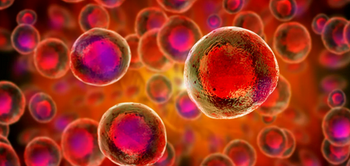
According to a research team from the National Eye Institute, part of the National Institutes of Health, the technique provides model for studying genesis of age-related macular degeneration and other eye diseases.

As we approach the end of 2022, members of the Ophthalmology Times Europe® Editorial Advisory Board were asked to predict developments in their ophthalmic specialties and interests. A focus is our ageing population, while efficiency and productivity are also on their minds. The board members agree that one of the major challenges in the year to come will be the large number of patients awaiting diagnosis and treatment, which is only going to increase with the rising average life expectancy worldwide.
Advertisement
Advertisement
Trending on Eye Care Network - Ophthalmology Times
1
Brepocitinib meets all Phase 3 end points in noninfectious uveitis
2
Myopia control using spectacle lenses with highly aspherical lenslets
3
CHMP recommends ranibizumab biosimilar Fovlussea for retinal disease
4
Duravyu misses wet AMD end point again as EyePoint pivots to DME
5