







Retina
Latest News
Advertisement
Video Series







Shorts

0:59
EYP-1901 positioned as lower-burden option in DME treatment as phase 3 program completes enrollment
a month ago
by
Kassi Filkins(+1 more)

0:24
An unusual clinical trial design to test vision restoration in GA
a month ago
by
Jordi Mones, MD, PhD(+1 more)

0:59
The unmet need for long-lasting DME treatment
2 months ago
by
Kassi Filkins(+1 more)

0:42
AI in ophthalmology: from structural to functional biomarkers
2 months ago
by
Miguel A. Busquets, MD, FACS(+1 more)

0:54
Could bedside OCT spot neurodevelopmental risk in infants before symptoms?
2 months ago
by
Cytnthia Toth, MD(+2 more)

0:39
MacTel2: Vascular disease or neurodegenerative disease?
2 months ago
by
Robin Vora, MD(+1 more)

0:57
Retina as a window to the brain: a biomarker approach to ROP
2 months ago
by
Cytnthia Toth, MD(+2 more)

1:21
QUASAR 64-week results: aflibercept 8 mg in macular edema following RVO—Jordana G. Fein, MD, MS
2 months ago
by
Jordana G. Fein, MD, MS(+1 more)

0:42
Can a retinal scan predict autism risk?
3 months ago
by
Cytnthia Toth, MD(+2 more)

0:51
How OLN324 differs from faricimab
3 months ago
by
Veeral S. Sheth, MD, MBA, FACS, FASRS(+1 more)
CME Content













Advertisement

Women's Health: Giant cell arteritis and the sex gap: What every eye care clinician should know
Published: | Updated:
Women are more often affected than men, and the disease manifests differently between the sexes.

Ocugen's global phase 3 ArMaDa3 trial evaluates OCU410, a one-time gene therapy targeting multiple disease pathways in geographic atrophy secondary to dry age-related macular degeneration.

ZEISS CLINIC 360 is an all-in-one cloud and browser-based software platform designed to consolidate ophthalmic diagnostic and medical record data into a single, unified patient view.

The Jack McGovern Coats' Disease Foundation has announced the initiation of new research to develop the first validated animal model of Coats' Disease, a rare eye disorder that primarily affects children.

Patient enrollment is complete in a phase 3 registrational, or pivotal, trial to evaluate OPGx-LCA5, a gene therapy that is under investigation for treating Leber congenital amaurosis type 5-associated inherited retinal disease.
Wet AMD gains a new FDA-approved therapy as retina, glaucoma, and dry eye pipelines surge—plus AI, devices, and workforce trends reshaping care.

Physician AI use has more than doubled since 2023—but the next leap in ophthalmology won't come from smarter diagnostic algorithms alone.

The approval establishes LYTENAVA as the first and only FDA-approved ophthalmic formulation of bevacizumab for the treatment of wet AMD in the United States.

Louie Cai, MD, discusses why manual prescreening is so labor-intensive, how the study was designed, and what broader adoption of AI-assisted screening could mean for clinician time, patient satisfaction, and the pace of drug development.

Danon disease is a rare, multisystem X-linked genetic disorder caused by variants in the LAMP2 gene. In children and young adults, it is defined overwhelmingly by its cardiac effects . What is far less appreciated is that the eye is frequently involved and that the retinal findings can appear before the systemic diagnosis is established.
Inflammasome Therapeutics announced positive phase 2 results achieved by kamuvudine-8 (K8), its investigational drug, for geographic atrophy (GA) and a good safety signal over the 6-month period of evaluation. The company also reported significantly slower GA progression and a visual acuity advantage.
Rare retinal diseases initially were the primary targets of gene therapy, but that is no longer the case. The focus has expanded beyond those to also include more common, chronic diseases such as diabetic macular edema and wet age-related macular degeneration. During the first half of 2026, that trend was evident.

Offline smartphone AI fundus screening detects diabetic retinopathy, glaucoma, and macular degeneration in one capture, delivering high accuracy for low-resource eye care.

Sura-vec is a 1-time investigational gene therapy designed to deliver sustained treatment in wet AMD, diabetic retinopathy and other chronic retinal conditions.
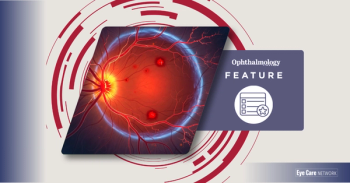
Panelists weigh in on treatment goals, access barriers, and where the field is headed.

Ultra-widefield imaging reveals early retinal risk in pediatric patients.

Study finds ChatGPT-5 overpredicts success after macular hole surgery—beating specialists on paper but missing failures.

The newly formed biotech will use the financing to push MMT-205, a bispecific antibody that directly activates Tie2 while inhibiting VEGF, toward IND-enabling studies, with first-in-human trials slated for 2027.

Atsena reported that, since enrollment opened in May 2026, it has already accrued approximately 10% of the pivotal cohort and expects the pace to accelerate as additional sites across North America and Europe are activated.

Belite Bio has completed its rolling NDA submission to the FDA for tinlarebant, a potential first approved treatment for Stargardt disease type 1.

Optical coherence tomography angiography found distinctive microvascular signatures in the retinal layers associated with various stages of decline in cognition.
Alkeus Pharmaceuticals has dosed the first participant in the phase 3 NORTHSTAR trial of oral gildeuretinol for Stargardt disease, a condition with no approved treatments.

Finding satisfaction in ocular research—considerations about AI and enhanced datasets.

Therini Bio begins a phase 1b DME trial of THN391, an intravitreal antibody targeting fibrin-driven retinal inflammation.

Transient vision loss may foreshadow stroke or heart events; study urges urgent 90-day evaluation and long-term cardiovascular monitoring.
Advertisement
Advertisement
Trending on Eye Care Network - Ophthalmology Times
1
FDA approves phentolamine ophthalmic solution 0.75% (Ryzumvi) for presbyopia
2
Alvotech files first known aflibercept 8 mg biosimilar with EMA
3
Uveitis: a practical guide for ophthalmologists and optometrists
4
AAO 2026: How to become an ocular pain detective in dry eye
5