In this Q&A, Ping Moore, OD, covers emerging dry eye therapies, from selenium sulfide to next-gen cyclosporine, and how subtype-guided care shapes treatment choices.

According to recent data, patients initiating semaglutide had a substantially greater risk of developing NAION versus those starting SGLT2 inhibitors.
Although rare, semaglutide initiation can lead to a 2-fold increased risk of nonarteritic anterior ischemic optic neuropathy (NAION) compared to SGLT2 inhibitors when initiated among patients with type 2 diabetes (T2D), according to a recent study.1
Semaglutide’s efficacy in weight loss has been well established over the past few years. Nationwide initiation of semaglutide and other GLP-1s has risen exponentially since 2008, rising from 12.9 million prescriptions to 52.3 million in 2023.2
“Although [GLP-1s are] effective for glycemic control, weight loss, and cardiovascular risk reduction, NAION has emerged as a serious rare adverse event,” Kent Heberer, PhD, US Department of Veteran Affairs and VA Palo Alto Healthcare System, and colleagues wrote. “Studies show conflicting associations.”1
The observation study emulated a target trial, assessing patients initiating semaglutide vs SGLT2 inhibitors using pharmacy dispensing data and detailed clinical covariates. Heberer and colleagues included US veterans aged ≥18 years with T2d, taking metformin, who began either semaglutide or SGLT2 inhibitors between March 2018 and March 2025, excluding dual initiators. The index date was set at the first outpatient pharmacy fill.1
Eligible patients needed to have ≥1 ICD-10 codes for T2D within 2 years preindex and a metformin fill within 90 days preindex. Patients were excluded if they had prior type 1 diabetes or secondary diabetes, had been exposed to other antidiabetic drugs or ≥30 days’ insulin use within the last 10 years, or prior ICD9/10 codes for NAION, giant cell arteritis, or traumatic optic nerve injury within 10 years.1
Ultimately, a total of 102,361 veterans met the study’s eligibility criteria; of these, 11,478 initiated semaglutide and 90,883 initiated an SGLT2 inhibitor. Almost all patients in the SGLT2 inhibitor arm received empagliflozin (n = 90,816), while the remainder were split between dapagliflozin and canagliflozin. At baseline, patients using semaglutide were younger, with a mean age of 59.2 (standard deviation [SD], 11.7) versus 64.6 (11.9). They also had a higher mean body mass index (38.8 [7.4] vs 33.6 [6.4]) and lower hemoglobin A1C levels (7% [1.4] vs 7.3% [1.5]).1
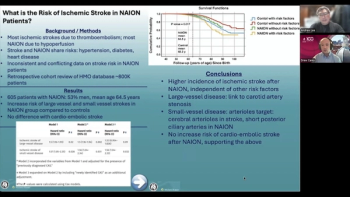
Over 2.1 years of median follow-up, spanning 239,333 person-years, a total of 30 semaglutide users developed NAION (incidence rate [IR], 123 per 100,000 person-years) versus 143 SGLT2i users (67 per 100,000 person-years). Using Kaplan-Meier curves, investigators recorded early and persistent separation, with a cumulative incidence consistently higher among semaglutide initiators. Unweighted analysis also saw semaglutide associated with increased NAION hazards than SGLT2i (HR, 1.84; 95% CI, 1.24-2.73; P = .002). After overlap weighting, patients initiating semaglutide had a 2.33-fold higher NAION risk (HR, 2.33; 95% CI, 1.53-3.54; P <.001).1
Given these data, Heberer and colleagues encourage clinicians to account for the potential, albeit rare, risk of developing NAION when initiating semaglutide.1
“As clinicians inform patients on semaglutide’s meaningful cardiometabolic benefits, they should also counsel on NAION as a rare, serious vision-loss event,” Heberer and colleagues wrote. “Consistent with recent commentaries, clinicians should encourage prompt evaluation of visual symptoms and consider ocular risk factors (eg, optic nerve disease, prior NAION). Ophthalmologists should identify semaglutide use in patients with NAION, who should inform their prescribing clinicians.”1