


OCT
Latest News


New research links retinal imaging and deep learning to improved schizophrenia detection
By Jordana Joy
Advertisement
Video Series


CME Content






Advertisement

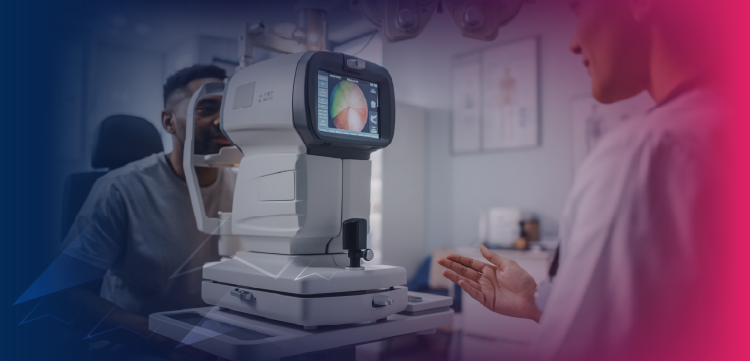
With cases of syphilitic uveitis on the rise, recognizing its varied presentations—including optic disc edema, which may appear without other significant eye inflammation—is increasingly important for timely diagnosis and treatment.

Perimeter Medical Imaging AI has been leveraging the technology to improve breast cancer surgeries and reduce the number of patients requiring repeat surgery.
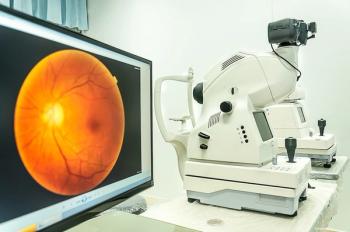
A study suggests that small hyperreflective retinal foci (HRF) on OCT images, linked to activated microglial cells, could serve as a valuable marker for monitoring neuroretinal inflammation and progression in age-related macular degeneration.

The NHS is expanding the use of optical coherence tomography to enhance diabetic eye care, aiming to improve early detection of diabetic retinopathy and reduce the backlog of hospital appointments.

News
A recent cohort study revealed low adoption of FDA-approved AI-based diabetic retinopathy detection, with less than 5% of diabetic patients receiving ophthalmic imaging. Researchers emphasize the need for improved awareness, cost-effectiveness, and integration to increase diabetic retinopathy screening rates.
News
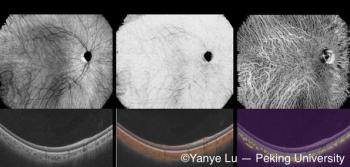
Peking University researchers have developed a deep learning-based, noninvasive choroidal angiography method that enables detailed 3D visualization of choroidal vessels from OCT scans. This technique could improve diagnostics for retinal diseases like macular degeneration, offering a safer alternative to traditional methods.

Researchers find a strong link between Alzheimer's disease and retinal thinning

News
In a study, a team of UCLA investigators detail a deep-learning model pre-trained on 2D scans that accurately predicts disease-risk factors from 3D medical-scan modalities.

News
The award from the National Institutes of Health will enable a team of researchers to investigate Alzheimer and Parkinson progression through the eye.

Ophthalmologists can use OCT to find the early signs of disease

The study helped identify predisposing factors for severe SANS in astronauts.
A team of researchers in China examined the difference and relationship between optical coherence tomography and optical quality analysis system parameters induced by compound electrolyte intraocular irrigating solution or Ringer lactate solution during uncomplicated cataract surgery.

The nOCT allows for detailed visualization of the brain's vascular anatomy.

Researchers train deep learning model on OCT scans to ID patients eligible for GA trials.

The company’s Spectralis OCTA module with SHIFT technology offers a tool for the diagnoses and management of retinal diseases.
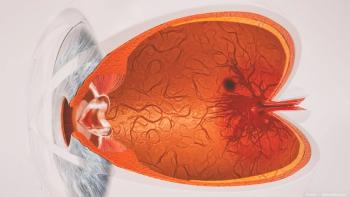
Scientists from the International Centre from Translational Eye Research used multiwavelength laser Doppler holography to assess blood flow in various layers of the human retina in vivo, which may impact the diagnosis of circulatory disorders.
The mapping method revealed prominent microscopic abnormalities consistent with diabetic retinopathy.
The company noted its OCT reference database now offers a library of 870 healthy eyes, more than tripling the previous versions.

A team of researchers are unraveling the mysteries of ocular pathologies by visualizing the fiber structure of the sclera, the outermost eye layer.

Joseph Izatt was a skilled researcher and inventor who played a foundational role in the development of optical coherence tomography.

The collaboration will bring automated, AI-powered OCT segmentation to MICRON Software Suite.

Contrary to the traditional understanding that this disorder remains stable, long-term structural changes were observed through spectral-domain optical coherence tomography (SD-OCT) imaging.

Electrophysiologic testing combined with structural imaging to zero in on issues.
Structural and vascular changes detected in RVO-affected eyes and unaffected fellow eyes

Chao Zhou, PhD, a professor of biomedical engineering in the McKelvey School of Engineering at the university, and team received the award from the Advanced Research Projects Agency for Health (ARPA-H).
Advertisement
Advertisement
Trending on Eye Care Network - Ophthalmology Times
1
Eyedaptic launches Eva, an agentic AI visual assistant for patients with retinal disease
2
Eyes on October 2026: AAO and EURETINA highlights, a trio of FDA approvals, and optogenetics takes the spotlight
3
October 2026 retina recap: Duravyu stumbles, DAYBREAK delivers, and optogenetics takes the Nobel
4
Christopher Starr, MD, FACS, on preventing the unhappy 20/20 patient
5