














Interventional Glaucoma
Latest News
Advertisement
CME Content
Advertisement

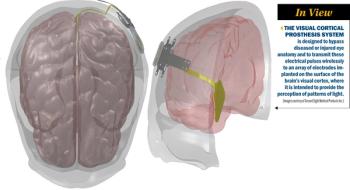
Visual cortical prosthesis intended to create artificial form of useful vision for blind individuals
Better visual outcomes goal for patients who also have had glaucoma procedure
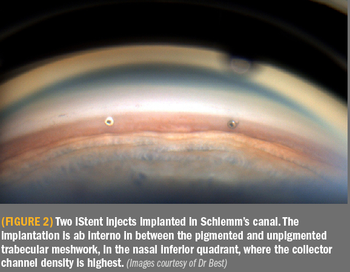
System preloaded with two trabecular bypass stents for ab interno implantation


Stereoscopic photographs are a useful tool in the detection of glaucoma, however, the difficulty in obtaining them has seen them underused in favour of optical coherence tomography (OCT). A new device is attempting to redress this balance, enabling stereo-photography to be used alongside OCT for optimal practice.
As an objective measure of the function of retinal ganglion cells, pattern electroretinography (PERG) testing reveals subclinical optic nerve changes that may be critical for deciding when to start therapy to avoid vision loss from glaucoma progression.

The combined clinical use of pattern electroretinography for the detection of early glaucoma indicators and selective laser trabeculoplasty for intervention may help realise the potential of early detection and treatment.
Created for surgeons, by surgeons – a new method of approaching gel stent implantation provides better outcomes for patients.
Ocular surface disease (OSD) and dry eye disease (DED) are very common problems in the elderly, and they both considerably decrease vision-related quality of life.
Optical coherence tomography angiography (OCTA) is a new imaging technique that has the potential to move rapidly into routine clinical practice. OCTA comprises different OCT-based technologies, which enable the non-invasive assessment of retinal perfusion, based on red blood cell movement in the optic nerve head, the peripapillary and the macular retina.
As another year comes to an end, five members of Ophthalmology Times Europe’s Editorial Advisory Board reflect and share their perspectives on the exciting opportunities that lie ahead for ophthalmologists in 2018, whilst also considering the potential challenges.
Micropulse transscleral cyclophotocoagulation utilises a different delivery modality than its predecessor, continuous-wave laser cycloablation, to produce a biological reaction without the lethal effects caused by thermal buildup.
High-intensity focused ultrasound cyclocoagulation is safe and effective in most refractory glaucomatous eyes. Complete success was achieved in 80% (24/30) of treated eyes that had undergone the maximum of three procedures.
A pioneering dye-based technique that enables aqueous humour outflow to be studied has the potential to improve glaucoma angle-based procedures and surgery outcomes.
An implantable glaucoma sensor has received CE mark approval for marketing in the European Union. The sensor (Eyemate, Implandata Ophthalmic Products) can provide frequent IOP readings, informing patients and their physicians about how the pressure changes by time of day and from one day to another.
The loss of autoantibodies may serve as useful biomarkers for glaucoma, according to Nadine von Thun Und Hohenstein-Blaul, Johannes Gutenberg University Mainz, Mainz, Germany, and colleagues.
Advertisement
Advertisement
Trending on Eye Care Network - Ophthalmology Times
1
Brepocitinib meets all Phase 3 end points in noninfectious uveitis
2
Myopia control using spectacle lenses with highly aspherical lenslets
3
Demodex blepharitis: Diagnosis, treatment response, and recurrence
4
CHMP recommends ranibizumab biosimilar Fovlussea for retinal disease
5