





Interventional Glaucoma
Latest News
Advertisement
Video Series
CME Content













Advertisement
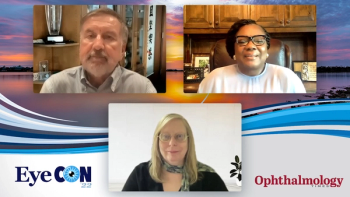
An interactive agenda at the Ophthalmology Times® EyeCon 2022 at the JW Marriott Marco Island Beach Resort in Florida will foster an open exchange of ideas with fellow attendees from across the United States.
Lisa M. Nijm, MD, JD, shares highlights from the Real World Ophthalmology 'After Dark' networking reception held at the American Academy of Ophthalmology annual meeting. The next Real World Ophthalmology meeting on November 5—which will be virtual—will cover important clinical, business, and personal growth areas for young ophthalmologists.

According to the company, latanoprost ophthalmic solution 0.005% successfully met the primary and all secondary endpoints, and it plans to file an NDA with the FDA in Q1 2023.
Hear how ophthalmologists and optometrists in the United States are recognizing the importance of this year's awareness day.
Shawn O'Neil of ViaLase shares updates on the company's femtosecond laser, image-guided, high-precision trabeculotomy (FLigHT) treatment.
At AAO 2022, Mitch Shultz, MD, provides discourse on iStent inject vs Hydrus contralateral eye evaluation data.

A team of National Institutes of Health scientists have shed light on how genetic architecture determines gene expression, tissue-specific function, and disease phenotype in blinding diseases.

According to the Glaucoma Research Foundation, the collaborative research program will explore some of the common characteristics of glaucoma, Alzheimer’s.
Nanoscope Technologies LLC announced this week it has received Direct Phase II SBIR grant from National Institutes of Health for developing an innovative approach to autonomously regulate pressure for treatment of Glaucoma in a gene-agnostic manner.
This glaucoma session will offer a look at how to incorporate pearls into clinical practice.
Visiox Pharma has announced the submission of a New Drug Application to the FDA for lead product candidate, PDP-716.
The setting for this year's Ophthalmology Times® EyeCon 2022 at the JW Marriott Marco Island Beach Resort in Florida will provide the opportunity for clinical interaction between faculty and attendees along with the practicality of information.
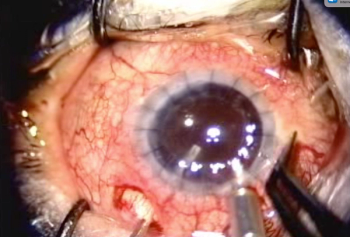
Ophthalmologists can reduce IOP and medications with endocyclophotocoagulation while in the eye.
Gautam Kamthan, MD, presented data at AAO 2022 regarding robot-assisted micro interventional glaucoma surgery.

First-in-human biologic stent in ophthalmology is a conforming implant material, i.e., a soft, scleral wall compliant bio-tissue to structurally reinforce the cyclodialysis cleft opening.
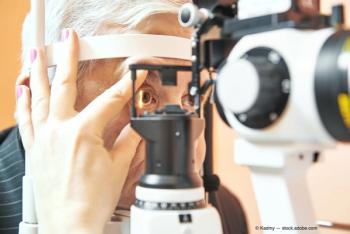
In a poster presented at the American Academy of Ophthalmology’s 2022 annual meeting in Chicago, Yu-Yen Chen, MD, PhD, noted that patients diagnosed with normal-tension glaucoma (NTG) have a significantly higher risk of developing Alzheimer’s disease compared with those without NTG.

The hour-long issue teaches the viewing ophthalmologist the technique and many modifications of intrascleral haptic fixation, an innovative approach when the capsule has been damage or is absent.

Genotyping and artificial intelligence are together starting to predict the progression of glaucoma in individual patients, sparing them from suboptimal treatments and adverse effects. Recent research efforts are exploring modifiable risk factors such as caffeine consumption.

The destination of Marco Island, Florida not only serves as an excellent backdrop for this year's Ophthalmology Times® EyeCon 2022 but also provides a unique opportunity for family members to see their ophthalmic loved ones in a professional light.
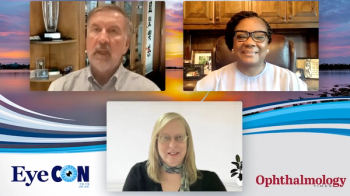
Co-chairs Peter J. McDonnell, MD, director of the Wilmer Eye Institute at Johns Hopkins University School of Medicine in Baltimore, Maryland, and Oluwatosin U. Smith, MD, of Glaucoma Associates of Texas in Dallas break down the top reasons to attend this year's Ophthalmology Times® EyeCon 2022 in a series of video segments.

According to Nicox SA, the patients made their final 3-month visit last week. Topline results of the trial are expected in November.

Haiyan Gong, MD, PhD, professor of ophthalmology and anatomy and neurobiology at Boston University School of Medicine, has received $200,000 through a Standard Award in National Glaucoma Research from the BrightFocus Foundation.
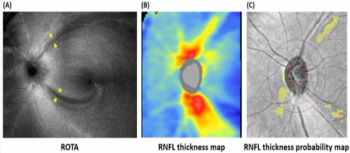
A research team led by the Department of Ophthalmology, School of Clinical Medicine, LKS Faculty of Medicine of The University of Hong Kong, with collaborators from the Faculty of Medicine of The Chinese University of Hong Kong and local and international partners, have developed a new technology ROTA to unveil the optical texture and trajectories of the axonal fiber bundles on the retina.
Timing of type 2 diabetes or hypertension diagnosis may impact the risk of primary open-angle glaucoma.
According to researchers, findings could lead to new screening protocols to catch glaucoma early and preserve vision.
Advertisement
Advertisement
Trending on Eye Care Network - Ophthalmology Times
1
Brepocitinib meets all Phase 3 end points in noninfectious uveitis
2
Myopia control using spectacle lenses with highly aspherical lenslets
3
Demodex blepharitis: Diagnosis, treatment response, and recurrence
4
CHMP recommends ranibizumab biosimilar Fovlussea for retinal disease
5