









Dr Steven Yeh provides a brief overview of available therapies for noninfectious uveitis and uveitis macular oedema.
Dr Steven Yeh provides a brief overview of available therapies for noninfectious uveitis and uveitis macular oedema.
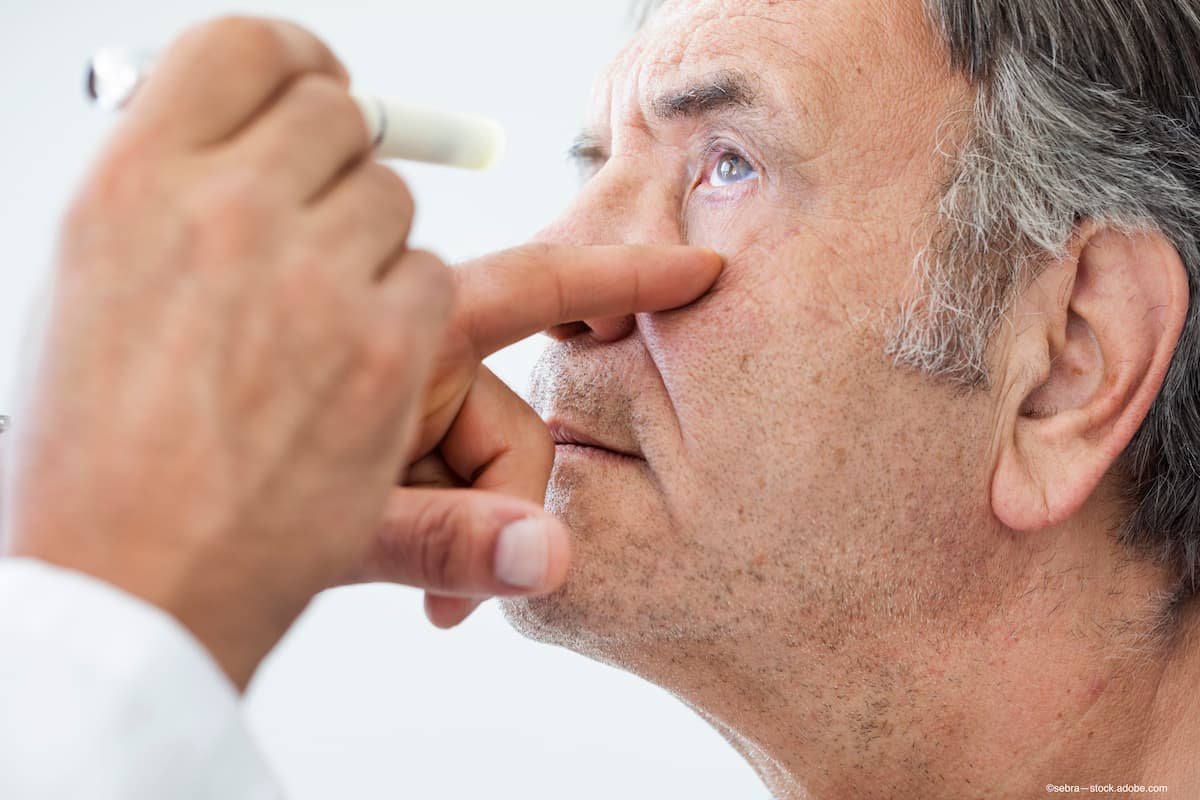
Kiora Pharmaceuticals announced it has enrolled the first patient as a part of a Phase 2 study evaluating KIO-201 topical eye drops in patients with PCED, a rare ocular surface condition characterized by non-healing wounds on the eye surface.

A team of investigators at Flinders University in Australia have found that a specific cell within the retina appears to be particularly good at housing Ebola and other viruses.
Via four cases, Dr Harry Flynn describes a variety of endophthalmitis management options for retinal surgeons.
Dr Penny Asbell discusses her presentation entitled, “Antibiotic Resistance among Ocular Staphylococcal Pathogens: Longitudinal Trends in the ARMOR Study."
Biologic treatments can be utilised to help the eye heal itself in inflammatory conditions such as dry eye disorder.

In a paper, investigators identified strategies used by patients to reduce the cost of therapy and its impact on adherence to treatment. Patients may be reluctant to disclose challenges regarding adherence to dry eye disease therapy, as well as fears of worsening quality of life.
The study's primary endpoints were to look at increasing Schirmer's scores, as well as eye discomfort score.
BRIM Biotechnology Inc. has entered into a new strategic partnership with Ora Inc. for the late-stage clinical development of lead drug candidate BRM421 for dry eye syndrome (DES).
Patients are at risk for developing severe dry eye and ocular surface disease.
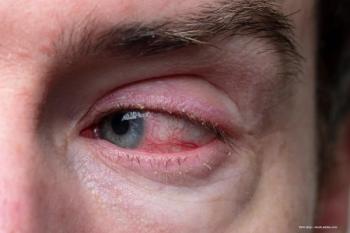
TP-03 met the primary and all secondary endpoints, effectively resolved Demodex blepharitis and was well-tolerated with no serious treatment-related adverse events. 56% of patients on TP-03 achieved the primary endpoint of complete collarette cure.
Investigators from the Karolinska Institutet and St. Erik Eye Hospital, Stockholm, Sweden, reported that they have developed a prognostic test, referred to as serUM, that they believe is a strong predictor of metastasis of uveal melanoma.
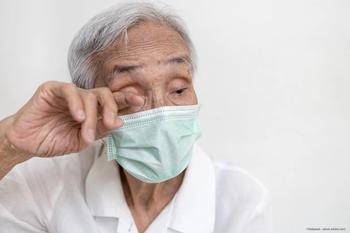
During a presentation at the Association for Research in Vision and Ophthalmology’s 2022 annual meeting, Dr Yuichi Hori and colleagues found that taping the top border of a surgical mask to a clinicians’ skin reduces the potential for ocular surface damage resulting from expirations of air reaching the ocular surface during the COVID-19 pandemic.
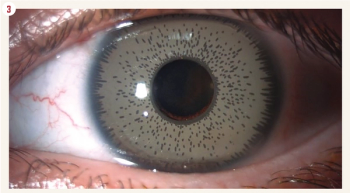
Authors of a retrospective study into complications associated with iris implants advise that the procedure should be considered as malpractice.
An end-of-week review of what happened in ophthalmology from April 9-April 15.
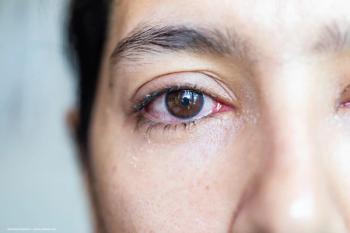
A team of investigators from Pohang University of Science and Technology has found that conjunctival goblet cell examination is important for the precise diagnosis and effective treatment of ocular surface diseases; however, CGC examination has not been possible until now due to lack of non-invasive devices.
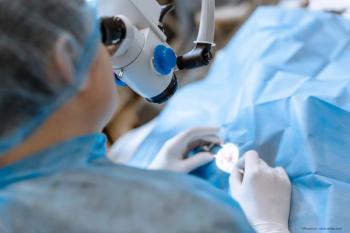
A large retrospective analysis was carried out to investigate various risk factors for endophthalmitis as well as the effect of using a hydrogel sealant.
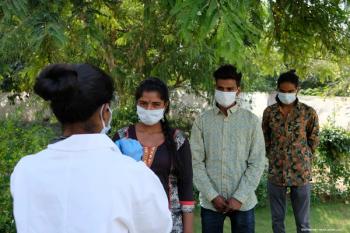
Successful outcomes in rhino-orbital-cerebral mucormycosis depend on awareness of red flag symptoms and signs, prompt diagnosis and early treatment with amphotericin B and surgery as necessary.
Dr Raymond Douglas discusses real-world adherence to teprotumumab as a treatment for thyroid eye disease.
Dr Preeya Gupta walks through her four pearls for successful corneal collagen cross-linking, including handling patient expectations, managing the epithelial cells and preventing infectious keratitis.

The investigators believe that, based on their findings, the impact of COVID-19 on the autonomous nervous system warrants further prospective studies and assessment of pupillary function might be a useful test for determining autonomic dysfunction.
At the 2021 American Academy of Ophthalmology annual meeting, Dr Penny Asbell discussed data from the ARMOR study and its effects on treating ophthalmic infections, such as endophthalmitis.

Underlying autoimmune disease alters uveitis therapy.

A team of investigators from the University of Michigan may have unlocked a potential new recipe for counteracting the impact that COVID-19 has on patients with underlying disease processes such as type 2 diabetes.

The investigators reported the following most prominent cognitive deficits: processing speed, executive functioning, and phonemic fluency among others.