






Geographic Atrophy
Latest News
Advertisement
Video Series









CME Content














Advertisement

The results of a multicenter controlled clinical trial showed that the device resulted in “a significant improvement in visual acuity (VA) from baseline to month 12.

The deal will see MeiraGTx assume development rights to ZipBio’s experimental therapies targeting the complement pathway in geographic atrophy (GA).

MTII tracking in geographic atrophy reveals central macula preservation and predicts vision loss better than lesion area, shaping future trial endpoints.

From artificial intelligence and IOL innovation to biosimilars, geographic atrophy, and postoperative eye protection, Joshua Mali, MD, FASRS, shares what he believes will define ophthalmology in the year ahead.

Imaging and biomarkers are driving earlier, more individualized GA treatment

Learn how multimodal imaging and complement inhibitors reshape geographic atrophy care, guiding early treatment, CNV monitoring, and AI-driven follow-up.

A total of 38 patients were included in the study. All underwent implantation of the PRIMAretinal prosthetic chip with the goal of restoring vision.

The trial is evaluating OCU410 (AAV5-RORA) for the treatment of geographic atrophy (GA) secondary to dry age-related macular degeneration.

The Investigational New Drug (IND) application from Complement Therapeutics for CTx001 was previously approved by the FDA in October 2025

New US patent boosts Nanoscope’s MCO-010 optogenetic therapy as long-term studies show lasting safety and vision gains in retinal disease.

Knowing what’s on the market for AMD and GA aids in preserving vision.

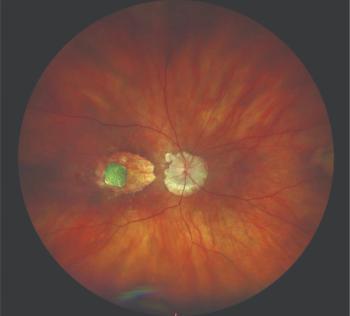
The novel system converts light into electrical signals to stimulate retinal cells.


This approach helps distinguish diseases associated with macular atrophy.

Lock in patient adherence with discussion of study results.

Results showed reduction in geographic atrophy progression and improved visual acuity.

While primary endpoint analysis showed no statistical difference in the rate of change in GA area between AVD-104 versus monthly avacincaptad pegol, 12-month results showed approximately 31% reduction in GA lesion growth rate versus growth rates in sham and natural history rates.

New research highlights iron dysregulation's role in dry AMD, suggesting transferrin as a promising treatment to slow disease progression.

Xelafaslatide is a small-molecule Fas inhibitor designed to protect key retinal cells, including photoreceptors, from cell death that occurs across multiple retinal diseases and conditions.

Geographic atrophy management evolves with proactive imaging, personalized therapies, and real-world insights, enhancing patient care and treatment outcomes.

K8 is a member of a new class of inflammasome-inhibiting drugs called kamuvudines.

The DRAGON trial was a 24-month pivotal phase 3 trial evaluating Tinlarebant in adolescent STGD1 patients.

To help with education and awareness, Prevent Blindness is providing free, expert-approved educational resources on GA.

In the study, authors investigated the natural history of GA lesion incidence rates and analyzed potential risk factors for faster incidence of GA lesions.
Advertisement
Advertisement
Trending on Eye Care Network - Ophthalmology Times
1
AAO 2026: BRUNELLO 1-year results for remigromig in DME
2
AAO 2026: Optogenetic gene therapy heads to phase 2 trial in geographic atrophy
3
AAO 2026: MCO-010 sustains vision gains in RP through 4 years
4
Real-world VOYAGER data on faricimab in nAMD, DME, RVO at EURETINA 2026
5