



















Geographic Atrophy
Latest News

Advertisement
CME Content
Advertisement
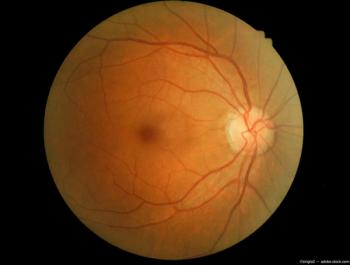

Oral gildeuretinol demonstrated a clinically meaningful reduction in the GA lesion growth rate at 24 months in the SAGA study.

Oral gildeuretinol demonstrated a clinically meaningful reduction in the geographic atrophy lesion growth rate at 24 months, supporting additional clinical development. SAGA topline data has been accepted as a late breaker at the 128th annual meeting of the American Academy of Ophthalmology, being held October 18-21 in Chicago.


According to the company, the pilot study showed procedural feasibility of ophthalmic artery angioplasty in the treatment of vascular lesions associated with geographic atrophy (GA).

BI 771716, with technology licensed from CDR-Life, is a highly specific antibody fragment, possibly enabling an optimized penetration through all retinal layers to the most critical target site driving GA disease pathology.

BI 771716, with technology licensed from CDR-Life, is a highly specific antibody fragment, possibly enabling an optimized penetration through all retinal layers to the most critical target site driving GA disease pathology.

Ophthalmologists can use OCT to find the early signs of disease

PAS-nomacopan is a long-acting bispecific inhibitor of C5 and leukotriene B4 for intravitreal treatment of geographic atrophy (GA).

According to the company, additional data from its Phase 2 ARCHER trial showed both vision protection in standard and low light conditions, and structural protection in regions of the eye key for visual acuity.
Eleonora Lad, MD, PhD, spoke about her presentation, "Multiwavelength photobiomodulation significantly reduces risk for vision loss and onset of geographic atrophy in dry age-related macular degeneration" at this year's American Society of Retina Specialists (ASRS) meeting in Stockholm, Sweden.

According to the company, OCU410 utilizes an adeno-associated virus platform for the retinal delivery of the RORA gene.

Riaz Qureshi, PhD, explains the effects of spin sneaking into systematic reviews and ways the scientific community can better identify it to improve the validity.

Researchers train deep learning model on OCT scans to ID patients eligible for GA trials.

Durga Borkar, MD, MMCi, sat down with Sydney M. Crago, Assistant Managing Editor of Ophthalmology Times and Modern Retina, to discuss Fas inhibition with ONL-1204 for the treatment of geographic atrophy: First-time results from a phase 1b study, which she is presenting at the ASRS meeting held in Stockholm, Sweden.
Rishi P. Singh, MD, sat down with Sydney Crago, Assistant Managing Editor of Modern Retina, to discuss his presentation on the results from part 1 of the Phase 2/3 SIGLEC trial assessing AVD-104 for GA at the American Society of Retina Specialists meeting held in Stockholm, Sweden.

Srinivas Sai Kondapalli, MD, sat down with Sydney M. Crago, Assistant Managing Editor of Ophthalmology Times and Modern Retina, to discuss outer retinal tubulations in lesion growth for subfoveal and non-subfoveal GA.

Sydney M. Crago, Assistant Managing Editor of Ophthalmology Times and Modern Retina, spoke with attendees, who shared which topics they are most looking forward to discussing at the ASRS meeting held in Stockholm, Sweden.

Researchers from the UKB Eye Clinic, in cooperation with the University of Bonn and in close collaboration with basic and clinical scientists, have examined patients with early forms of AMD. The researchers focused on the so-called iRORA lesions, which are very early anatomical signs of retinal damage.

Comanagement is a key component for treatment of disease.

Durga Borkar, MD, MMCi, recently discussed the quality data (Qdata, Verana Health) gathered on geographic atrophy as well as the GATHER 1 and GATHER 2 data.

Apellis plans to seek re-examination, with a final opinion expected in fourth quarter of 2024.

Repeated 0.1-ml intravireal injections of lampalizumab, antigen-binding fragment of a humanized monoclonal antibody that inhibits complement factor D, seem to be associated with a low risk of elevated IOP

During interview earlier this year, we asked leaders in the retina field would tell residents and medical students as they train for the next decades in retinal care. Here's what 2 of them had to say.
Advertisement
Advertisement
Trending on Eye Care Network - Ophthalmology Times
1
AAO 2026: BRUNELLO 1-year results for remigromig in DME
2
AAO 2026: Optogenetic gene therapy heads to phase 2 trial in geographic atrophy
3
AAO 2026: MCO-010 sustains vision gains in RP through 4 years
4
Real-world VOYAGER data on faricimab in nAMD, DME, RVO at EURETINA 2026
5