

















Staging AMD accurately and identifying clinical features that are linked with disease progression are key.



Apellis announces corporate restructuring to drive growth of pegcetacoplan
Staging AMD accurately and identifying clinical features that are linked with disease progression are key.
According to the company, the therapeutic is the only approved GA treatment with a statistically significant reduction in the rate of GA progression at the 12-month primary endpoint across two Phase 3 clinical trials.
Paul Hahn, MD, PhD, spoke with our team about comparing the relative efficacy of pegcetacoplan versus avacincaptad pegol in patients with geographic atrophy at the 2023 ASRS annual meeting.

Data from the 30 month GALE extension study indicated that continuous treatment with pegcetacoplan injection showed increasing beneficial effects over that timeframe in patients with geographic atrophy (GA).
Tarek Hassan, MD, spoke with our team about a novel glyco-mimetic nanoparticle for the treatment of geographic atrophy at the 2023 ASRS annual meeting.
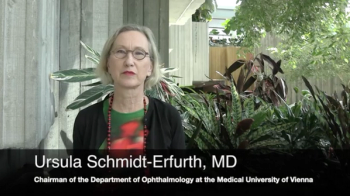
Ursula Schmidt-Erfurth, MD, spoke with our team to share information on the GALE extension study at the 2023 ASRS annual meeting.

The companies are partnering to advance a novel therapy with the goal of preserving sight for people living with blinding retinal disease.

In presentations at the American Society of Retina Specialists 41st Annual Meeting in Seattle, additional analyses support consistent protection from vision loss.

During presentations at the American Society for Retina Specialists 41st Annual Meeting in Seattle, the company noted that there was no indication that drug product or manufacturing issues contributed to rare events of retinal vasculitis.
Carl Danzig, MD, spoke with our team to share the exciting results of the GATHER 1 and GATHER 2 clinical trials for avacincaptad pegol for the treatment of geographic atrophy at the 2023 ASRS annual meeting.

Cochair Peter J. McDonnell, MD, highlights what this year’s conference will mean for clinicians and addresses the anticipated increased patient volume.

According to the ASRS Research and Safety in Therapeutics Committee, ophthalmologists noted instances of intraocular inflammation (IOI) after the initial injection of pegcetacoplan.

The complement system identifies and eliminates pathogens and dying cells, 3 pathways can activate the complement system—classical, lectin, and alternative—and their activation results in similar functions of opsonization, inflammation, and cell lysis.

The company has completed evaluation on candidates and selected a single drug candidate to move forward into clinical trials.

CT1812 is an experimental, oral therapy for the treatment of geographic atrophy secondary to dry age-related macular edema.
Data supports ANX007 as the first complement therapy to preserve visual acuity, achieving statistically significant protection, but reduction in rate of geographic atrophy lesion growth did not reach statistical significance.

According to the company, topical administration is capable of delivering metformin to choroid, RPE, and retina.

Data demonstrate a reduction in the loss of retinal pigmented epithelial and photoreceptor cells.

Analysis signals up to 59% risk reduction in rate of vision loss compared with sham treatment at 12 months.

According to the companies, Boehringer Ingelheim will use RetinAI’s tools to develop treatments for GA, applying the company’s artificial intelligence tools to its imaging data in a search for novel biomarkers and predictors of disease progression.

The GA Won’t Wait campaign is designed to help older adults and their families understand and recognize the symptoms of this progressive and irreversible disease.

One way to advance the current understanding of GA is to study how disease progression varies among related individuals.

Industry leaders view pegcetacoplan as most important retinal technology in 10 years.

According to the company, post-hoc time-to-event analysis signals up to 59% risk reduction in rate of vision loss compared to sham treatment at 12 months. The analysis will be presented at the ARVO Annual Meeting from April 23-27 in New Orleans.

Ophthalmologists see new therapy as having a major impact on how geographic atrophy is treated.