

Opinion|Videos|December 9, 2025
Understanding Aflibercept’s Structural Design and Use of High-Dose in Retinal Vascular Diseases
Panelists discuss how aflibercept’s structural design and the higher molar dose of its 8-mg formulation enhance VEGF binding, treatment durability, and clinical predictability.
Advertisement
Episodes in this series
The panel reviews why aflibercept has remained a mainstay since its 2-mg approval, emphasizing its VEGF “trap” design, high binding affinity, fully human fusion protein architecture, and low immunogenicity—features associated with reliable anatomic responses and minimal tachyphylaxis. Clinically, aflibercept’s predictability enables consistent treat-and-extend intervals easing clinic flow and patient counseling. Discussion then shifts to aflibercept 8 mg, now approved for AMD and DME (with RVO pending). The higher molar dose increases intravitreal VEGF-binding capacity, translating to faster drying in some patients and longer durability versus 2 mg, allowing extended dosing for appropriate candidates. Overall, the session highlights structure–function principles, practical interval setting, and how the 8-mg formulation may raise the ceiling on fluid control and convenience.
Advertisement
Related to this article

In this Q&A, Ping Moore, OD, covers emerging dry eye therapies, from selenium sulfide to next-gen cyclosporine, and how subtype-guided care shapes treatment choices.

Ophthalmology is projected to face one of the steepest physician shortages of any subspecialty by 2038.

Two investigational pipeline therapies take aim at the root causes of dry eye disease

The RMAT designation opens the door to a faster development pathway for EO2002 as a minimally invasive alternative to corneal transplantation, while Emmecell also advances a cell therapy for geographic atrophy.
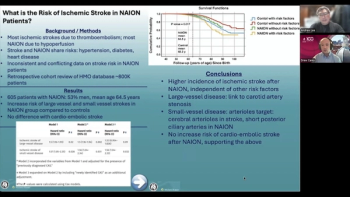
Andrew G. Lee, MD, and Drew Carey, MD, discuss findings from a retrospective study examining ischemic stroke risk in patients with non-arteritic anterior ischemic optic neuropathy and the implications for vascular risk factor management.

Length and width, not thickness, emerge as key drivers of higher-order aberrations.

What the approval of a second targeted biologic means for patients, practice, and the evolving TED treatment landscape

Three real-world cases illustrate strategies to identify and manage GA across a range of scenarios, from coexisting wet age-related macular degeneration to functionally monocular patients.
Advertisement
Advertisement
Trending on Eye Care Network - Ophthalmology Times
1
FDA approves phentolamine ophthalmic solution 0.75% (Ryzumvi) for presbyopia
2
Alvotech files first known aflibercept 8 mg biosimilar with EMA
3
FDA approves subcutaneous Enspryng for TED
4
Beyond slowing atrophy: Optogenetic therapy targets vision lost to GA
5