


Videos
Advertisement
Advertisement
Jay Chhablani, MD, presented the phase 1/2 clinical trial data for OCU410, at the 2025 annual meeting of the American Society of Retina Specialists.

At ASRS 2025, Andrew G Lee, MD, gave key insight into the world of a neuro-ophthalmologist and why and when a retina specialist should consult a neuro-ophthalmologist
Advertisement

The DRD Cure Accelerator, highlighted at the CCOI-Stanford Summit, is a global initiative advancing clinical research and collaborations to eliminate vision loss from diabetic retinal disease.
To mark Ophthalmology Times' 50th anniversary, we invited top experts to reflect on the most significant innovations in ophthalmology over the past five decades.
To mark Ophthalmology Times' 50th anniversary, we invited top experts to reflect on the most significant innovations in ophthalmology over the past five decades.
Advertisement
To mark Ophthalmology Times' 50th anniversary, we invited top experts to reflect on the most significant innovations in ophthalmology over the past five decades.
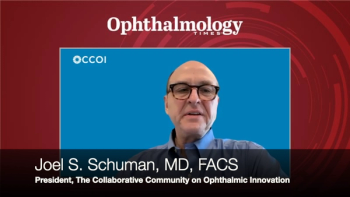
President Joel S. Schuman, MD, highlights the group’s mission and vision for the future—uniting 17 working groups and over 80 stakeholders.
To mark Ophthalmology Times' 50th anniversary, we invited top experts to reflect on the most significant innovations in ophthalmology over the past five decades.
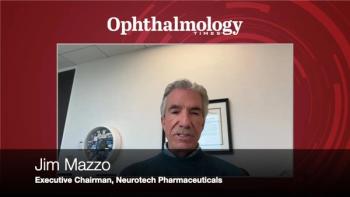
Jim Mazzo is among the presenters who will highlight the need to break silos and accelerate eye health solutions at the Collaborative Community on Ophthalmic Innovation (CCOI) meeting at Stanford University on July 23, 2025.
To mark Ophthalmology Times' 50th anniversary, we invited top experts to reflect on the most significant innovations in ophthalmology over the past five decades.
To mark Ophthalmology Times' 50th anniversary, we invited top experts to reflect on the most significant innovations in ophthalmology over the past five decades.
To mark Ophthalmology Times' 50th anniversary, we invited top experts to reflect on the most significant innovations in ophthalmology over the past five decades.
New technologies and a proactive mindset are transforming how glaucoma is diagnosed and treated—and redefining what “controlled” really means.
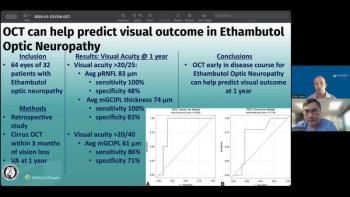
Andrew G. Lee, MD, and Drew Carey, MD, discuss how baseline optical coherence tomography parameters can help ophthalmologists counsel patients and make more informed decisions after ethambutol-associated optic neuropathy.
From laser vision correction to adjustable lens implants, the Center for Refractive Solutions at New York Eye and Ear Infirmary of Mount Sinai offers advanced options for every stage of life.

A look at current therapies, clinical trial results, patient education, and emerging options for managing this progressive retinal disease.
Advanced monitoring strategies are overcoming significant obstacles in retinal care, as highlighted at the 2025 International SPECTRALIS Symposium — And Beyond (ISS).
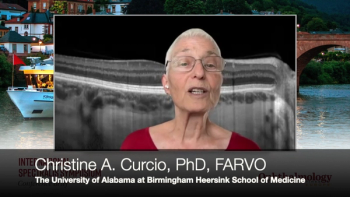
Advanced autofluorescence reveals cellular pigment reservoirs with therapeutic potential at the Heidelberg 2025 International SPECTRALIS Symposium – And Beyond (ISS).

This noninvasive imaging tool reveals early brain pathology through the eye, promising faster and more accurate diagnoses as highlighted at the Heidelberg 2025 International SPECTRALIS Symposium – And Beyond (ISS).
Findings presented at the Heidelberg 2025 International SPECTRALIS Symposium — And Beyond (ISS) suggest detailed structural data could better inform therapeutic targeting and monitoring.
Improved axial resolution allows clearer visualization of early atrophic changes, including iRORA vs cRORA differentiation, as shared at the Heidelberg 2025 International SPECTRALIS Symposium – And Beyond (ISS).
From basal laminar deposits to foveal centering, a new framework refines what clinicians see—and what they treat—in outer retinal disease, as presented at the Heidelberg 2025 International SPECTRALIS Symposium – And Beyond (ISS).
A panelist discusses how treating demodex blepharitis with Lotilaner not only eliminates the anterior blepharitis symptoms but also improves meibomian gland function, with low recurrence rates after treatment and significant benefits for patient comfort and quality of life.
A panelist discusses how demodex blepharitis frequently co-occurs with other ocular surface conditions in younger patients, as illustrated by a 35-year-old contact lens wearer who presented with recurrent styes, contact lens intolerance, and a history of rosacea.
Advertisement
Advertisement
Trending on Eye Care Network - Ophthalmology Times
1
RCA releases first State of Retina Care report
2
OT Roundup ep. 1: ADHD's eye link, MOGENRY's BLA, and myopia news
3
FAQ: What retina specialists need to know about the MOGENRY (MCO-010) BLA acceptance
4
Vienna calling: Inside the 26th EURETINA Congress
5