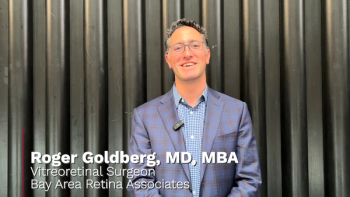
At ARVO 2025, in Salt Lake City, Utah, Roger Goldberg, MD, MBA, talked about his presentation on the effect of AREDS vitamins in geographic atrophy.

At ARVO 2025, in Salt Lake City, Utah, Roger Goldberg, MD, MBA, talked about his presentation on the effect of AREDS vitamins in geographic atrophy.
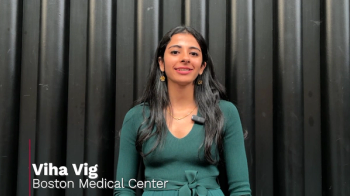
At ARVO 2025, in Salt Lake City, Utah, Viha Vig, talked about her poster presentation investigating the relationship between ocular and systemic mitochondrial diseases and dementia
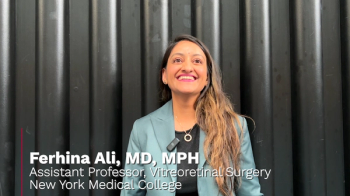
At ARVO 2025, in Salt Lake City, Utah, Ferhina Ali, MD, MPH, talked about her presentation on the early real-world use of aflibercept 8 mg in treatment-naive patients with neovascular age-related macular degeneration
At ARVO 2025, in Salt Lake City, Utah, C Michael Samson, MD, MBA, gave insight into his data on immune cell profiling in birdshot retinochoroidopathy using single-cell RNA sequencing.
At ARVO 2025, in Salt Lake City, Utah, Diana Do, MD, gave an update on the LIGHTSITE III study of photobiomodulation for dry age-related macular degeneration.
Giullia Coradetti, MD, offered insight into her research on a post-hoc analysis based on the GATHER 2 clinical trial data for geographic atrophy and age-related macular degeneration.
Christina Prescott, MD, talks about the rate of recurrence of stromal keratitis in the Zoster Eye Disease Study, both in the placebo and in the treatment group.
Ellen Koo, MD, presented data from first in-human clinical trials, looking at the results from magnetic cell therapy and reports on the efficacy and safety in the patients.
Perfluorohexyloctane demonstrated rapid symptom relief in patients with dry eye, with effects reported as early as 5 minutes after dosing.
A panelist discusses how nonimplant MIGS, such as viscocanaloplasty and viscoelastic delivery devices, offer long-term IOP reduction and medication savings, emphasizing their benefits for early intervention and improved postoperative quality of life, while noting limitations for more advanced glaucoma conditions.
A panelist discusses how Via360 viscodilation effectively reduced IOP and improved vision in a 90-year-old woman with chronic angle-closure glaucoma, offering a suitable surgical solution given her complex medication regimen and poor adherence.
A panelist discusses how differences in viscodilation devices—particularly the presence or absence of pressurized viscoelastic delivery—impact IOP outcomes in MIGS, highlighting the advantages and trade-offs of Omni, iTrack Advance, and Via360 based on surgical goals and ease of use.
A panelist discusses how combining cataract surgery with canaloplasty and trabeculotomy using the Via360 device offered an effective MIGS solution for a patient with open-angle glaucoma and poor medication adherence, reducing IOP while minimizing the need for filtering surgery.
A panelist discusses how selecting the right MIGS procedure based on individual patient factors—such as glaucoma severity, angle anatomy, and target IOP—can optimize outcomes and personalize glaucoma management.
CCOI transforms ophthalmic innovation by uniting stakeholders, streamlining processes, and prioritizing patient perspectives for faster, impactful solutions.

Almeida highlighted the increasing prevalence of diabetic macular edema and the importance of developing safe, well-tolerated treatments.

This large database study explored the link between autoimmune problems and AMD.
In this conversation, Franklin discussed a research study on intraoperative fluorescein angiography in surgical procedures, highlighting significant advancements in surgical visualization and patient outcomes.
Glaucoma management is shifting toward earlier, drop-sparing interventions using sustained drug delivery and advanced laser technologies that improve outcomes and quality of life for both patients and physicians.
Exploring how oral sedation and office-based surgery can enhance efficiency and patient experience
A one-drop, low dose atropine study assesses accommodative amplitude and dynamics, with clinically applicable findings.
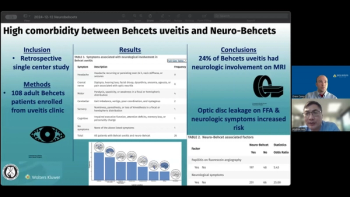
In cases with optic nerve hyperfluorescence or neurologic symptoms, prompt neuroimaging is warranted to rule out neuro-Behcet disease and guide multidisciplinary management.
Katherine Talcott, MD, a retina specialist at Cleveland Clinic, presented findings on EYP-1901 in the phase 2 DAVIO study.
The trial will assess allogeneic retinal pigment epithelium cells in the treatment of geographic atrophy.
The first SightLine meeting, held pre-ASCRS, reveals insights on physician-industry relationships, mentorship opportunities, and the practical applications of AI in healthcare.
Outcomes from high myopia LASIK using the Teneo laser platform demonstrate strong visual stability and patient satisfaction, with reduced dysphotopsias and minimal reliance on cycloplegia or nomograms.
Researchers stratified a dataset of more than 100 patients in an emergency department to see which patients may be indicated for retinal artery occlusions.