
Initiating aflibercept 8 mg or faricimab as a first-line therapy was associated with longer treatment intervals and superior anatomic outcomes in a real-world analysis of more than 12,000 eyes.

Initiating aflibercept 8 mg or faricimab as a first-line therapy was associated with longer treatment intervals and superior anatomic outcomes in a real-world analysis of more than 12,000 eyes.
In the latest episode of The Retina TL;DR with Dr. Weng, host Christina Y. Weng, MD, MBA, FASRS, talks with Dr. Brodie about a photovoltaic subretinal implant showing meaningful visual gains in patients with geographic atrophy due to AMD.
Bedside OCT in preterm infants links retinal thickness to motor, cognition, and autism risk at age 2, hinting at earlier brain screening.
Learn how real-world Encelto implantation refines MacTel care, from selecting progressing symptomatic patients to surgical technique, safety counseling, and future ECT promise.
Not every question in the management of patients with GA has a clear answer—the two retina specialists work through the ones clinicians face most often in practice.

For Jay S. Duker, MD, and Ramiro Ribeiro, MD, PhD, paths that began in clinical and academic medicine became the foundation for a different kind of work—leading drug development from the inside.
SOL-1 data show OTX-TKI extends rescue-free control in treatment-naive wet AMD, shaping AI-driven trial design and longer-interval care.
In the latest episode of The Retina TL;DR with Dr. Weng, host Christina Y. Weng, MD, MBA, FASRS, talks with Dr. Eichenbaum about the cell and gene therapy pipeline ahead, what sustains a career in retina, and why lifting others up is just what you do.
Meeting founder and co-chair Arshad M. Khanani, MD, MA, FASRS, shares what attendees can expect during this year's program, opening the evening of June 12 and running through June 13 in Las Vegas, Nevada.
Sharon Fekrat, MD, FACS, FASRS, reviews the science behind dopamine signaling in the retina and its potential role in the progression of age-related macular degeneration.
Dimitra Skondra, MD, PhD, FASRS, shares her perspective on the evolving treatment landscape for dry age-related macular degeneration and the key questions facing the field.
Carl D. Regillo, MD, FACS, reviews long-term efficacy and safety findings from the Port Delivery System clinical trial program.
Michael Singer, MD, discusses the role of steroids, biomarkers, and second-generation therapies in diabetic macular edema management.
In this interview from the 2026 Retina World Congress, Katherine Talcott, MD underscores that retinal vein occlusions (RVOs) should prompt retina specialists to look beyond the eye and ensure patients are connected to primary care and cardiology. She highlights the importance of systemic risk factor management and interdisciplinary coordination as essential components of comprehensive RVO care.
Ashkan Abbey, MD, reviews findings from the DAVIO2 and VERONA clinical trials for the bioerodible intravitreal insert.
Patricio G. Schlottmann, MD, examines why injection frequency drives treatment failure in wet AMD and the particular challenges facing patients in Latin America.
Posture, operating room setup, and small workflow adjustments can reduce cumulative neck and back strain over time.
Jay Chhablani, MD, on multimodal imaging, OCT biomarkers, and the importance of early diagnosis as treatment options emerge
In the latest episode of The Retina TL;DR with Dr. Weng, host Christina Y. Weng, MD, MBA, FASRS, talks with Dr. Murdock about how the rise of "Ozempic face" has placed aesthetic injectables at the intersection of oculoplastics and retina.

From role models to open doors, Christina Y. Weng, MD, MBA, FASRS, shares insights on career development, women in ophthalmology, evolving training models, and her work as protocol chair for the DRCR Retina Network’s Protocol AO study.
In the latest episode of The Retina TL;DR with Dr. Weng, host Christina Y. Weng, MD, MBA, FASRS, talks with Drs. Do, Lad, and Munk about the LIGHTSITE III trial data behind photobiomodulation and what it means for retina practice.
In the latest episode of The Retina TL;DR with Dr. Weng, host Christina Y. Weng, MD, MBA, FASRS, talks with Dr. Dugel about the novel hydrogel-based tyrosine kinase inhibitor platform designed to extend durability and improve long-term outcomes in neovascular AMD.
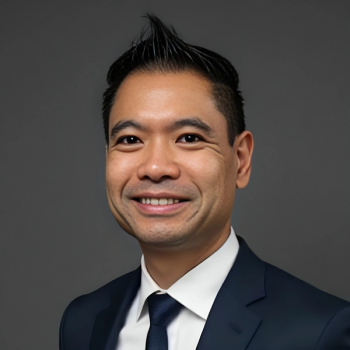
Leng discusses preliminary results from an ongoing study investigating the interaction between pegcetacoplan and anti-VEGF treatments in patients with GA.

In the latest episode of The Retina TL;DR, host Christina Y. Weng, MD, MBA, FASRS, talks with Dr. Khanani about new retinal gene therapy trials, covering safety, delivery, and ways to reduce treatment burden.
Panelists discuss how emerging therapies—including TKIs, sustained-release implants, and gene therapy—may reduce treatment burden and shift retinal disease management toward longer-acting, maintenance-based approaches.
In the latest episode of The Retina TL;DR with Dr. Weng, host Christina Y. Weng, MD, MBA, FASRS, talks with Dr. Zacks about ONL1204, a first-in-class Fas pathway inhibitor showing promise in neuroprotection for retinal diseases—from retinal detachment to geographic atrophy and glaucoma.
Panelists discuss how aflibercept 8 mg maintains a safety profile similar to 2 mg and how workflow, systemic risk, and patient comfort influence confidence in adopting the higher-dose formulation.
Panelists discuss how clinicians manage suboptimal responders by focusing on stability rather than complete dryness, using multimodal approaches, and avoiding premature treatment switching.