(FAQ) Inflammatory Eye Disease Week: What clinicians should know
Published: | Updated:
Prevent Blindness marks IED Week, October 19 to 25, as new therapies and pivotal trials reshape care for uveitis and thyroid eye disease.

Prevent Blindness marks IED Week, October 19 to 25, as new therapies and pivotal trials reshape care for uveitis and thyroid eye disease.
At AAO 2026, Anjum F. Koreishi, MD, shared how to prevent complications after cataract surgery in patients with uveitis.
Timothy Janetos, MD, explained when to refer uveitis to a specialist and why access to uveitis care remains limited.
Timothy M. Janetos, MD, Donald J. D’Amico, MD, and Mark J. Gallardo, MD, point to uveitis access, clinical trial rigor, and procedural pharmaceuticals.
Liza M. Cohen, MD, explains when to use CT vs MRI in thyroid eye disease and why to review images yourself.
Anjum F. Koreishi, MD, explains why inflammation control and planning are key to cataract surgery for patients with uveitis.

Improved guidance on preservatives and allergens needed to ensure safety.
EnVision Summit insights spotlight complex glaucoma cases, MIGS pitfalls, and personalized surgery choices—preview the issues driving 2026 debates in Puerto Rico.

Analysis of 20 years of data highlights differences in reimbursement trends across ophthalmology subspecialties and practice settings, according to Dustin D. French, PhD.

Potential loss to follow-up is a critical issue for these patients with glaucoma.

Course director Robert S. Feder, MD, shares how the monthly Zoom sessions aim to deliver clinical pearls and foster cross-subspecialty learning.
At the EnVision Summit 2025 in San Juan, Puerto Rico, Poonam Misra, MD, and Alcina Lidder, MD, gave advice on managing glaucoma in patients with other ocular co-morbidities such as myopia and those who have undergone corneal transplantation.
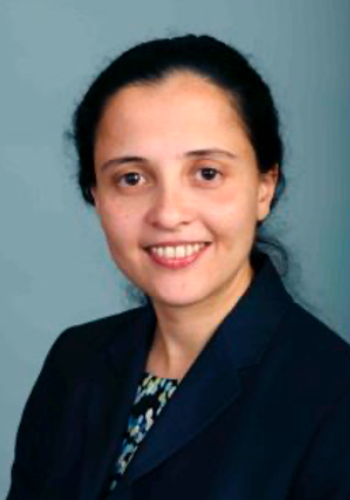
Amani Fawzi, MD, is inducted into the society. Her research uses translational approaches to study age-related macular degeneration and diabetic retinopathy.

OCT methods are invaluable in the assessment of patients with the condition.

Physician provides contemporary perspective and pearls to guide ophthalmologists.

While the spikes that are characteristic of COVID-19 are well-documented, researchers have detected a subtle change from the onset of the pandemic in January to May, when the virus ultimately engulfed New York City.
Common devices differ in hardware, analysis, and display of data

Educators must connect their own behavior to message of what is important

Cataract surgery in patients with coexisting uveitis is more challenging than managing either condition alone. Surgeons must answer a different set of questions and consider alternative management strategies, said Debra A. Goldstein, MD, FRSC, professor of ophthalmology and director of the Uveitis Service, Department of Ophthalmology, Northwestern University Feinberg School of Medicine, Chicago.
In this article, Dr Tanna discusses treatment options for glaucoma patients who do not show satisfactory response to a PGA while taking into consideration the two key therapeutic choice factors: IOP-lowering efficacy and tolerability.
New devices to lower IOP and facilitate aqueous outflow via minimally invasive glaucoma surgery are being developed, and early results from clinical trials are favorable for some.
Nicholas J. Volpe, MD, professor and holder of the Adele Niessen Chair in Ophthalmology at the University of Pennsylvania School of Medicine, has been named the new chairman of ophthalmology at Northwestern Medicine, effective Sept 1.
Normal-tension glaucoma (NTG) is a form of primary open-angle glaucoma (POAG) in which there is no known history of statistically elevated IOP; however, the definition of an upper limit of normal IOP is arbitrary. POAG is a multifactorial disease process with pressure-dependent and pressure-independent etiologic factors. In NTG, the pressure-independent factors likely play a more substantial role.
Ophthalmologists do not agree on whether normal-tension glaucoma (NTG) is the same as primary-open angle glaucoma (POAG). Angelo P. Tanna, MD, director of the Glaucoma Service, Feinberg School of Medicine, Northwestern University, Chicago, approached this debate by offering a detailed definition of NTG.
Once thought to be a disease characterized solely by elevated IOP, the definition of glaucoma has been evolving to more accurately portray the disease's true nature.
Glaucoma has long been defined as a disease characterized by elevated IOP. That definition, however, is changing to define the disease as an optic neuropathy characterized by a specific pattern of optic nerve head and visual field damage. That's the word from Theodore Krupin, MD, department of ophthalmology, Sorrel Rosin Eye Center, Northwestern University, Chicago.
In a comparison study of adjunctive medication for glaucoma therapy, the addition of brimonidine tartrate, a selective alpha-adrenergic agonist, to a prostaglandin analog achieved greater pressure-lowering than either of two carbonic anhydrase inhibitors.
The repeatability of selective laser trabeculoplasty (SLT) was investigated in a retrospective study which included 52 eyes that were phakic, had primary open-angle glaucoma or pseudoexfoliation glaucoma, and maintained successful IOP control for at least 1 year after initial SLT.
Las Vegas-The detection of visual field progression is a critically important aspect of the management of glaucoma, yet it remains a major challenge for clinicians, said Angelo P. Tanna, MD, speaking here during a Glaucoma Subspecialty Day program at the annual meeting of the American Academy of Ophthalmology.
Fairfax, VA—The American Society of Cataract and Refractive Surgery (ASCRS) has formed a Retina Clinical Committee to provide members with a resource on the latest advances in retinal treatment.