

CEO Stephen McLeod, MD, outlines the American Academy of Ophthalmology's commitment to advocating for evidence-based, sustainable, and equitable reforms that prioritize public health and access to quality care.
CEO Stephen McLeod, MD, outlines the American Academy of Ophthalmology's commitment to advocating for evidence-based, sustainable, and equitable reforms that prioritize public health and access to quality care.

The bio-interventional platform is for uveoscleral outflow enhancement in open-angle glaucoma patients undergoing combined cataract surgery.

A retrospective study showed that the gender of the ophthalmologist influenced the amount of communication with the patient, and that the pandemic had an impact.

After review by the Data and Safety Monitoring Board, the dosing of OCU200 in patients with diabetic macular edema (DME) will continue.

Inherited retinal diseases have disease processes distinct from age-related macular degeneration and geographic atrophy, but may present with "phenocopy" clinical signs

The recent agreement with Cipla adds to the list of partnerships Formosa has formed for APP13007.

The study evaluated 14 patients that were treated with cultivated autologous limbal epithelial cells (CALEC) and followed them for 18 months.

Investigators advised clinicians of the potential for dystrophies that mimic age-related macular degeneration and other atrophic macular pathologies to be incorrectly diagnosed, which can impact treatment.

The investigators retrospectively evaluated 126 consecutive treatment-naïve nAMD patients (126 eyes) who received a loading dose of a minimum of three monthly intravitreal aflibercept injections that was followed by a TAE.

Ambulatory surgical centers are freestanding health care facilities that specialize in providing surgical and diagnostic procedures, not requiring an overnight stay.

The award recipients are leading research projects in India, Italy and Mexico
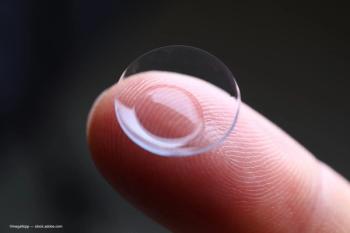
The system aids in the orthokeratology lens design process by syncing directly with topographers to create precise lens designs for the treatment of myopia in the matter of seconds.

This treatment is already approved for both diabetic macular edema (DME) and NIU-PS outside the US, including in 17 European countries.

Among the promising areas of retinal disease research are innovative approaches targeting pan-vascular endothelial growth factor inhibition.

Batoclimab is an anti-FcRn treatment being developed for a range of autoimmune diseases and active thyroid eye disease (TED).

The treatment was approved by China’s National Medical Products Administration (NMPA) and is China's first, and the world’s second, approved IGF-1R antibody drug.

This program is in place for prescriptions of cyclosporine ophthalmic solution 0.1% (VEVYE, Harrow) and promises a $59 price tag per bottle, effective immediately.

The Arise system utilises advanced algorithms to interpret corneal topography images, recommending lenses without requiring a fitting set

The Perimeter B-Series OCT system combines proprietary AI technology with optical coherence tomography, for use during breast-conserving surgeries.

The findings of this model support KIO-104 as a promising therapeutic candidate for both the prevention and treatment of PVR.
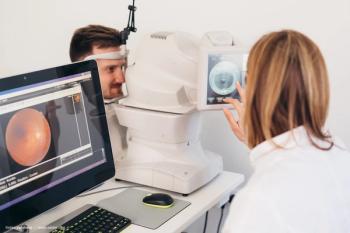
The authors commented that the patient’s "age, relative acute onset, and lack of medical history make this an atypical presentation.”

Investigators measured the choroidal structures using enhanced depth imaging optical coherence tomography

The closing of the merger is expected to occur as soon as practicable, subject to the satisfaction or waiver of the remaining customary closing conditions.

Maria Vittoria Cicinelli, MD, Denise Loya-Garcia, MD, PhD, and Vishal Raval, MD, were announced as the recipients and will receive a $3,000 honorarium.
Systemic evaluation key to the cause of the detachments

The award honors Ludwig von Sallmann, MD, a “distinguished international ophthalmologist and ophthalmic investigator whose contributions greatly increased the basic and clinical understanding of vision and ophthalmology.”

24-week topline data from the phase 2b ASPIRE study in diabetic macular edema (DME) are expected to be released in Q1 of 2025.

SpliceBio continues to actively enroll patients in the ASTRA study and accompanying POLARIS trial

After a successful inaugural WOS in 2024, the congress will feature new lectures and wetlabs in its sophomore year

Yu reviewed the benefits and limitations of various electrophysiologic technologies in a diverse group of inflammatory conditions affecting the retina and optic nerve.