

Phase 3 data show subcutaneous elegrobart quickly reduces proptosis and diplopia in chronic thyroid eye disease, with convenient at-home dosing.
Phase 3 data show subcutaneous elegrobart quickly reduces proptosis and diplopia in chronic thyroid eye disease, with convenient at-home dosing.

Oral QA102 shows imaging signals slowing drusen and GA progression in intermediate dry AMD at ARVO 2026, despite missing its primary end point.

Research suggests that one drop of atropine is all it takes for beneficial effects.

Data presented at ARVO 2026 show that high-dose gene therapy boosts central retinal sensitivity in X-linked retinitis pigmentosa, with the phase 3 VISTA study fully enrolled.
AI-assisted screening in glaucoma clinics flags patient distress early, improving adherence and outcomes without adding staff burden.

Phase 2 and phase 3 results in diabetic macular edema and uveitic macular edema support intravitreal anti–IL-6 therapy

Interim 6-month results from Part B of the LIGHTHOUSE trial show structural and functional improvements consistent with earlier cohorts; pivotal Phase 3 enrollment now underway with BLA filing targeted for 2028.
Ariel Ong, a fellow from University College London, discussed her ARVO poster, looking at her work on developing a scalable pipeline for data extraction from ophthalmic clinical letters and what significance that could have in managing patients.

Several presentations at ARVO 2026 show the field advancing on two fronts: extending how long therapies last and broadening what they target.
Madhura Tamhankar, MD, took some time at the ARVO conference in Denver, Colorado, to discuss a poster on disease progression in thyroid eye disease, stressing what we know about the Rundle Curve may not be accurate.

Three-year durability data emerge for two distinct approaches to RP

Emerging evidence repositions role of selective laser trabeculoplasty

Diastolic perfusion pressure emerges as the strongest predictor of myocardial strain in a recent study.

ECG-synchronized Doppler holography provides repeatable measurements of the retinal blood flow
The poster looked into the LLM's potential for biases in gender and race when it came to its knowledge of retinitis pigmentosa.

New pathways are reshaping the management of retinal disease.
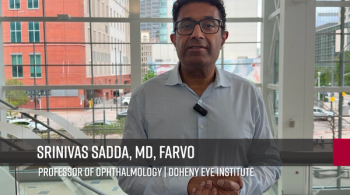
Srinivas Sadda, MD, FARVO, immediate past president of ARVO, discusses the impact the organization has had on his career and how he wants to help the next generation.
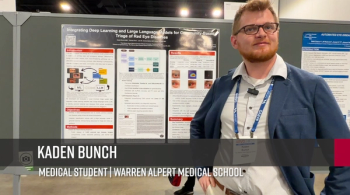
Kaden Bunch, a fourth-year medical student from the Warren Alpert Medical School of Brown University, talked about his poster on large language models and the effectiveness of diagnosing red eye diseases.
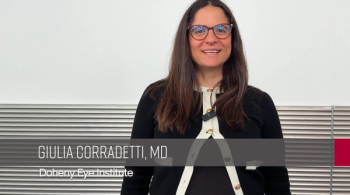
At this year's ARVO meeting in Denver, Colorado, Giulia Corradetti spoke on how baseline OCT biomarkers can predict anatomic response in neovascular age-related macular degeneration when treated with faricimab.

In addition to ChatGPT for Clinicians, OpenAI introduced ChatGPT for Healthcare earlier this year.

Researchers noted growing evidence supporting an additional role for B vitamins.
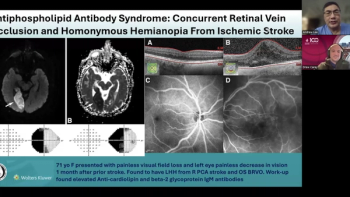
Andrew G. Lee, MD, and Drew Carey, MD, discuss how eye and brain vascular events such as retinal vein occlusion and stroke can signal antiphospholipid syndrome and require further evaluation.

New SOL-X extension follows AXPAXLI implant in wet AMD for 3 years, probing 24-week dosing durability, safety and vision protection.

Professor Alió reflects on a new comprehensive volume dedicated to aging in ophthalmology


According to the company, the NDA submission is supported by data from the phase 3 DRAGON trial.

SOL-1 data show AXPAXLI extends wet AMD control, delaying fluid rebound and reducing rescue injections while sustaining vision through 52 weeks.

Melding ophthalmology and neurology

Temporal optical coherence tomography modelling may improve longitudinal disease tracking.

New expert‑led series explores how ophthalmic innovations move from early development to market‑ready therapies through cross‑functional collaboration.