

iStar Medical announced the expansion of its commercial rollout of its MIGS implant MINIject® to the UK.
iStar Medical announced the expansion of its commercial rollout of its MIGS implant MINIject® to the UK.

Investigators at the International Center for Materials Nanoarchitectonics have developed the first-ever artificial retinal device that increases the edge contrast between lighter and darker areas of an image, using ionic migration and interaction within solid.
According to the company, the trial will study the effect of the drug in treatment-naïve patients with diabetic macular edema (DME) who are members of underrepresented patient populations.

The International Agency for the Prevention of Blindness (IAPB) recently announced an expansion of their ‘Focus on Glaucoma’ and ‘Focus on Diabetes’ series with their new ‘Focus on Child Eye Health’ series in partnership with CooperVision.

Andrew Lee, MD, and Elizabeth Fortin, MD, briefly discuss whether all patients with NAION should receive a sleep study.

A team of investigators from Pohang University of Science and Technology has found that conjunctival goblet cell examination is important for the precise diagnosis and effective treatment of ocular surface diseases; however, CGC examination has not been possible until now due to lack of non-invasive devices.

Investigators found that patients with neovascular age-related macular degeneration in all countries included in the study lost vision as a result of the lockdown and reduced number of treatments during the COVID-19 pandemic.

Approval is based on year 1 data from the Phase III KESTREL and KITE trials investigating brolucizumab 6 mg versus aflibercept 2 mg in DMO patients.

According to researchers at the University of California, Irvine, base editing may provide long-lasting retinal protection and prevent vision deterioration in patients with inherited retinal degeneration, specifically in Leber congenital amaurosis patients.
Approval is based on year 1 data from the Phase III KESTREL and KITE trials investigating brolucizumab 6 mg versus aflibercept 2 mg in DME patients.

Investigators find technology aids instruction of medical students
Developments in imaging, translational research and clinical trials of treatments for retinal diseases dominated discussion at the two-day Bascom Palmer Eye Institute Angiogenesis, Exudation, and Degeneration 2022 virtual conference.

The data support the ongoing development of KPI-012, a novel investigational secretome therapy, to address the complex wound healing process in persistent corneal epithelial defect (PCED).
A University of Houston study found that minorities have fewer eye exams, higher instances of disease.

Orbis International celebrates 40 years of innovation this year, beginning in 1982 with their iconic flying eye hospital. Since their start, Orbis has continued their innovation, working to achieve sustainable and scalable impact in the countries where they work. Doris Macharia, MD, senior vice president of global programs with Orbis, talks with Ophthalmology Times' Sheryl Stevenson, reflecting on the last 40 years and what's to come.

Lower dose of bevacizumab is as effective as a higher dose for treating retinopathy of prematurity.
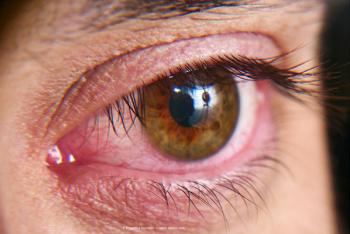
Top-line results are expected during second quarter for the therapeutic to treat patients with dry eye disease.

The company’s Systane iLux2 Meibomian Gland Dysfunction Thermal Pulsation System is a handheld device that allows patients to see the need for treatment and visualize their procedure.

According to the company, the VIRGO trial evaluated the safety and efficacy of the investigational twice-daily administration of pilocarpine HCl ophthalmic solution 1.25% in adults with presbyopia. The trial met its primary efficacy endpoint, the company noted.

According to the company, the modifier gene therapy candidate is for the treatment of retinitis pigmentosa resulting from mutations in the nuclear receptor subfamily 2 group E member 3 and Rhodopsin genes.

A team of investigators at the Okinawa Institute of Science and Technology Graduate University in Japan have identified a gene necessary for the survival of retinal ganglion cells—a class of neurons located in the retina that are critical for vision.

Device demonstrates potential as a durable, sustained-release glaucoma therapy
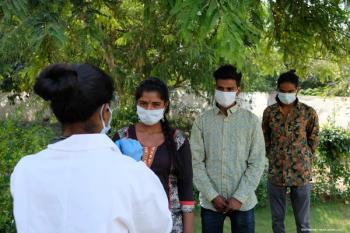
Successful outcomes in rhino-orbital-cerebral mucormycosis depend on awareness of red flag symptoms and signs, prompt diagnosis and early treatment with amphotericin B and surgery as necessary.

The International Agency for the Prevention of Blindness (IAPB) recently announced an expansion of their ‘Focus on Glaucoma’ and ‘Focus on Diabetes’ series with their new ‘Focus on Child Eye Health’ series in partnership with CooperVision.
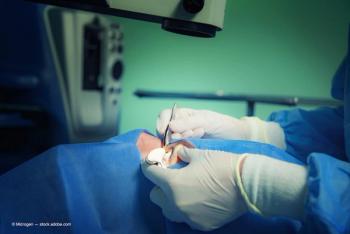
The company announced the expansion of its commercial rollout of its MIGS implant to the UK

Investigators at the International Center for Materials Nanoarchitectonics have developed the first-ever artificial retinal device that increases the edge contrast between lighter and darker areas of an image, using ionic migration and interaction within solid.
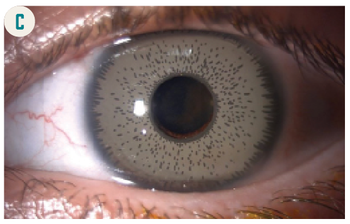
Despite inherent issues, clinicians still perform the procedure

Study focuses on ascertaining the risk of patients developing additional tumors

Dr Taiichi Hikichi counteracted the potential inflammatory effect of brolucizumab by combining its administration with a sub-Tenon’s capsule injection of triamcinolone acetonide.

The company’s announcement marks first clinical trial in humans of Ocugen’s modifier gene therapy platform.