
Ben Bergo, CEO of Visus Therapeutics, gives a company update on the company's presented phase 2 data, and what's next in the pipeline.
Ben Bergo, CEO of Visus Therapeutics, gives a company update on the company's presented phase 2 data, and what's next in the pipeline.

Apellis Pharmaceuticals releases results of their Geographic Atrophy Insights Survey (GAINS), revealing a large emotional toll and significant decrease in independence for patients with geographic atrophy.
John Berdahl, MD, discusses the technique and benefit of endothelial cell therapy. An early technology, this therapy method allows for up to 100 treatments out of a single human cornea.

The glaucoma market seems to be in an expansion phase, as evidenced by the explosions in the number of new pharmaceutical and surgical options entering the marketplace. The introduction of new devices is possibly the single most influential factor currently driving the glaucoma market.
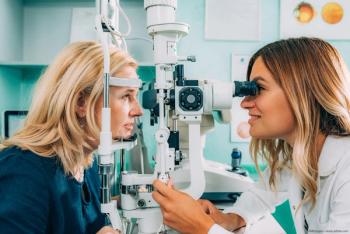
It is particularly important to identify any signs of meibomian gland disease in patients to prevent gland atrophy and loss of function.
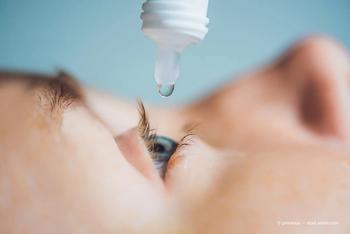
In a presentation at the American Society of Cataract and Refractive Surgery’s 2022 annual meeting, Marjan Farid, MD, ABO, and Preeya K. Gupta, MD, offered details of clinical trials for CSF-1 ophthalmic solution, a presbyopia eye drop candidate. Results showed that nearly half of the participants treated with CSF-1 achieved a 3-line or more increase in the distance-corrected near visual acuity an hour after drop instillation on day 15.

Anushka M. Raj, BS, second year medical student at the University of Oklahoma’s Dean McGee Eye Institute, presents "Inter-Device Measurement Reliability of Angle Kappa and Angle Alpha, Devices and Instruments" during ASCRS.
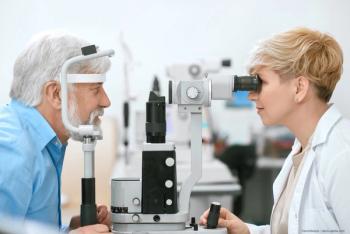
Over the past 2 years, retina specialists and their patients have learned how AI may be a tool physicians can use to monitor patients for disease progression, how telemedicine might mean more than a mere video chat between patient and clinician, and how the tools of the 21st century were closer to real-world practice than anticipated.
Study reviews mechanisms of action of pilocarpine, carbachol, and brimonidine.
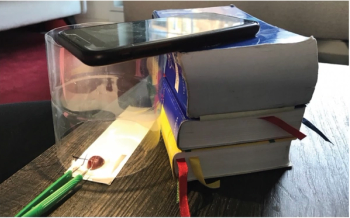
The pandemic has impacted ophthalmic surgical training. Exercises have been developed to provide key skills that can be practised simply at home and require no special equipment.
David Wirta, MD, Medical Director for the Eye Research Foundation, Inc., presents the data of Aerie Pharmaceuticals, Inc.’s novel dry eye product candidate, AR-15512 (0.003%). The successful phase 2 results has propelled the product into phase 3 trials.
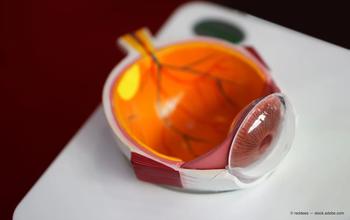
According to an e-poster presented by Jagadesh C. Reddy, MD, and Harini Indusekar, BScOptom, at the American Society of Cataract and Refractive Surgery’s 2022 annual meeting in Washington, D.C., patients who have pre-existing DR are less likely to achieve Snellen 20/40 or better vison after cataract surgery compared with the patients with diabetes but without DR.
Philip Dockery, MD, MPH, discusses his paper "Corneal cross linking for progressive keratoconus, a retrospective analysis of 515 consecutive eyes," with Ophthalmology Times' David Hutton.
Richard L. Lindstrom, MD, of Minnesota Eye Consultants, discusses his ASCRS presentation, "Randomized, Open-Label, Parallel-Group Study of Two Dosing Regimens of Netarsudil in Patients with Fuchs Corneal Dystrophy," with Ophthalmology Times' Sheryl Stevenson.

Blake K. Williamson, MD, MPH, MS, and coauthor Urvi Patel, BSc, presented an e-poster at the American Society of Cataract and Refractive Surgery’s 2022 annual meeting in Washington, D.C., on the efficacy of a combination eye drop comprised of an antibiotic, anti-inflammatory and lubricant as part of a postoperative treatment regimen following cataract surgery.
For the first time, Orasis Pharmaceutical's phase 2b data for the company's novel candidate for the treatment of presbyopia, CSF-1, a preservative-free solution that contains a proprietary combination of low-dose pilocarpine and multi-faceted vehicle, will be presented during ASCRS by Marjan Farid, MD, and Preeya Gupta, MD. The company recently released its phase 3 topline results. Orasis' Paul Smith, president and COO, talks with Ophthalmology Times' Sheryl Stevenson about this data and the findings' relevance to patients and providers.
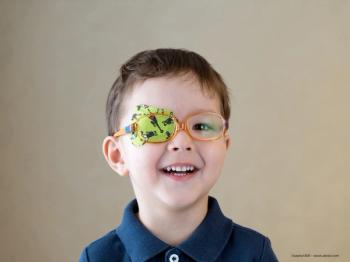
In patients with amblyopia, minuscule fixation eye movements play a major role with treatment, according to Fatema Ghasia, MD, associate professor of ophthalmology and director of the Vision Neuroscience and Ocular Motility Laboratory at the Cole Eye Institute at Cleveland Clinic in Ohio.
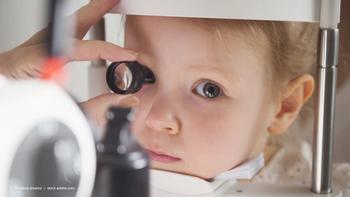
In an e-poster presented at the American Society of Cataract and Refractive Surgery’s 2022 annual meeting in Washington, D.C., Abdelrahman M. Elhusseiny, MD, MSc, noted a research team found that cenegermin was effective for improving the corneal healing in these pediatric patients.

In patients with amblyopia, minuscule fixation eye movements play a major role with treatment, according to Dr Fatema Ghasia.
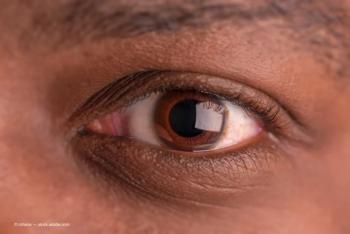
Christina Weng, associate professor of ophthalmology, Baylor College of Medicine, Houston, talked about the importance of managing potential pseudophakic cystoid macular edema (CME) following cataract surgery.
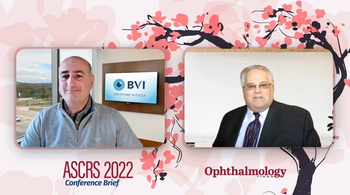
Shervin Korangy, CEO of BVI, shares about the company's new technology, Beyeonics One, on display during ASCRS 2022.
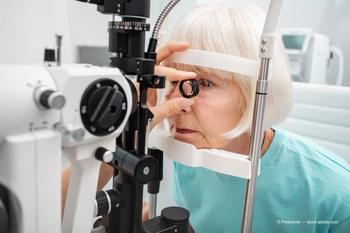
About 65% of patients sought follow-up care for glaucoma after presentation to the Wills Eye Hospital emergency room (ER), according to Elliot G. Cherkas, BSc, the lead author of the study.
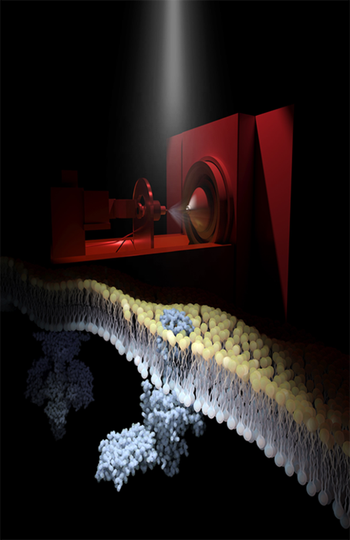
Impact of native lipids on rhodopsin signaling and regeneration opens door to GPCR drug discovery in native membrane environments.

Over the past 2 years, retina specialists and their patients have learned how AI may be a tool physicians can use to monitor patients for disease progression, how telemedicine might mean more than a mere video chat between patient and clinician, and how the tools of the 21st century were closer to real-world practice than anticipated.

Thanks to recent innovation, ophthalmologists have several options at their disposal for the treatment of presbyopia.

Researchers at the University of Southern California have stimulated the retinas of blind mice using focused ultrasound technology.

In patients with amblyopia, minuscule fixation eye movements play a major role with treatment, according to Fatema Ghasia, MD, associate professor of ophthalmology and director of the Vision Neuroscience and Ocular Motility Laboratory at the Cole Eye Institute at Cleveland Clinic in Ohio.

Options under investigation for the treatment of AMD include interruption of the dry AMD disease process and gene therapy to prompt the retina to heal itself.
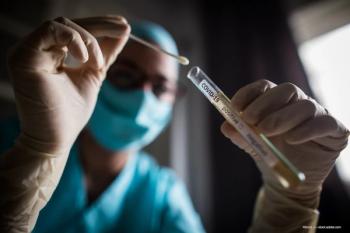
Investigators reported that the incidence of retinal vein occlusions (RVOs) but not retinal artery occlusion, increased in the 6 months after COVID-19 diagnosis.

Ophthalmologists have several options at their disposal for the treatment of presbyopia, according to Elizabeth Yeu, MD, a partner at Virginia Eye Consultants and an assistant professor at Eastern Virginia Med¬ical School in Norfolk. Speaking recently at the virtual 2022 Toronto Cataract Course, Yeu noted that innovation is advancing in presbyopia correction.