


Roche reveals promising results for Vabysmo in treating eye diseases, showcasing significant vision improvements and safety in recent clinical trials.
Roche reveals promising results for Vabysmo in treating eye diseases, showcasing significant vision improvements and safety in recent clinical trials.

OCT-A angiography can help reveal early neurodegenerative disease signs, offering a non-invasive method for identifying high-risk patients through retinal analysis.

Phentolamine ophthalmic solution 0.75% is for the treatment of significant, chronic night driving impairment in keratorefractive patients with reduced mesopic vision.
The start of the series that asks leading experts in the field what eye disease they would cure and why.


A study reveals Hispanic patients face lower success rates in trabeculectomy with MMC compared to European patients, highlighting significant disparities in glaucoma surgery outcomes.

Dr. Tanna will kick off the new monthly subspecialty education series with a virtual session on September 9, 2025, focused on using OCT imaging and perimetry to track glaucoma progression.

The acquisition includes the noninvasive Valeda PBM device for the treatment of early and intermediate dry age-related macular degeneration.

Course director Robert S. Feder, MD, shares how the monthly Zoom sessions aim to deliver clinical pearls and foster cross-subspecialty learning.

Ashvattha Therapeutics reveals phase 2 results for migaldendranib, showing significant vision improvements and reduced injection needs in retinal disease patients.

Roche's Contivue platform gains EU CE mark, offering innovative treatment for neovascular AMD with fewer injections and promising long-term vision outcomes.

This marks the first time that the TearCare System has been included in the TFOS DEWS III Management and Therapy Report.

A study reveals similar risks of sight-threatening diabetic retinopathy in pregnant women with type 1 diabetes compared to nonpregnant controls.

Outlook Therapeutics seeks FDA clarity on ONS-5010 after a complete response letter, aiming to address efficacy concerns for wet AMD treatment.



In addition to Thompson joining the board of directors, EyeCool also announced the members joining its newly formed medical advisory board (MAB).

Identifeye HEALTh is taking on retinal imaging, enhancing accessibility and integrating AI to improve patient care and streamline healthcare workflows.
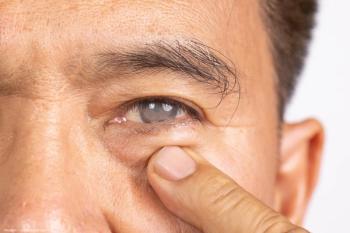

Neurotech Pharmaceuticals enhances its leadership by appointing Peter J. McDonnell, MD, a leading ophthalmology expert, to its Board of Directors.

MCO-010 receives Orphan and RMAT designations, highlighting its potential as a groundbreaking therapy for various retinal dystrophies.

Virtual reality and artificial intelligence are reshaping medical education.

Alfredo Sadun, MD, PhD, details an unexpected outcome from a gene therapy in development for Leber hereditary optic neuropathy (LHON).

The goal is to provide an end-to-end operating system that unifies clinical, operational, and financial workflows.

Jeremiah Tao, MD, FACS, highlights essential safety strategies in oculofacial surgery, emphasizing cost-effective techniques to prevent complications and enhance patient care.


Recapping the Heidelberg Engineering International SPECTRALIS Symposium—and Beyond.

FDA issues a complete response letter to Outlook Therapeutics for ONS-5010, citing insufficient evidence of effectiveness for wet AMD treatment.

Surgical tools improve Schlemm canal access and enable earlier glaucoma care.

As myopia becomes a worldwide epidemic, the upcoming Paris workshop on September 8, 2025, will convene global leaders to discuss strategies, research priorities, and new treatment pathways.