ACP says the label “provider” blurs clinical roles, commercializes care, and erodes trust—urging words that protect medical ethics and relationships.
ACP says the label “provider” blurs clinical roles, commercializes care, and erodes trust—urging words that protect medical ethics and relationships.

Lab tests show red‑light myopia devices exceed ANSI safety limits in seconds, fueling urgent calls for independent validation before kids use them.
New AAV therapy for retinitis pigmentosa completes Phase I/II dosing, aiming to protect cones and slow vision loss; first readout targets 2027.
Oluwatosin U. Smith, MD, highlights how the foundation provides education, research, and access-to-care for patients and clinicians globally and locally.

Aaron Y. Lee, MD, MSCI, explains how temporal optical coherence tomography modeling may improve longitudinal disease tracking and clinical decision-making at Angiogenesis 2026.

The primary endpoint of the trial is non-inferiority in the mean change from baseline in best-corrected visual acuity (BCVA) at 52 weeks.

The results of a multicenter controlled clinical trial showed that the device resulted in “a significant improvement in visual acuity (VA) from baseline to month 12.

P. Dee G. Stephenson, MD, FACS, shares insights on evolving LAL technology and best practices for managing the ocular surface before and after surgery.

Lorem ipsum dolor sit amet, consectetur adipiscing elit.

The deal will see MeiraGTx assume development rights to ZipBio’s experimental therapies targeting the complement pathway in geographic atrophy (GA).

Retina specialists showcase innovation and precision in retinal care

The 2025 program built on its evolving reputation as a multispecialty educational forum that successfully integrates ophthalmology and optometry, premium CME content, and a family-friendly format to foster professional growth without sacrificing work–life balance.

Proactive strategies enhance comfort, adherence and long-term glaucoma control
EnVision Summit insights spotlight complex glaucoma cases, MIGS pitfalls, and personalized surgery choices—preview the issues driving 2026 debates in Puerto Rico.

China approves ZEISS ARTEVO 750 and 850 ophthalmic microscopes, expanding 3D digital visualization and iOCT-ready workflows for cataract and retinal surgery.
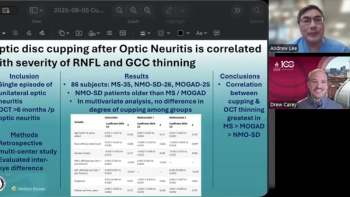
Andrew G. Lee, MD, and Drew Carey, MD, discuss how optic disc cupping after optic neuritis reflects nerve and ganglion cell thinning, not disease type, helping distinguish it from glaucoma.

Metformin, a common diabetes medication, may be associated with less development of intermediate age-related macular degeneration (AMD).

Early first-in-human results suggest Ocumetics’ accommodating IOL shows short-term safety and improved uncorrected distance vision, but data remain limited and preliminary.

Family-friendly format empowers continuing education.


MTII tracking in geographic atrophy reveals central macula preservation and predicts vision loss better than lesion area, shaping future trial endpoints.
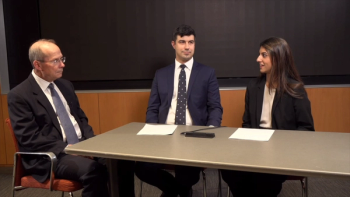
NYU Grossman’s Preeya Mehta, MD, and Jonathan S. Williams, MD, sit down with Mount Sinai’s Louis R. Pasquale, MD, to discuss long-term safety and efficacy data from a PreserFlo microshunt trial and the role of microshunts in glaucoma surgery.
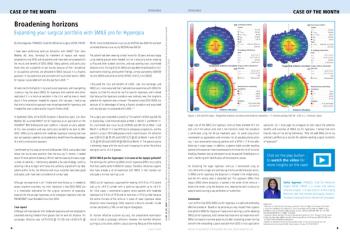
Discover how Dr. Smita Agarwal expanded her refractive portfolio with ZEISS SMILE pro for hyperopia, and why this flapless approach delivered excellent outcomes for her first hyperopic patient.

Revisyon is described as a device-led therapy that applies specific wavelengths of low-level LED light to the crystalline lens through a non-invasive, in-clinic procedure.

Marta Pazos, MD, PhD, examined the role of optical coherence tomography, artificial intelligence, and clinical evaluation in early glaucoma management.
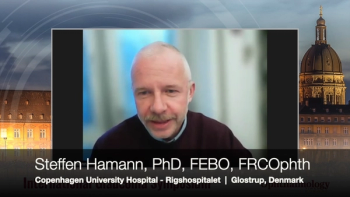
Steffen Hamann, PhD, FEBO, FRCOphth, discusses how optic disc drusen can mimic glaucoma and discussed evolving imaging and research strategies.

Proactive strategies enhance comfort, adherence, and long-term glaucoma control
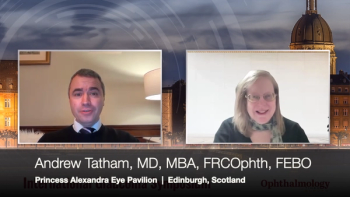
Andrew Tatham, MD, MBA, FRCOphth, FEBO, outlines the role of micro-invasive glaucoma surgery alongside established glaucoma procedures, focusing on safety, patient selection, and future directions.

AI is reshaping clinical practice in retinal imaging and workflow optimization, according to Priv.-Doz. Dr. med. Jan H. Terheyden, FEBO.

Prof. Dr. Luís Abegão Pinto outlines how real-world datasets can improve artificial intelligence accuracy, reduce bias, and support clinical decision-making at scale.