
AI revolutionizes retinal care, enhancing diagnosis, monitoring, and treatment through innovative technologies and collaborative efforts in ophthalmology.
AI revolutionizes retinal care, enhancing diagnosis, monitoring, and treatment through innovative technologies and collaborative efforts in ophthalmology.

Aldeyra met with the FDA on December 12, 2025, in which the FDA requested the company submit the CSR from the reproxalap dry eye disease field trial to the NDA.

Dr. Curcio highlights volume electron microscopy evidence from a preterm-born adult retina reveals unexpected Müller glial diversity and implications for foveal development.
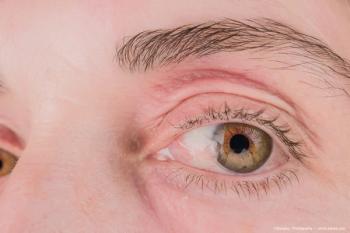
Tips for optimizing surgical techniques to reduce recurrence and enhance outcomes.
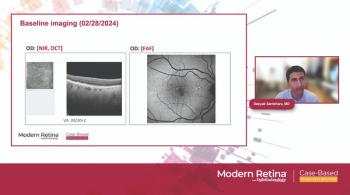
Lock in patient adherence with discussion of study results.

Results showed reduction in geographic atrophy progression and improved visual acuity.

The trial is being discontinued based on the recommendation from an Independent Data Monitoring Committee (IDMC) to stop the trials for “futility."

While primary endpoint analysis showed no statistical difference in the rate of change in GA area between AVD-104 versus monthly avacincaptad pegol, 12-month results showed approximately 31% reduction in GA lesion growth rate versus growth rates in sham and natural history rates.

A phase IV study in China found that 22 of 26 patients achieved complete healing of a persistent corneal epithelial defect or corneal ulcer after 8 weeks.

Pre and postclinic routines, time blocking, and the Eisenhower Decision Matrix enhance efficiency in clinical education.

The company plans to submit its NDA package in the second half of 2026.

The grading scales were compiled with the goals of achieving conciseness and the ability to provide clear drug-dose-modification recommendations compared with the previous ocular CTCAE scale.

Dr. Quan Dong Nguyen presents interim data from the phase 3 DRAGON study on a potential first therapy for adolescent Stargardt disease.

A study from a tertiary eye hospital suggests that effective keratitis management may have the potential to restore vision.


Alcon increases its acquisition offer for STAAR Surgical, emphasizing a final deal amid shareholder debates and delays in the merger process.

Combining imaging and patient symptoms improves assessment of disease progression.


New research highlights iron dysregulation's role in dry AMD, suggesting transferrin as a promising treatment to slow disease progression.

Explore the challenges and insights in long-term follow-up of paediatric gene therapy, focusing on data integrity, patient retention, and ethical considerations.

Xelafaslatide is a small-molecule Fas inhibitor designed to protect key retinal cells, including photoreceptors, from cell death that occurs across multiple retinal diseases and conditions.

The study evaluated thermal dynamics associated with CW-TSCPC and TLT using MicroPulse technology, such as temperature peak, exposure duration, and thermal spread in a simulated ciliary body using computer modeling.

Gene therapy revolutionizes retinal disease treatment, offering long-lasting solutions and reducing the need for frequent injections in patients with nAMD.


EndoArt is an artificial cornea endothelial layer made of a sterile biocompatible material, acrylic hydrophilic. According to the company it is the first synthetic implant to treat corneal edema.

Geographic atrophy management evolves with proactive imaging, personalized therapies, and real-world insights, enhancing patient care and treatment outcomes.
nAMD treatment options may offer positive outcomes to patients by reducing fluid fluctuations associated with poorer outcomes.

Guest lecturer explores the emerging frontiers in ROP therapy and the evolving ethical, clinical, and technological considerations.

The EU-ROP registry revolutionizes retinopathy of prematurity management, offering insights into treatment variations and outcomes across Europe.