June brings FDA clearance for Lumvoa, key retina and glaucoma trials, device deals, and hard truths on AI performance in eye care.

Tips for optimizing surgical techniques to reduce recurrence and enhance outcomes.
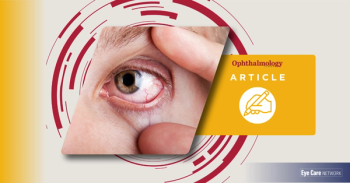
Pterygium is a common ocular surface disorder characterized by a fibrovascular growth originating from the conjunctiva that extends onto the adjacent cornea (Figure).1 Its prevalence varies considerably across geographic regions. Because prolonged sun exposure is the main environmental risk factor for pterygium development,2 it is more common in equatorial areas. However, even though I practice in the northeastern US, I still encounter these lesions regularly.
Pterygia can induce significant irregular astigmatism, ocular discomfort, and even obstruction of the visual axis, and as such, their visual and symptomatic burden on patients can be substantial.3 Because the astigmatism stems from the lesion’s irregular morphology, it is often not fully correctable with spectacles. Patients also commonly experience dry eye–like symptoms, which disrupt tear film stability and promote inflammation.4 Surgical excision remains the definitive treatment; however, recurrence can pose a significant challenge for long-term management.1
With no universally accepted grading system for pterygium, objective measurements and clinical judgment guide the decision to proceed with surgery. For example, although the lesion’s horizontal and vertical extent can be measured directly using slit-lamp calipers, its thickness or elevation can typically only be assessed visually. Corneal topography is another factor for evaluating the lesion’s impact on corneal shape and induced astigmatism.
For early, minimally symptomatic lesions, I typically begin with conservative therapy such as artificial tears or lubricating ointments to relieve discomfort, along with topical corticosteroids or immunomodulators to control inflammation. However, once visual function or ocular comfort becomes significantly compromised, surgical intervention becomes a valuable option.
In the past, pterygium excision was performed using the bare sclera technique, in which the fibrovascular tissue is removed, leaving the underlying sclera exposed.5 However, because this approach carries an alarmingly high recurrence rate, reported between 24% and 89%,6 covering the defect has become standard practice. The 2 main reconstructive options currently used for pterygium surgery are amniotic membrane grafting (AMG) and conjunctival autograft (CAG).1,7 Both approaches cover the defect, promote epithelial healing, and reduce inflammation. Although CAG has historically been considered the gold standard, AMG offers distinct advantages that have made it an increasingly attractive alternative.
AM is derived from human placenta and contains signaling factors that modulate transforming growth factor-β signaling, inhibit fibroblast proliferation, and promote epithelialization, giving it anti-inflammatory and antiscarring properties,8-10 particularly in re-epithelialization. Historically, several aspects of AM effect on wound healing have been evaluated using cell models. In keratinocytes, the presence of AM induced the activation of mitogen-activated protein. It should be noted that BioTissue’s cryopreserved amniotic membrane (CAM) is the only AM that the FDA has recognized in that capacity.11 CAM often results in faster recovery and less postoperative discomfort for patients; studies have also identified comparable recurrence rates to autografting for mild to moderate cases.12,13 As such, I prefer CAM for smaller or primary pterygia, as it avoids a secondary (alternative) harvest site, reduces operative time, and minimizes postoperative morbidity. For severe or recurrent pterygia, I continue to favor CAG, sometimes supplemented with CAM as an adjunctive layer.7
My surgical sequence begins with precise marking of the intended excision area to prevent overly aggressive resection. Under local anesthesia, I first remove the conjunctival component of the lesion, followed by dissection of its corneal extension. The next, and perhaps most critical, step is a meticulous tenonectomy to completely remove all abnormal Tenon tissue, because any residual fibrovascular remnants can be a major driver of recurrence. Before proceeding to reconstruction, I achieve hemostasis with light cautery and polish the corneal surface using a diamond burr to remove residual tissue.
For coverage, I select a CAG, CAM, or a combination, depending on the case. The graft is secured with fibrin glue rather than sutures, a technique that expedites surgery, reduces postoperative inflammation, and lowers recurrence risk.14 Although some surgeons prefer to reinforce with sutures for added stability, I find a sutureless approach to be more comfortable for patients without compromising efficacy.
The application of mitomycin C before grafting can also help suppress pterygium-causing fibroblast proliferation and neovascularization. It is important to note that higher doses of mitomycin C are associated with lower recurrence of pterygia but also higher risks of complications such as scleral necrosis or limbal stem cell toxicity. I have found the application of 0.02% mitomycin C for 2 minutes to be a good balance of efficacy and safety.15 I typically reserve the use of mitomycin C for cases of recurrent pterygia. In recurrent cases, I prefer CAG whenever sufficient healthy conjunctiva remains available. When conjunctival tissue is inadequate or the defect too extensive, I employ a hybrid double-graft technique by layering CAM on top of the CAG. This approach has been shown to enhance healing and reduce recurrence in complex pterygia cases.7
Despite advances in pterygium management, significant unmet needs remain. Unlike cataract surgery, which typically allows rapid recovery with low complication rates, pterygium surgery remains relatively inflammatory and uncomfortable, with patients often experiencing redness and irritation for a week or more, particularly after CAG procedures.
Furthermore, current recurrence rates remain in the high single to low double digits, underscoring the need for continued innovation in pterygia treatments. Future innovations should focus on enhancing biologic healing, potentially through next-generation membranes or growth factor-enriched matrices that accelerate epithelial recovery.
For ophthalmologists managing challenging pterygium cases, CAM has become an indispensable tool in modern ocular surface surgery. It provides a biologically active surface that promotes healing, minimizes inflammation, and achieves recurrence rates comparable to those of traditional autografts. As surgical techniques continue to evolve and new biologic materials emerge, I am optimistic that ongoing advances will bring greater comfort, faster recovery, and more consistent outcomes for patients with this condition.
References