Jennifer I. Lim, MD, FARVO, FASRS shared insights from her presentation on "Detection of early diabetic retinopathy using OCT-A blood flow analysis" with our team.
Jennifer I. Lim, MD, FARVO, FASRS shared insights from her presentation on "Detection of early diabetic retinopathy using OCT-A blood flow analysis" with our team.
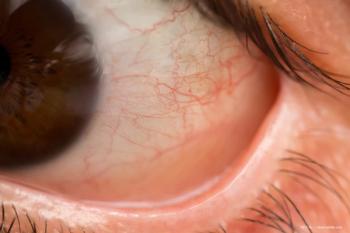
Lim and colleagues conducted a retrospective study to establish the normalized NBFI using OCTA and test if that index is sufficiently sensitive for detecting early DR.

Our team caught up with Baruch Kupperman, MD, PHD who is presenting, "Improving vision and dry AMD matching mechanism with the right patient population and stage of disease" to learn more about this topic.

The American Society of Retina Specialists is hosting its annual meeting this year in Seattle, Washington. Our team caught up with Baruch Kupperman, MD, PHD who is presenting, "Improving vision and dry AMD matching mechanism with the right patient population and stage of disease" to learn more about this topic.
Our team caught up with Baruch Kupperman, MD, PhD to learn about his ASRS presentation, "Improving vision and dry AMD matching mechanism with the right patient population and stage of disease."

With the potential to impact millions of patients, a study finds that biomimetic materials pulsed with low-energy blue light can reshape damaged corneas, including thickening the tissue.

Detrimental effects of IVB may not be recognized at an early age, which underscores the importance of following these children over time.

Detrimental effects of IVB may not be recognized at an early age, which underscores the importance of following these children over time.

With this funding, the DISCOVER study will evaluate the safety and tolerability of three doses of AXT107 in patients with wet AMD.
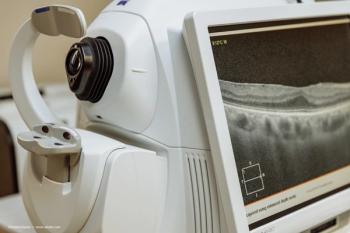
Hungarian investigators reported the beneficial use of optical coherence tomography (OCT) for detecting macular pathologies in patients with scleritis.

Researchers found that using automated methods to determine the VA showed “robust performance in predicting visual impairment”

The presenter, Jeffrey S. Heier, MD, Director of the Retina Service and Retina Research, Ophthalmic Consultants of Boston, and an investigator in ARCHER will deliver the data on July 30, 2023.

Using automated methods to determine the visual acuity showed robust performance in predicting visual impairment.

Press Release

Researchers indicated OCT can be vital to a timely diagnosis and treatment for scleritic patients.

APX3330 achieved statistical significance in preventing clinically meaningful progression of diabetic retinopathy.

THR-149 is being evaluated in a Phase 2 clinical trial as a potential treatment for diabetic macular edema, which is expected to readout topline results by the end of this year.

The next Ophthalmic World Leaders Leadership Summit will take place in Austin, TX, on September 21 and 22, 2023.

The results of this study demonstrated the good safety and tolerability of HLX04-O.

The College of Health Care Professions will offer a blended 36-week certificate program to meet the growing demand for ophthalmology assistants across the Dallas-Forth Worth region.

The intraocular injection of AXT107 microparticulate suspension will be explored in the DISCOVER study.

The company announced it has scheduled an End-of-Phase 2 meeting with the FDA in Q4 2023 to discuss the specifics of the APX3330 development program.

Going forward, sozinibercept will be the official moniker of OPT-302, which holds fast track designation from the US Food and Drug Administration (FDA).

The presenter, Jeffrey S. Heier, MD, Director of the Retina Service and Retina Research, Ophthalmic Consultants of Boston, and an investigator in ARCHER will deliver the data on July 30, 2023.

Belite Bio has completed patient enrollment for a trial evaluating Tinlarebant, which is the first ever treatment for Stargardt Disease.

OPT-302 is the company’s novel recombinant “trap” fusion protein targeting inhibition of vascular endothelial growth factors C and D, two ligand mediators of angiogenesis and vascular leakage involved in retinal vascular diseases.

HLX04-O has the potential to be one of the first bevacizumab approved for use in ophthalmic diseases, benefiting more patients with eye diseases worldwide.

Ophthalmologist offers pearls for use of technology in daily work.


The companies plant to create a comprehensive resource that provides valuable insights into health outcomes, medication adherence, and the effectiveness of various treatment protocols.