
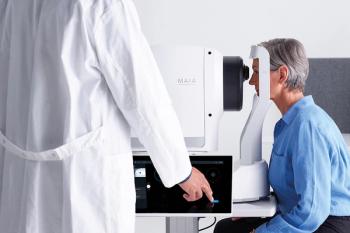
Learn how OCT aids neuro-ophthalmology, where it falls short, and why AI plus neurologist–ophthalmologist teamwork prevents misdiagnosis.
Learn how OCT aids neuro-ophthalmology, where it falls short, and why AI plus neurologist–ophthalmologist teamwork prevents misdiagnosis.
Joseph Anaya, MD, and Ashkan Abbey, MD, discuss how retina specialists identify appropriate candidates for complement inhibitor therapy in geographic atrophy, set patient expectations, and monitor treatment in real-world clinical practice.

Cases highlight faricimab’s dual VEGF/ANG2 action for severe diabetic macular edema—faster drying, better vision, longer intervals.
The 6-month Support, Educate, Empower (SEE) program was associated with a 20% improvement in glaucoma treatment adherence and reduced distress among adult patients.
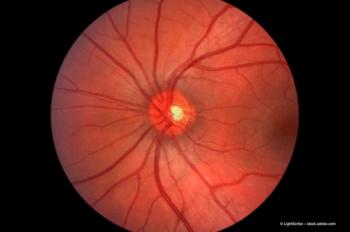
Steffen Hamann, PhD, FEBO, FRCOphth, offers insight into the landscape for optic disc drusen and the impact of advances in OCT.


Leng discusses preliminary results from an ongoing study investigating the interaction between pegcetacoplan and anti-VEGF treatments in patients with GA.
Joseph A. Anaya, MD, MBA, and Ashkan M. Abbey, MD, FASRS, FAAO, consider how emerging treatments impact patient vision, functional outcomes, and practical management of geographic atrophy.

University of Utah data show US ophthalmic drug and eye drop shortages last longer and occur more often, affecting local and systemic medications equally.

Three real-world GA cases reveal why early imaging-guided treatment matters, how fast vision can decline, and how to manage CNV risk with anti-VEGF.

The company describes liMeliGhT as a 1-year clinical trial that will support the Biologics License Application (BLA) filing for OCU400 and potential approval in 2027.

The trials are evaluating DURAVYU (vorolanib intravitreal insert) for the treatment of diabetic macular edema (DME).

Healthcare staff face splashes, aerosols, chemicals and lasers daily; ANSI-rated eye protection and better compliance prevent most workplace injuries.
Gene and cell therapies plus AI imaging tools accelerate breakthroughs for rare retinal diseases, spotlighting new trials for RP and Stargardt patients.

The clinical study will evaluate a noninvasive corneal strengthening procedure designed to reshape the cornea and correct refractive errors in-office without tissue removal.
Host Deborah Ristvedt, DO, welcomes Trattler to discuss how early inspirations, mentorship, collaboration, and a philosophy of simplifying complex concepts have shaped his ophthalmology career.

A recent nonrandomized trial has demonstrated toric IOLs’ efficacy in providing long-term visual outcomes, reducing amblyopia compared to non-toric lenses.

The FDA has assigned a PDUFA goal date of October 17, 2026.

PULSAR post-hoc finds aflibercept 8 mg matches 2 mg for PCV, offering 12–16-week dosing and reduced injection burden.

Steffen Schmitz-Valckenberg, MD, discusses how optical coherence tomography-based models may enable rapid, noninvasive assessment of functional loss in GA.

From artificial intelligence and IOL innovation to biosimilars, geographic atrophy, and postoperative eye protection, Joshua Mali, MD, FASRS, shares what he believes will define ophthalmology in the year ahead.
In the latest episode of The Retina TL;DR, host Christina Y. Weng, MD, MBA, FASRS, talks with Dr. Khanani about new retinal gene therapy trials, covering safety, delivery, and ways to reduce treatment burden.
A recent study highlights the efficacy of the FAi implant in patients with NIU-related macular edema, improving BCVA and reducing choroidal thickness.
Take a look at some, but certainly not all, that you may have missed from this year’s EnVision Summit.

Study finds low-vision rehab boosts daily function and quality of life, but exposes gaps in long-term data and diverse research.

Interventional therapies give patients faster relief and better vision outcomes

The investigators wanted to assess the safety and feasibility of intravitreal injection of autologous CD34+ bone marrow stem cells (BMSCs) in eyes with vision loss from CRVO.

Real-world nAMD/DME care highlights durable anti-VEGF options and emerging TKIs and gene therapy to cut injection burden, improve vision, and reduce fluid.

New research links near work in dim light to myopia: accommodative pupil constriction may cut retinal illumination and speed worsening vision.

Early clinical experience highlights considerations for patient selection, surgical technique, and long-term monitoring in retinal disease.