
Opinion|Videos|March 5, 2026
Patient selection and counseling for complement inhibitor therapy in geographic atrophy
Joseph Anaya, MD, and Ashkan Abbey, MD, discuss how retina specialists identify appropriate candidates for complement inhibitor therapy in geographic atrophy, set patient expectations, and monitor treatment in real-world clinical practice.
Advertisement
In this episode, Joseph A. Anaya, MD, MBA, and Ashkan M. Abbey, MD, FASRS, FAAO, discuss how clinicians approach patient selection, counseling, and monitoring when initiating complement inhibitor therapy for geographic atrophy (GA). The conversation focuses on practical decision-making in routine retina practice, including identifying appropriate candidates, setting realistic expectations for treatment, and establishing monitoring strategies for safety and disease progression.
Abbey explains that one of the clearest candidates for treatment is a patient who has already lost central vision in the fellow eye due to a disciform scar or GA. In these cases, patients are often motivated to begin therapy to preserve remaining vision. He notes that conversations about treatment can occur across a range of lesion sizes and locations, including extrafoveal and subfoveal GA. Patients who report declining vision over time and have GA consistent with their symptoms are typically offered treatment after a discussion of the potential benefits and limitations.
When initiating therapy, Abbey describes a cautious approach, typically treating the worse-seeing eye first rather than performing bilateral injections at the initial visit. After observing the response for signs of inflammation or other complications, treatment may then be extended to both eyes if indicated.
The discussion also addresses the complexity of counseling patients with extrafoveal lesions who may not yet be symptomatic. Although these lesions often grow faster than subfoveal lesions, the absence of symptoms can make the treatment discussion more challenging. Abbey notes that longitudinal imaging, particularly autofluorescence demonstrating lesion growth over time, can help patients understand disease progression and inform decision-making.
Anaya and Abbey also discuss how clinicians frame treatment expectations for patients who perceive ongoing progression despite therapy. Abbey emphasizes that clinical trial data demonstrate a reduction in the rate of lesion growth compared with sham, rather than a halt in disease progression.
The episode also reviews monitoring strategies, including routine optical coherence tomography (OCT) imaging at each visit, periodic OCT angiography to assess for choroidal neovascularization, and patient education regarding symptoms that could indicate intraocular inflammation.
Ashkan M. Abbey, MD, FASRS, FAAO, is in practice at Texas Retina Associates in Dallas, Texas, and director of clinical research. He is a speaker and consultant for Apellis Pharmaceuticals, Inc and Astellas Pharma Inc.
Joseph A. Anaya, MD, MBA, is assistant professor of ophthalmology at Wilmer Eye Institute at Johns Hopkins University School of Medicine in Baltimore, Maryland. He has no relevant financial disclosures.
Advertisement
Related to this article

The RMAT designation opens the door to a faster development pathway for EO2002 as a minimally invasive alternative to corneal transplantation, while Emmecell also advances a cell therapy for geographic atrophy.

Three real-world cases illustrate strategies to identify and manage GA across a range of scenarios, from coexisting wet age-related macular degeneration to functionally monocular patients.

In a preference study, Csaky and colleagues found that lesion growth rate reduction was the primary driver of GA treatment decisions among US retina specialists, with greater risk tolerance for foveal-threatening lesions.

In this Q&A, Ping Moore, OD, covers emerging dry eye therapies, from selenium sulfide to next-gen cyclosporine, and how subtype-guided care shapes treatment choices.

Ophthalmology is projected to face one of the steepest physician shortages of any subspecialty by 2038.

Two investigational pipeline therapies take aim at the root causes of dry eye disease
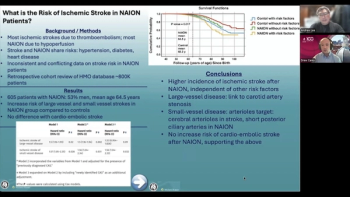
Andrew G. Lee, MD, and Drew Carey, MD, discuss findings from a retrospective study examining ischemic stroke risk in patients with non-arteritic anterior ischemic optic neuropathy and the implications for vascular risk factor management.
Patients with polyendocrine metabolic ovarian syndrome have higher ocular disease prevalence.
Advertisement
Advertisement
Trending on Eye Care Network - Ophthalmology Times
1
AAO 2026: BRUNELLO 1-year results for remigromig in DME
2
AAO 2026: Optogenetic gene therapy heads to phase 2 trial in geographic atrophy
3
AAO 2026: MCO-010 sustains vision gains in RP through 4 years
4
Real-world VOYAGER data on faricimab in nAMD, DME, RVO at EURETINA 2026
5