

Investigators have found that 1 intravitreal injection of an adeno-associated virus encoding an immunosuppressive transgene, either HLA-G or eqIL-10, reduced the clinical and histologic inflammation in a well-established model of autoimmune uveitis.

Investigators have found that 1 intravitreal injection of an adeno-associated virus encoding an immunosuppressive transgene, either HLA-G or eqIL-10, reduced the clinical and histologic inflammation in a well-established model of autoimmune uveitis.

Gene therapy has produced early and lasting improvements in retinal cell morphology and visual acuity in a patient with inherited retinal disease.

In the 30 years since optical coherence tomography was first described, it has become one of the most widely used technologies for imaging the human eye.

Integration of spectral domain optical coherence tomography with ultra-wide field imaging can increase accurate detection of diabetic macular oedema and epiretinal membrane.

Newly developed acrylic implant provides option for patients with endothelial dysfunction.

For ophthalmologists, finding the ideal solution for presbyopia has long been the ‘holy grail’ of the field.

Children with certain neurodevelopmental disorders show altered ocular movements and a more reduced amplitude of accommodation, however, vision problems are not always present in these children and so cannot be considered an aetiological factor.

A new study reveals that children of mothers with diabetes during pregnancy have an increased risk of eye problems.

Results may represent a retinal degenerative change.

Science fiction is quickly becoming science fact as a team of German scientists found that a small, lab-grown brain cell cluster that developed fundamental eye structures.

Single-use cataract surgery comes with several safety and quality attributes.
Fluorescence lifetime imaging ophthalmoscopy may be useful to monitor the progression of AMD as well as the effectiveness of treatment approaches.

The EURETINA 2021 Virtual Meeting is scheduled for September 9 to 12, 2021, and retina specialists are eager to see the showcase of cutting-edge scientific developments.

Programming includes 16 EURETINA sessions; 22 symposia; 44 instructional courses; 85 hours of content, and more than 300 speakers.

Long-term treatment helps chronic, vision-threatening disease.

The versatile technique comes with short learning curve and combines well with MIGS.

Ophthalmologists face challenges of drug delivery for retinal diseases.

In response to a previously published article, three ophthalmologists present their views on intravitreal pharmacotherapy injections.

RGX-314 viewed by investigators as a therapeutic option for exudative AMD.

OCULUS has combined efforts with International Myopia Institute to raise awareness of myopia and drive scientific advancements to prevent sight-threatening complications and blindness, which may arise as a result.

This article is produced by Roche for healthcare professionals and is not intended to provide medical advice and/or treatment guidance. This website is not country-specific and therefore may contain information which is not applicable to your country.

With at least 24 inherited retinal disease (IRD) clinical trials ongoing in the United States, and additional studies of stem cell therapy in several IRD indications, hope is on the horizon for many patients.
Study of subjects with rare inherited form of AD shows increased retinal capillary perfusion during the presymptomatic stage.

The U.S. FDA granted orphan drug designation to ADX-2191, methotrexate for intravitreal injection, as treatment for retinitis pigmentosa.

If approved, Genentech’s treatment of faricimab will be the first and only medicine targeting two distinct pathways, Ang-2 and VEGF-A, that often cause retinal diseases that may cause vision loss.

Why investigators are recognising AMD as a disease spectrum rather than a single entity.
Retrospective review highlights the sustained efficacy of combination procedure.

The proportion of eyes that developed PDR or centre-involving DMO was lower with periodic aflibercept treatments compared with sham treatment through the 2-year point.
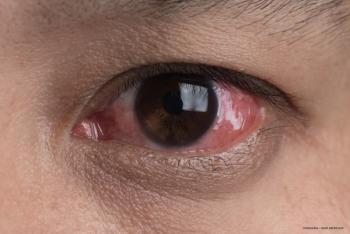
While operating on a patient with chronic uveitis presents some challenges, there are a few pearls that may increase success.