Piotr A. Woźniak, MD, PhD, previews the ESCRS' growing focus on AI-assisted digital surgery and an expanding dry eye programme.

Piotr A. Woźniak, MD, PhD, previews the ESCRS' growing focus on AI-assisted digital surgery and an expanding dry eye programme.

Ahead of the 44th ESCRS Congress in London, a look at the presbyopia-correcting IOL, glaucoma and dry eye disease research on this year's scientific programme.
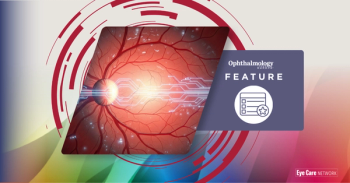
New research covers a 3D OCT foundation model, an OCTA biomarker review and offline smartphone screening for three retinal diseases.
A gamified program may speed the brain’s adjustment, new data suggest.

Thyroid Eye Disease (TED) is an autoimmune condition affecting around one in 1,000 people in Europe. Its variability of symptoms and close association with Graves' disease, a separate thyroid disorder, can lead to considerable challenges in diagnosis. Earlier detection depends on strong collaboration between endocrinologists and ophthalmologists, as well as conversations that fully explore the impact of symptoms on patients' daily lives.
João Pedro Marques, MD, PhD, on how systematic reanalysis moved a cohort's solved rate from 59.4% to 70.1% and what it means for gene therapy eligibility

A systematic review of 21 studies found OCTA detects early diabetic retinopathy—reduced vessel density being the most consistent biomarker—but heterogeneous, unstandardized evidence isn't sufficient for routine clinical screening yet.
Japan designated gildeuretinol an orphan drug for Stargardt disease as the oral therapy enters phase 3 evaluation in the NORTHSTAR trial.
A preclinical study of the effects of aflibercept (Eylea, Regeneron Pharmaceuticals) and faricimab (Vabysmo-svoa, Genentech) showed that the two treatments were equal in their ability to maintain or restore the retinal endothelial barrier function and resultant visual integrity. Investigators attributed this result mainly to inhibiting vascular endothelial growth factor A165 from binding to its receptor.
Matias Iglicki, MD, PhD, on patient selection, technical pitfalls and why symmetry decides outcomes in flanged vs sutured fixation
Researchers in the UK have developed a new treatment approach for aniridia-related keratopathy (ARK), a rare genetic ocular disease, namely, a collagen scaffold that delivers limbal epithelial stem cells and stromal stem cells to the area affected by ARK. The treatment resulted in improved ocular surface scores and visual acuities.

AI model beats human graders at spotting glaucoma risk in UK population retinal photos, boosting accuracy and strengthening the case for scalable AI vision screening.

A maternal high-fat diet can negatively affect the retinal structure in mice.
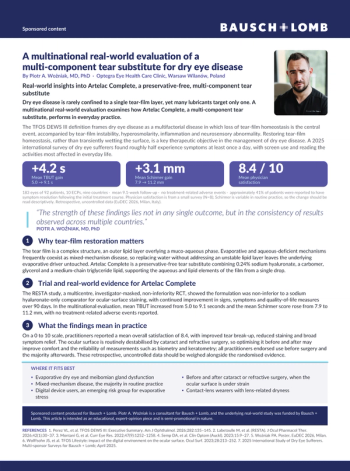
Real-world insights into Artelac Complete, a preservative-free, multi-component tear substitute
In this Q&A from EDES 2026 in Milan, Piotr A. Woźniak, MD, PhD, discusses his real-world evidence study on a dry eye lubricating drop, including its effects on tear film stability.
An investigational treatment for vision loss associated with Bardet-Biedl syndrome is being tested in the first three patients treated.

Private practice fellowships sharpen cataract and refractive skills with high volume, new tech, and hands-on practice management mentorship.

Waste, cost and carbon are converging to reshape how cataract centres choose instruments.

Home OCT now gives us the next dimension: time.
In this Q&A, Vance Thompson, MD, clears up myths about dry eye and LASIK wearing off, and explains how better screening and technology are making the procedure more precise for younger patients.

Findings highlight the need for routine bilateral endothelial assessment in herpetic eye disease
Choosing the right IOL for patients seeking spectacle independence is increasingly complex as novel optical designs enter the field. This comparative case report explores how a proven diffractive trifocal IOL (AT LISA tri 839MP) performs against a novel spiral optic IOL and what the real-world trade-offs mean for patient selection.
Shortcomings of early 27-G vitrectomy systems drove the development of new technologies designed to match or surpass the performance of larger-gauge systems. The DORC TDC VELOCE represents the latest advancement - a next-generation high-speed cutter that reaches its full potential when combined with the DORC EVA NEXUS surgical system.

The phase 2 Early Vitrectomy and Intravitreal Antibiotics for Post-Operative Exogenous Endophthalmitis study showed that performing early vitrectomy for acute endophthalmitis can offer better and faster visual outcomes than the current treatment of prescribing antibiotics first.

Susvimo works in conjunction with the company’s port delivery platform, Contivue, which was specifically engineered for use with Susvimo.

Why AI-driven functional imaging could change how clinicians assess and treat retinal disease

PRIMA, the first brain-computer interface approved for form vision restoration (reading letters, numbers, words) in patients with geographic atrophy (GA) secondary to age-related macular degeneration, is commercially available in Europe.
David E. I. Pyott, CBE, MD(Hon), MBA, MA, discusses expanding subspecialty training and internationally recognized credentials in underserved regions.

A 10-year analysis finds latanoprost accounts for 40% of glaucoma prescriptions in New Zealand.