

Italian investigators reported that ocular surface conditions such as dry eye disease are key factors in perioperative outcomes, even when patients achieve 20/20 vision.

Italian investigators reported that ocular surface conditions such as dry eye disease are key factors in perioperative outcomes, even when patients achieve 20/20 vision.

The funding will help further the glaucoma program alongside new board member Carol Gallagher.

Monofocal IOLs, along with advanced phacoemulsification technology, offer tailored solutions.

The biosimilar to aflibercept (Eylea) had already received approval in the EU and US.

Incoming directors bring diverse expertise to help the ASO protect ophthalmic care and advocate for patients.
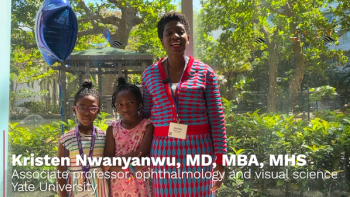
At the Envision Summit 2025 in San Juan, Puerto Rico, Kristen Nwanyanwu, MD, MBA, MHS, joined by her children, discussed her talk on eradicating TRD and the family-friendly environment of the conference.

The new formula will help relieve temporary symptoms caused by dryness of the eye.

Shameema Sikder, MD; and T. Y. Alvin Liu, MD, highlight the technology’s role in bridging challenges and successes for clinical practice.

Amniotic membrane tissue offers a number of advantages to patients.
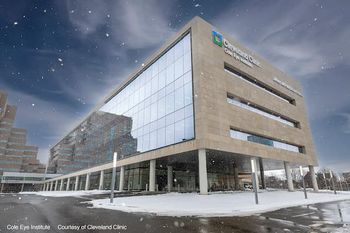
The state-of-the-art facility more than doubles the institute’s footprint, enhancing patient care, research, and education.

Clinician highlights a novel complication of atropine treatment in a teenage patient.

A PDUFA date has been set for October 20, 2025. If approved, Epoxia will be the first epi-on corneal crosslinking on the market.
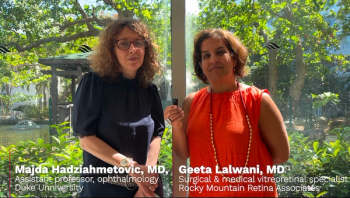
At the Envision Summit 2025 in San Juan, Puerto Rico, retina program chairs Geeta Lalwani, MD, and Majda Hadziahmetovic, MD, discussed Hadziahmetovic's presentation on deep learning models of neovascular AMD as well as their time at the conference.

According to Apellis and Sobi, pegcetacoplan (Aspaveli) first received marketing authorisation for treatment of paroxysmal nocturnal hemoglobinuria.
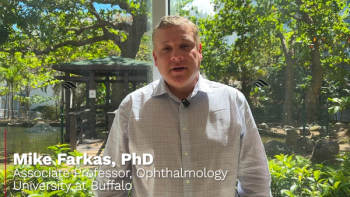
At the Envision Summit 2025 in San Juan, Puerto Rico, Mike Farkas, MD, discussed gene therapy research for retinal degenerations that sidetracks the current "status quo" therapies of AAV-based replacement and CRISPR-Cas9 genome editing.

Risk factors vary in both short-term and long-term periods following Boston Type 1 keratoprosthesis surgery.

Children experienced sudden vision loss, visual field constriction, nyctalopia and dyschromatopsia following febrile illness.
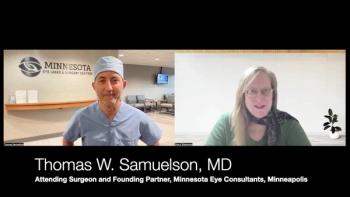
Direct selective laser trabeculoplasty enhances the experience for both patients and physicians, he notes, while also mitigating issues related to poor adherence and ocular surface disease from topical therapy.
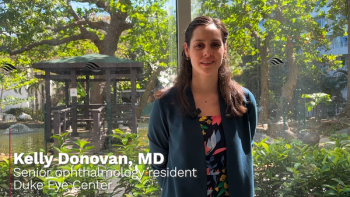
At the Envision Summit 2025 in San Juan, Puerto Rico, Kelly Donovan, MD, talked about her graduate research on the earliest phase of diabetic retinopathy, and trying to understand how hyperglycemia translates into disease.

Sexual harassment in the specialty remains high 5 years after a previous study, with higher frequencies of recent experiences and continued low reporting rates.
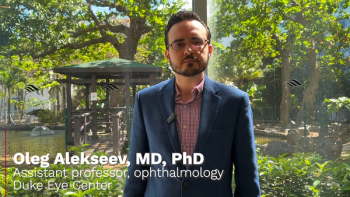
At the Envision Summit 2025 in San Juan, Puerto Rico, Oleg Alekseev, MD, PhD, talked about difficulties in diagnosing inherited retinal degenerations due to mutations in over 300 different genes.
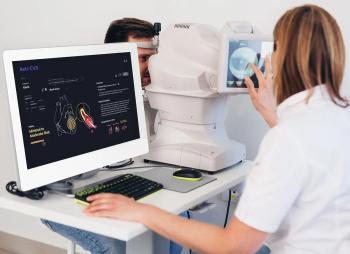
The UK-based company will debut the tool, called Dr.Noon CVD, at two conferences in March.
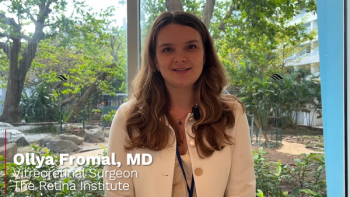
At the Envision Summit 2025 in San Juan, Puerto Rico, Ollya Fromal, MD, gave advice on how retina specialists can manage add-ons in their busy retina clinics.
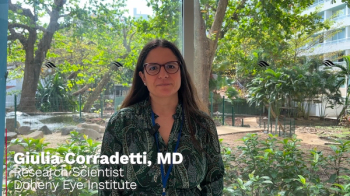
At the Envision Summit 2025 in San Juan, Puerto Rico, Giulia Corradetti, MD discussed AI applications in the identification and prediction of OCT structural biomarkers in intermediate AMD.

Ying Han, MD, PhD discusses glaucoma management strategies, including transitioning care between ophthalmologists and optometrists, improving diagnosis, and the hope for future glaucoma developments.

Patients who underwent bilateral treatment experienced a higher rate of clinically relevant recovery, the authors reported.
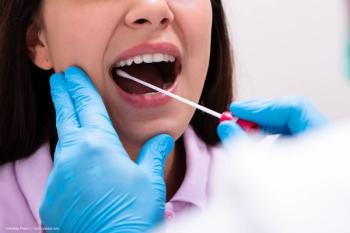
SightScore is a saliva test that looks at millions of genetic variants in the patient’s genome to create a personalized polygenic risk score for glaucoma.
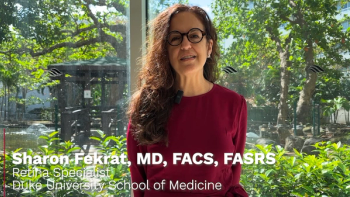
At the Envision Summit 2025 in San Juan, Puerto Rico, Sharon Fekrat, MD, FACS, FASRS talked about multi-modal retinal and choroidal imaging to diagnose and identify neurodegenerative diseases using machine learning.
The focus in recent years has shifted to reducing the long-term burden of medical therapy, minimizing the risk of medication toxicity and persistent ocular surface disease.

Shah discusses several studies from the IRIS registry and plans for a retina program at next year's event to address the growing interest in retina procedures and techniques.