

Study investigators compared 2 novel lens designs using data obtained from 19 investigational sites in Australia, Canada, Spain, and the UK

Study investigators compared 2 novel lens designs using data obtained from 19 investigational sites in Australia, Canada, Spain, and the UK

The company will use proceeds from the Series A to assemble and develop a diversified pipeline of product candidates that combines scientifically compelling targets with innovative translational approaches.

The company is revealing the 8-year follow up results of its novel Elios Excimer Laser Trabeculostomy procedure combined with cataract surgery.

While there is currently no cure for blindness, an artificial vision system has undergone its first successful implantation, bringing with it the potential to restore partial vision to people who have lost their sight.

The NGF0121 study will enroll 100 patients and will use Schirmer's test and the Symptom Assessment Questionnaire in Dry Eye questionnaire as its co-primary endpoints to measure improvement in signs and symptoms of dry eye over time.

A pair of Japanese ophthalmologists have concluded that SARS-CoV-2 may target lacrimal gland tissue and manifest as chronic inflammation.

Results from the study were presented by Russell Tait, PhD, CEO of PolyActiva, at the Glaucoma 360 New Horizons Forum in San Francisco, California

Tiffani Martin was diagnosed with type 1 juvenile diabetes when she was just 5 years old, and has battled myriad health issues as a result, including vision loss. Leading the charge for a multifactorial approach to combat diabetes, Kristen Nwanyanwu, MD, MBA, MHS, and her team have embraced the need for a multi-pronged program to address health disparities in diabetic retinopathy.
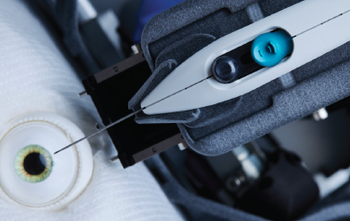
Utilizing new technology, surgeons can be 20 to 40 times more precise.

Proper measurement of the eye is key to predicting lens strength.

The company recently took the wraps off an exclusive agreement with the Medical University of South Carolina (MUSC) Foundation for Research Development to license next generation complement-targeted gene therapies for the treatment of geographic atrophy and other ocular diseases.

Kato Pharmaceuticals will study the efficacy of Resolv ER for the treatment of vitreomacular attachment.
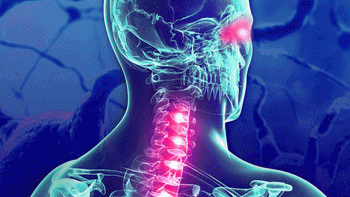
According to data presented by Horizon Therapeutics at the North American Neuro-Ophthalmology Society annual meeting held this week in Austin, Texas, Uplizna treatment is linked to fewer severe attacks and reduced levels of key disease-related biomarkers versus placebo.
Researchers know that parts of the retina are considered as biomarkers for Alzheimer’s, but the team from Otago’s Dunedin Multidisciplinary Health and Development Research Unit in New Zealand have been investigating the retina’s potential to indicate cognitive change earlier in life.
According to the company, it is developing elamipretide for treatment of extra-foveal GA under U.S. FDA Fast Track designation.
AM712 is a novel bispecific biologic molecule specifically designed for ocular use. In pre-clinical studies, it demonstrated efficacy, ocular pharmacokinetics, and the desired safety profile supporting clinical exploration.

During a presentation at the Bascom Palmer Eye Institute Angiogenesis, Exudation, and Degeneration 2022 conference, Robert Bhisitkul, MD, PhD, provided 24-week clinical data from the Phase 1 study, demonstrating that patients with DME and wAMD showed improved visual acuity through 24 weeks following a single dose of UBX1325.

During the Glaucoma 360 New Horizons Forum at the Grand Hyatt San Francisco at Union Square, several speakers discussed the latest advances in technology.

Oluwatosin U. Smith, MD, associate professor in the Department of Ophthalmology, University of Texas Southwestern, Dallas, speaks with Ophthalmology Times'® Sheryl Stevenson on the highlights of her presentation exploring remote monitoring of glaucoma and the future of virtual care on the whole.

Andrew G. Iwach, MD, co-founder and co-chair of Glaucoma 360, Glaucoma Center of San Francisco, speaks with Ophthalmology Times’® Sheryl Stevenson on his presentation regarding trends and challenges of glaucoma.
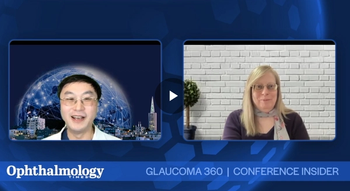
Shan C. Lin, MD, explains why ophthalmologists should be mindful of refractive considerations in cataract surgery for their patients with glaucoma.
Robert L. Stamper, MD, speaks with Ophthalmology Times®' David Hutton on intraocular pressure measurement, corneal elasticity, and why hysteresis is important for glaucoma management.
This year's Shaffer-Hetherington-Hoskins Lecture keynote speaker Joseph Caprioli, MD, focuses on the phenotypes of primary open-angle glaucoma with Ophthalmology Times®' David Hutton at Glaucoma 360.

Carel B. Hoyng, MD, noted that investigators have developed an RNA therapy to stop the progression of the disease, which ultimately leads to legal blindness.

Arshad M. Khanani, MD, MA, told attendees at the Bascom Palmer Eye Institute’s 19th annual Angiogenesis, Exudation, and Degeneration 2022 Virtual Edition that data from the part A of the KALAHARI trial is encouraging, showing that THR-149 has the potential to improve vision in patients with DME who have a sub-optimal response to anti-VEGF therapies.

Most patients (95%) with the PDS implanted did not need supplemental treatment before the refills, indicating the persistence and durability of the treatment.
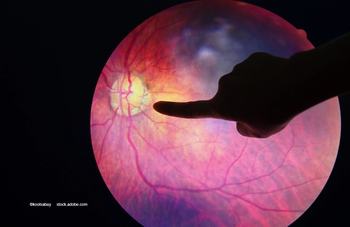
After 2 years, the improvements in vision and anatomy were sustained with extended dosing out to every 16 weeks in a high percentage of patients.

During the Glaucoma 360 New Horizons Forum, the spotlight was cast upon sustained release injectables, including innovations that have been flourishing over the past year despite, or perhaps because of, a continuing worldwide pandemic.
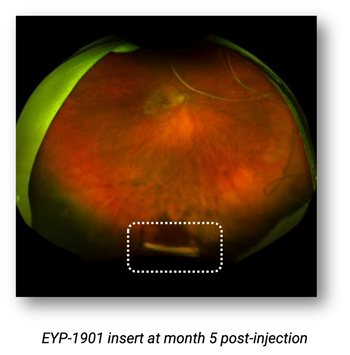
Jay S. Duker, MD, who presented data at the Bascom Palmer Eye Institute’s 19th annual Angiogenesis, Exudation, and Degeneration 2022 Virtual Edition, noted that previously treated patients showed a significantly reduced treatment
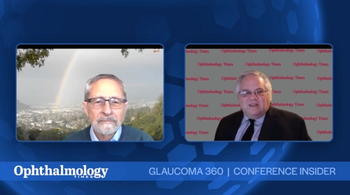
Robert L. Stamper, MD, speak with Ophthalmology Times®' David Hutton to discuss his presentation at the Glaucoma 360 event in San Francisco, where he presented an update on OCT-Angiography and its role in detecting the density of the capillaries in the macula.