
Participate by May 20 in the annual Ophthalmic Business and Leadership Trends Survey for 2022.

Participate by May 20 in the annual Ophthalmic Business and Leadership Trends Survey for 2022.
Investigators find the recognition could improve surveillance of the disease.

In a patient survey, 66% of respondents said AI plays a large role in their diagnosis and treatment and thought it was important.

It’s been a minute, as the Baltimorean’s say, but I still remember my first day of residency. I knew next to nothing about ophthalmology but showed up smiling and eager to learn. I felt incredibly fortunate to be training at such a prestigious institution. I was awed by the distinguished faculty, and my co-residents couldn’t be any more impressive. In short, I wasn’t sure I belonged.
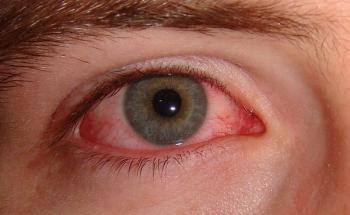
In a paper, investigators identified strategies used by patients to reduce the cost of therapy and its impact on adherence to treatment Patients may be reluctant to disclose challenges regarding adherence to dry eye disease therapy, as well as fears of worsening quality of life.
Two grants will be available, each offering $150,000 to scientists focusing on glaucoma research who have already received their first independent federal National Institutes of Health (NIH) grant and are collecting new and novel data to apply for a second R01.

An investigator at Anglia Ruskin University is leading work on an anti-cataract drug, which has had positive results in lab tests.

BRIM Biotechnology Inc. has entered into a new strategic partnership with Ora Inc. for the late-stage clinical development of lead drug candidate BRM421 for dry eye syndrome (DES).

Philip Ruzycki, PhD, receives a career development award that will provide $350,000 to support his laboratory over the next 4 years.

TAKE-HOME: This affordable device allows the view through a slit lamp to be shared in real time or recorded, for teaching and reference purposes.

Formosa Pharmaceuticals, AimMax Therapeutics unveiled data from CPN-301, the first of two pivotal Phase 3 clinical studies of APP13007, a novel ophthalmic nanosuspension formulation of a potent corticosteroid, clobetasol propionate (0.05%).

For health care workers, the pandemic has led to increased burnout, concerns about workplace safety, and staffing shortages that threaten not only patient care but also the entire provider ecosystem.

A discovery by investigators at the National Eye Institute sheds light on tissue targeted by age-related macular degeneration and other diseases.
The Eye Van, operated by Vision Loss Rehabilitation Canada, is a mobile medical clinic that delivers eye care in northern Ontario communities where ophthalmology services aren't readily available.

Investigators note that the capacity to visualize corneal nerves of the sub-basal plexus and stroma in real time and without requiring use of contrast agents allows for longitudinal studies that can track nerve density and arborization in the same subjects over time.
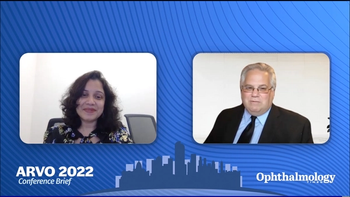
The study found that if certain forms of nystagmus that are seen in patients, then there is a higher chance of poor binocular visual function, as well as higher interocular suppression.
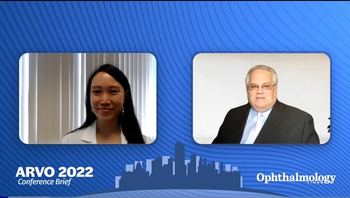
The study evaluates three separate cases, each which experiences irreversible changes in their corneal structure caused by challenges in getting timely treatment due to various reasons, including insurance, lost to follow up, and the coronavirus pandemic.

The company is partnering with leading ophthalmology practices focused on improving patient outcomes. OMNY solutions are derived from electronic health record data and provide valuable information on the evolving treatment paradigm for patients with ophthalmic disease, including difficult to obtain insights on the rationale behind treatment decisions, and the impact of social determinants of health on care delivery and outcomes.

The American Academy of Ophthalmology applauded Congress for reaching the 290-consponsor milestone for the proposal. By reaching the two-thirds majority of bipartisan support in Congress, the bill is eligible for inclusion on the Consensus Calendar under new rules that were established in 2019.
Colin Carr, founder and CEO of CARR, chats with Ophthalmology Times' David Hutton in this part one episode of the EyePod. Carr hits on some hot real estate topics in the healthcare industry, including top mistakes healthcare providers make with their office space, how to decide whether you're going to purchase or lease, and how healthcare providers can save $100k or more on their next lease renewal.

At ARVO 2022 in Denver, Colorado, Timothy Blenkinsop, MD, presented “3D Eye Organoids with Distinct Cornea.” His presentation outlined how these organoids have developed sophisticated cornea structures.

As more and more practices embrace dark adaptation testing, AdaptDx technology has become a staple in primary eye care.

The Phase 3 integrated PEACHTREE and AZALEA study data revealed strong safety and efficacy for triamcinolone acetonide via suprachoirodal injection.

The study's primary endpoints were to look at increasing Schirmer's scores, as well as eye discomfort score.
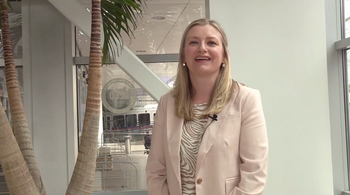
Catching up after ASCRS 2022, Ora's Caitlin Black, senior director and therapeutic area head of medical devices, talks about the next generation of ophthalmic device therapies and diagnostics, clinical trial updates and new innovations that are most exciting for presbyopia treatment.
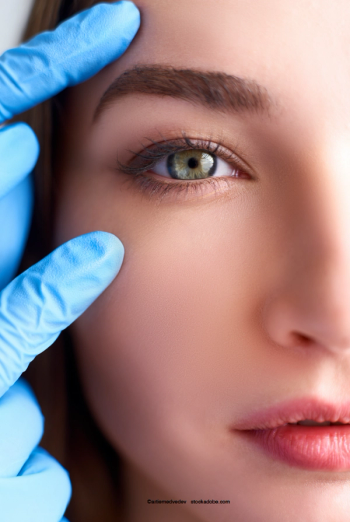
Why low-lying lids can affect much more than patients' visual field, with implications for visual quality and their self-esteem.

The company's VialConnect is an intuitive clinical trials management platform built for coordinators and investigators.

Penny Asbell, MD, FACS, MBA, discusses “Antibiotic Resistance among Ocular Staphylococcal Pathogens: Longitudinal Trends in the ARMOR Study."
Takeaway: there doesn't seem to be a specific dry eye phenotype that does better or worse.
The companies will collaborate to commercialize therapeutic option in Greater China, South Korea and Select Southeast Asian Markets for the treatment of presbyopia, expanding access to long-acting, presbyopia-correcting eye drops for approximately 600 million patients.