
The approval establishes LYTENAVA as the first and only FDA-approved ophthalmic formulation of bevacizumab for the treatment of wet AMD in the United States.

The approval establishes LYTENAVA as the first and only FDA-approved ophthalmic formulation of bevacizumab for the treatment of wet AMD in the United States.
Louie Cai, MD, discusses why manual prescreening is so labor-intensive, how the study was designed, and what broader adoption of AI-assisted screening could mean for clinician time, patient satisfaction, and the pace of drug development.
Danon disease is a rare, multisystem X-linked genetic disorder caused by variants in the LAMP2 gene. In children and young adults, it is defined overwhelmingly by its cardiac effects . What is far less appreciated is that the eye is frequently involved and that the retinal findings can appear before the systemic diagnosis is established.

In this Q&A, Ping Moore, OD, covers emerging dry eye therapies, from selenium sulfide to next-gen cyclosporine, and how subtype-guided care shapes treatment choices.
Two-year PRISM results show 4D-150 gene therapy sustains wet AMD vision while cutting anti-VEGF injections up to 87%, with reassuring safety.

Bausch + Lomb’s EyeGility preloaded enVista IOL inserter streamlines cataract surgery with push-plunger delivery, less handling, faster workflow.

Creators on TikTok and YouTube share real LASIK journeys, bust myths, and help Gen Z and millennials explore modern vision correction options.

Ophthalmology is projected to face one of the steepest physician shortages of any subspecialty by 2038.
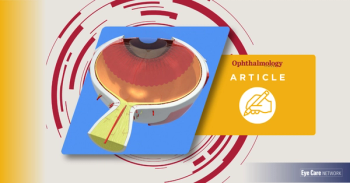
Inflammasome Therapeutics announced positive phase 2 results achieved by kamuvudine-8 (K8), its investigational drug, for geographic atrophy (GA) and a good safety signal over the 6-month period of evaluation. The company also reported significantly slower GA progression and a visual acuity advantage.

The multicenter study is evaluating ZOC2017217, a lanosterol-derived investigational eye drop, ahead of a planned phase 3 trial.
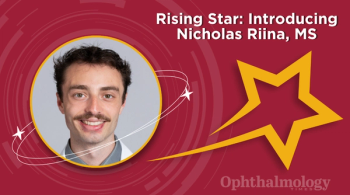
Rising star in Ophthalmology, Nicholas Riina, MS, focuses on artificial intelligence and uses robotics training to enhance glaucoma diagnosis.

The randomized, double-masked, 3-arm trial did not achieve its primary endpoint of replicating the visual function improvements observed in a smaller phase 1/2a study.

Dry eye care pivots to root-cause diagnosis and personalized biologics/devices,

A new survey has discovered a gap between the value parents place on children's vision and the comprehensive eye care that teens and young adults receive.

Esen Akpek, MD, on dry eye's emotional and vision-related toll, its hidden autoimmune links, and when to move patients beyond artificial tears.

The non-exclusive license agreement pairs Alcon's PCIOL optical designs with RxSight's post-operative light-adjustable platform, with the aim of allowing surgeons to fine-tune visual outcomes after cataract surgery.
Cataract surgery becomes refractive: learn how IOL choices and preop counseling across distance, intermediate and near turn 20/20 into 20/happy.

The FDA issued a nationwide recall of a steroid eye drop.

Findings from the third annual State of Dry Eye survey link symptom management to quality of life gains, including lower anxiety and improved self-confidence.
June brings FDA clearance for Lumvoa, key retina and glaucoma trials, device deals, and hard truths on AI performance in eye care.

Dry eye cases rise with heavy screen use and younger patients; learn modern workups spotlighting MGD, etiology-driven treatments, and collaborative care reshaping outcomes.

A successful Type B Rare Disease Evidence Principles meeting confirms the pivotal study design, opening a potential BLA pathway on 6-month efficacy data, with dosing expected to begin in the fourth quarter of 2026.

The RMAT designation opens the door to a faster development pathway for EO2002 as a minimally invasive alternative to corneal transplantation, while Emmecell also advances a cell therapy for geographic atrophy.
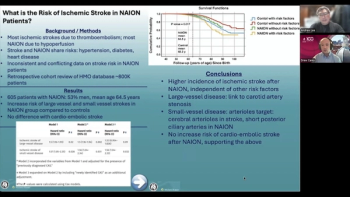
Andrew G. Lee, MD, and Drew Carey, MD, discuss findings from a retrospective study examining ischemic stroke risk in patients with non-arteritic anterior ischemic optic neuropathy and the implications for vascular risk factor management.
Patients with polyendocrine metabolic ovarian syndrome have higher ocular disease prevalence.
Length and width, not thickness, emerge as key drivers of higher-order aberrations.

Offline smartphone AI fundus screening detects diabetic retinopathy, glaucoma, and macular degeneration in one capture, delivering high accuracy for low-resource eye care.

In this Q&A, Dipanjan Pan, PhD, breaks down the science behind the COSMIC tear biosensor platform and what it will take to bring it to clinical use.

What the approval of a second targeted biologic means for patients, practice, and the evolving TED treatment landscape

Optometrist–ophthalmologist co-management targets dry eye early, improves cataract and refractive surgery satisfaction, and uses advanced diagnostics and treatments for healthier ocular surfaces.